Eu

Ukip conference venue received £1 million of EU funding

From our UK edition

Nigel Farage has kicked off the first day of Ukip party conference at Doncaster Racecourse with a speech claiming that anti-EU groups are united and ready to push for a UK exit from the European Union: 'We are together, we are united, and we believe that the tide has turned. I believe that we are on course to win the most historic and the most important political victory in any of our lifetimes.' United as they may be, perhaps one of the brains at Ukip ought to have done a bit more research regarding their conference venue before going ahead with the booking. For all their preaching about the need to leave the EU for the good of the country, it turns out that Doncaster Racecourse hasn't done too badly out of Britain's membership; the racecourse is in part paid for by EU money.

High life | 24 September 2015

From our UK edition

Gstaad Jeremy Clarke has wiped me out again, for a change. His accounts of the high jinks on board the SpectatorAt the age of 79, I'm seriously contemplating becoming a bird-watcher cruise had the mother of my children laughing out loud, something she’s not known for among those of us who consider laughing loudly a staggering breach of taste. Never mind, Jeremy’s talents and his ability to describe the indescribable in vivid prose is a badly kept secret among those of us who love good writing. The only thing wrong with Jeremy is that he shows me up week in, week out. Being the fall guy does not suit me one bit. And I hope I won’t be falling this week in Amsterdam, where I’m competing in the world veteran judo championships. This is my last competition ever.

Do English Tories care more about the EU than the UK?

From our UK edition

This morning Ruth Davidson, leader of the Scottish Conservative and Unionist party, outlined the extent to which she agrees with Nicola Sturgeon, leader of the Scottish National Party. Both wish Scotland, and indeed the United Kingdom, to remain a member of the European Union. It is true, as Ms Davidson noted, that the SNP oppose even holding a referendum on the terms of British membership but it is also the case that, at least notionally, each wish, or are on record as desiring, a broadly comparable set of EU-wide reforms. Now, as Mark Wallace rightly observes, Davidson's case for continued EU membership is a purely practical one. The emotional and historical arguments for maintaining the integrity of the British union do not apply to continuing membership of the EU.

Jeremy Corbyn offers a twist to the EU renegotiation

From our UK edition

Jeremy Corbyn has taken to the Financial Times, the newspaper of big business, to say that Labour will support Britain staying in the EU whatever happens in the renegotiation. This is a reversal of Corbyn’s previous view that such a position was equivalent to giving David Cameron a blank cheque to negotiate away social and environmental ‘protections’. But there is a twist. Corbyn says that if Cameron does win changes in these areas, Labour will commit to reversing them if it wins the next election. Now, I think this could pose a problem for the In campaign because it confirms that the settlement that is being put to the electorate is not permanent, that there could be more integration in the near future.

Merkel’s response to the refugee crisis has made the situation worse

From our UK edition

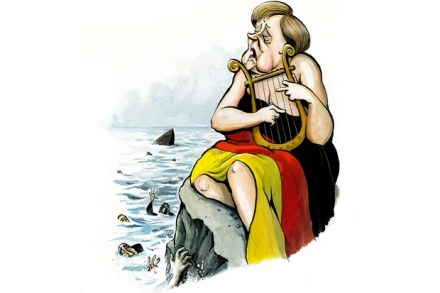
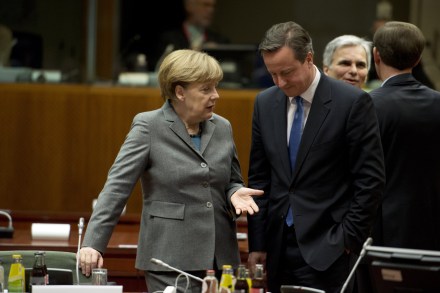
Having, effectively, unilaterally ripped up the EU agreement on how to handle refugees, Germany is now desperately trying to re-impose the rules. At the start of this month, Angela Merkel’s government declared that any Syrian who could reach the country could claim asylum in Germany. This was contrary to the Dublin Convention of 1990 which set out that refugees should seek asylum in the first EU member state that they arrive in. Predictably, Germany’s actions led to a huge surge in the number of refugees trying to reach the country. The volume of people coming is now so great that Berlin has had to put in place controls on the Austrian border. It is also saying that it won’t accept refugees who have been fingerprinted or admitted in another EU state.

Merkel’s folly

From our UK edition

[audioplayer src="http://rss.acast.com/viewfrom22/merkelstragicmistake/media.mp3" title="James Forsyth and Holly Baxter debate Merkel's offer to Syrian refugees" startat=38] Listen [/audioplayer]Of all the irresponsible decisions taken in recent years by European politicians, few will cause as much human misery as Angela Merkel’s plan to welcome Syrian refugees to Germany. Hailed as enlightened moral leadership, it is in fact the result of panic and muddled thinking. Her pronouncements will lure thousands more into the hands of unscrupulous people-traffickers. Her insistence that the rest of the continent should share the burden will add political instability to the mix. Merkel has made a dire situation worse.

Cameron’s impossible dilemma

From our UK edition

If you spot the Prime Minister squirming and wriggling on the Syrian refugee issue, there’s a very simple explanation. The Prime Minister is in a very tight spot, caught between a rock and a hard place. And it is clear that he hasn’t yet decided the best way to extricate himself. After winning an outright Tory victory at the general election in May and the likely prospect of another win in 2020, he only has one major hurdle left during his term in office: winning the EU referendum. Whether he calls, as many expect, a vote as early as this spring, or waits until the end of his own self-imposed deadline of December 2017, Cameron will be campaigning to stay in. But as every day of the Syrian crisis passes, his chances of victory are getting slimmer.

Green with rage

From our UK edition

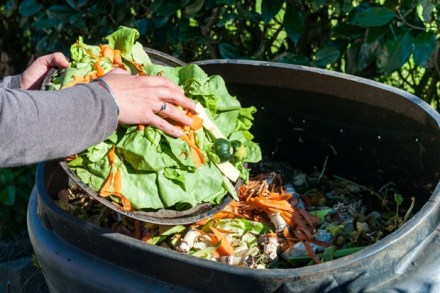
I am stuck behind a big yellow recycling lorry in Bristol, which this year became the UK’s first European Green Capital. It is collecting food waste from the special brown bins we have to use, and the stench is horrendous. Behind me are about another dozen cars and, sad to say, I fear that not all of them have turned off their idling engines. Squadrons of recycling vehicles invade every day, blocking our narrow Victorian streets and causing misery and mayhem — starting with the school run: ‘Dad! I’m going to be marked down for a “late” again!’ ‘Sorry son, but these teabags mustn’t be allowed to rot in landfill. And besides, we have our city’s green status to consider!

Here’s the answer to your migrant crisis, Mr Cameron

From our UK edition

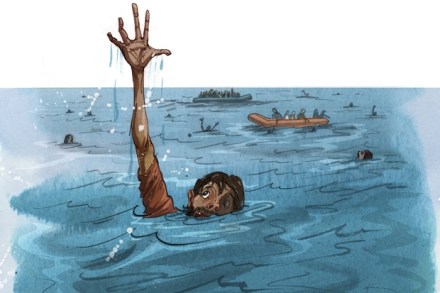
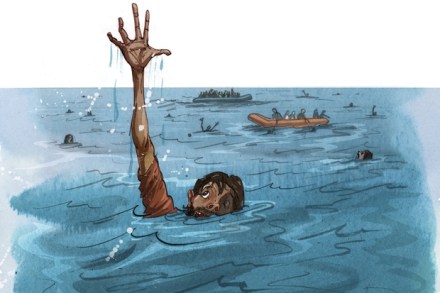
[audioplayer src="http://rss.acast.com/viewfrom22/howtofixtherefugeecrisis/media.mp3" title="Paul Collier and Douglas Murray discuss how to fix the migrant crisis" startat=32] Listen [/audioplayer]For all its difficulties, Europe is prosperous and safe: one of the best places on Earth. Many other societies have yet to achieve this happy state: some are murderous and poor. Two of the most troubled zones in the world are near Europe: the Middle East, and the Sahelian belt which spans northern Africa. Unsurprisingly, many of the people who live in these societies would rather live in Europe. Impeded by immigration controls, a small minority of this group are taking matters into their own hands, trying to enter Europe illegally by boat across the Mediterranean.

Immigration hits a record high

From our UK edition

There must be an element of masochism in Theresa May that leads her to promise the electorate something she cannot give them: net migration in the tens of thousands. Figures released today show that the balance of people coming into the county rose to 330,000 in the year to March 2015, putting the Home Secretary further than ever—further than any Home Secretary in history—from the target. [datawrapper chart="http://static.spectator.co.uk/6xuHX/index.html"] An increase of 84,000 in the number of people coming the UK, and a fall of 9,000 in the number of people leaving the country made up the 94,000 increase in net migration on the previous year. The balance of migrants from within the EU increased by 53,000 to 183,000.

Sorry, but I can’t join in the China panic

From our UK edition

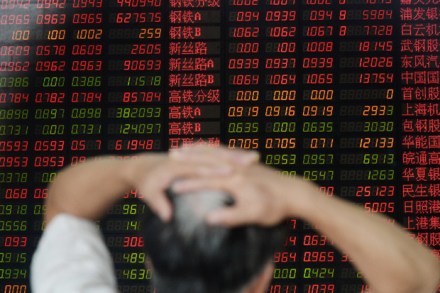
 MS Queen Victoria, 38°N 19°E I’ll do my best, but I’ve got to be honest: being surrounded by shining Ionian waters and convivial Spectator cruisers isn’t helping me channel the panic that has gripped global markets. So forgive me if this dispatch doesn’t have the apocalyptic tone you’re expecting. I’m as irritated as anyone that contagion from China’s share-gambling epidemic has knocked my modest interest in FTSE100 stocks back to where it stood in late 2012, but ask yourself: do you know anything about China or the global economy today that you didn’t know a month ago?

If Jeremy Corbyn joins the No to EU campaign, he’ll drive voters to Cameron

From our UK edition

If the man with the dull beard does win, where will Labour stand in the European Union referendum? Jeremy Corbyn, being a hard leftist, is theoretically against the EU, but eurosceptic Labour friends tell me that he is not to be relied on when the going gets tough. I expect he will adopt the conventional ‘anti-austerity’ position, which is to assail the European elites while not doing anything which might risk the loss of the subsidies they provide and the regulations they pour forth. If so, that will, on balance, be good for the ‘get out’ side. A Corbyn-led campaign for a No vote would drive lots of Tory waverers right back to David Cameron. This is an extract from Charles Moore's notes. The full article can be read here.

The Spectator’s notes | 20 August 2015

From our UK edition

Watching the very pleasant Liz Kendall on television this week, I was struck by how extraordinary it is that more than 40 years have now passed since the Conservatives selected a woman leader and still the Labour party cannot bring itself to do so. (Although, come to think of it, it took Labour 142 years to catch up with the Conservatives in selecting a Jew, so perhaps we have another century to wait.) I am not necessarily saying that Ms Kendall is the answer — she seems able, but inexperienced — but there does appear to be a serious barrier to women at the very top of the Labour party. I suspect this is due less to old-fashioned misogyny than to the sexual politics which feature so largely in the ideology of the left.

Barometer | 20 August 2015

From our UK edition

No sex, please Several friends of the late Sir Edward Heath asserted that he could not be guilty of sexually assaulting children because he was asexual. How many adults do not experience sexual attraction? — A 2004 study by Anthony F. Bogaert, of Brock University, Ontario, Canada, analysed responses to a British questionnaire ten years earlier. Of 18,000 respondents, 195, or just over 1%, had agreed with the statement ‘I have never felt sexually attracted to anyone at all’. — A 1983 study by a student at the University of Michigan classified 5% of males and 10% of females as asexual. Unaccountable spending The EU declined to offer a breakdown of the £86m spent by staff on EU credit cards.

Stop health tourism

From our UK edition

Speaking after the Stafford hospital scandal in 2010, the then newly appointed Health Secretary, Andrew Lansley, grandly announced plans for a charter to support whistleblowers. The government, he said, would ‘create an expectation that NHS staff will raise concerns about safety, malpractice and wrongdoing as early as possible’. We now know just how that fine pledge worked out. In 2013 this magazine ran a piece by J. Meirion Thomas, then a cancer specialist at the Royal Marsden hospital in London, about his concerns at how the NHS was being exploited by health tourists. He had tried, he said, to expose an ineligible foreign patient but had as a result been accused of unethical behaviour. Meanwhile, the scale of health tourism in the NHS is becoming clearer by the day.

The Calais crisis needs a better response than fences and dogs, Prime Minister

From our UK edition

David Cameron should be in real trouble over Calais. It goes to the heart of two of the central issues by which British voters judge governments: are you competent and can you control immigration. Judging by the unstoppable growth of the chaotic 'Jungle', the increasing number of assaults on Eurotunnel staff and the rising number of tragic and needless deaths, we know the answer to the competence question. To paraphrase Sam Goldwyn, there are two words for the government: incompetent. Every time a minister comes on the radio or TV to explain what the government is doing, I immediately think 'who is that useless Lib Dem junior minister? No 10 must hate having to compromise on immigration policy.' Then I remember.

Podcast: how to fix the refugee crisis

From our UK edition

Are there any immediate solutions for fixing the refugee crisis? On this week's View from 22 podcast, Paul Collier discusses this week's Spectator cover feature on this topic with Douglas Murray. Are there any easy political solutions to this crisis? Where in the world should concerned politicians look to find solutions? What can the Jordanian authorities do to help? And what should the European Union be doing to fulfil its 'duty of rescue'? Philip Delves Broughton and Freddy Gray also discuss how Hillary Clinton is winning the 2016 race — for the Republicans. Why is she failing to be an inspiring candidate? Has the Democratic party realised that Clinton is failing to deliver? Could Vice President Joe Biden be a better candidate?

A real rescue plan

From our UK edition

[audioplayer src="http://rss.acast.com/viewfrom22/howtofixtherefugeecrisis/media.mp3" title="Paul Collier and Douglas Murray discuss how to fix the migrant crisis" startat=32] Listen [/audioplayer]For all its difficulties, Europe is prosperous and safe: one of the best places on Earth. Many other societies have yet to achieve this happy state: some are murderous and poor. Two of the most troubled zones in the world are near Europe: the Middle East, and the Sahelian belt which spans northern Africa. Unsurprisingly, many of the people who live in these societies would rather live in Europe. Impeded by immigration controls, a small minority of this group are taking matters into their own hands, trying to enter Europe illegally by boat across the Mediterranean.

George Osborne: Britain must work with France to build a trade relationship with the EU

From our UK edition

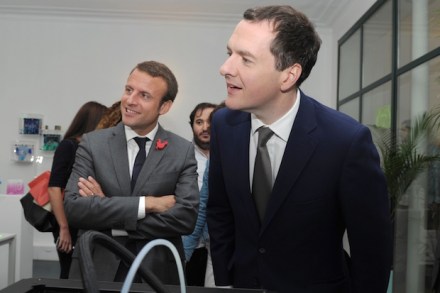
George Osborne has revealed the aim of Britain’s EU renegotiation: to move our relationship back towards a trading partnership. The Chancellor has told the Daily Telegraph he would like to see a paired down relationship focusing on economic matters: ‘I prefer to talk about it as a single market of free trade. It’s free trade with the rules that enable the free trade to be a real success. That’s the way I think we should think about it. ‘Britain has other interests at a European level. For example, the climate change talks that are happening in Paris at the end of this year. The security work that we do with the French. 'But for Britain, I always felt that the central attraction of European Union membership was the economic one.

Barack offers David some assistance to keep Britain in the EU

From our UK edition

Barack Obama has given his perennial reminder that Britain should stay in the European Union. In an interview with the BBC, the President of the United States has said it is important for both Britain’s prosperity and influence around the world to remain ‘In’: ‘Having the United Kingdom in the European Union gives us much greater confidence about the strength of the transatlantic union and is part of the cornerstone of institution built after World War II that has made the world safer and more prosperous. 'And we want to make sure that United Kingdom continues to have that influence. Because we believe that the values that we share are the right ones, not just for ourselves, but for Europe as a whole and the world as a whole.