Energy

The bear and the euro

From our UK edition

Wen Jibao’s comments to the BBC about the euro crisis dramatise the shift in economic power from west to east. Jibao remarked that: “Trust is more important than currency and gold and now, during the debt crisis, we again bring trust to Europe. I have total trust in Europe's economic development”. But China’s role in the euro crisis is far less problematic than Russia’s.

The green consensus in action

From our UK edition

A couple of days ago, I wrote about the deleterious effects of political consensus on energy policy. A good example of this has emerged today. According to Politics Home, Luciana Berger and Caroline Lucas are seeking an amendment to the Green Deal to impose a target for domestic carbon reduction. A number of salient points emerge from this. First, it’s a fine instance of the obsession with targets; itself an indication that this area of policy is largely a top down initiative – driven by targets, taxes and penalties. The Green Deal, as it currently stands, is one of the few areas that put incentive before directive. The idea was to ‘nudge’ consumers into improving domestic energy efficiency.

In England’s green and pleasant land

From our UK edition

What do the TUC, heavy industry and the European Commission have in common? This is not the start of a bad joke; the answer is that they all oppose the government’s energy policy. Ten days ago, Tata (formerly British Steel) announced that it was to cut more than 1,500 jobs at plants in Scunthorpe and on Teeside. The directors later confirmed that their decision was influenced, in part, by the introduction of a costly carbon floor price at the last Budget. The floor price, which exists on top of levies imposed by the EU, has increased the burden of taxation on energy consumption to subsidise renewable energy research. In last week’s issue of the Spectator, Matt Ridley predicted how this policy will likely be an expensive fiasco.

Monbiot’s mission

From our UK edition

George Monbiot is undergoing an astounding and very public transformation. Last week he overcame the habit of a lifetime and fully endorsed nuclear power as a safe energy source. He went further this week, attacking the anti-nuclear movement for perpetuating lies and ignoring the consensus around scientific facts. He levels special criticism at the allegedly lax scholarship of Dr Helen Caldicott, a decorated primate of the anti-nuclear communion.  He also debunks the myths surrounding the disaster at Chernobyl and laments that campaigners have abused that tragedy by exaggerating its consequences. Monbiot’s tone is neither arch nor righteous. Rather, he’s disappointed and the piece has a dignified poignancy.

The yellow bird of liberty stretches its wings

From our UK edition

Remember when Nick Clegg said that the coalition was shuffling into a new phase? One where his party would would make their presence, and their differences with the Tories, more acutely felt? Turns out the Lib Dem leader wasn't kidding. Judging by this report of a press briefing he has given in Mexico, the brave new phase is very much in effect. For starters, Clegg luxuriates in the anti-nuclear hysteria that has arrived in the wake of Fukushima — emphasising not just that our planned nuclear power stations will be more costly and difficult to build now, but also his party's policy that no public money should be used to fund their construction.

Nuclear hysteria

From our UK edition

The above Japanese video - explaining the nuclear accident to children — makes a lot more sense than many of the hysterical reports we have been reading in the last few days. The figures are not out yet, but it's likely that tens of thousands were killed by the tsunami. Yet the newspapers were all focused on the nuclear meltdown — which injured 15 people. The irony is that, when a tsunami strikes, the local nuclear power station is pretty much the safest place to be. This is the argument advanced in the leading article for the current issue of The Spectator (subscribers, click here; non-subscribers please join us for £1 a week).

A Sinner Repents

From our UK edition

Fair play to George Monbiot: You will not be surprised to hear that the events in Japan have changed my view of nuclear power. You will be surprised to hear how they have changed it. As a result of the disaster at Fukushima, I am no longer nuclear-neutral. I now support the technology. A crappy old plant with inadequate safety features was hit by a monster earthquake and a vast tsunami. The electricity supply failed, knocking out the cooling system. The reactors began to explode and melt down. The disaster exposed a familiar legacy of poor design and corner-cutting. Yet, as far as we know, no one has yet received a lethal dose of radiation. Some greens have wildly exaggerated the dangers of radioactive pollution. For a clearer view, look at the graphic published by xkcd.com.

From the archives: Protesting the price hikes

From our UK edition

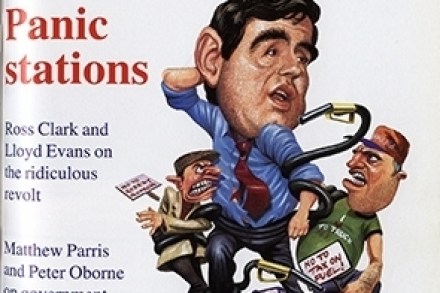
The week began with grim projections about petrol prices, and has been coloured by the twin topics of tax and inflation since. So, a decent opportunity to look back on the fuel protests of 2000, in the latest shot from the Spectator archives. Here's a piece from the time, by Coffee House regular, and Spectator theatre critic, Lloyd Evans:   Do you want a smack in the mouth?, Lloyd Evans, The Spectator, 16 September 2000 As I write this, the gravest crisis in our island story is unfolding before my eyes. The great four-star emergency of September 2000. Where it will lead, no one can tell.

Keep the central planners away from energy policy

From our UK edition

Today, the government publishes its consultation proposals for reform of the electricity generation market. The key debate over the next few months will be whether Britain continues to have a competitive market, or reverts to central planning of the power generation sector. New Labour paid lip-service to a competitive electricity market, while chipping away at its ability to operate effectively – through a constant accretion of new policies, typically promoting renewables. The effect has been to salami-slice the market into technology-specific segments, to increase political and regulatory uncertainty, to encourage lobbying and rent-seeking, and to increase financing costs.

Putting a stop to taxpayer funded environmentalism

From our UK edition

It’s that time of year again, time for the world to pay attention to climate change policy for a few weeks.  Most of the year, schemes like the EU Emissions Trading System and the Renewables Obligation just wallow in dysfunction and quietly cost us a fortune, adding to our electricity bills in particular.  Manufacturers pay attention, and higher energy costs threaten to drive industrial jobs abroad, and the poor and elderly feel the effects, even if they don’t know why their bills are rising.  But the only people who really have the staff and the organisational clout to pursue this issue all year round are the environmental campaigns.   Many of them, like Friends of the Earth, have multi-million pound budgets and dozens of staff.

King Coal Will Reign For Years Yet

From our UK edition

Like Andrew says, James Fallows' Atlantic article on clean coal - and China's advances in developing the stuff - deserves to be read in full. But it's also a useful corrective to the notion that "alternative energy" sources (with the exception of nuclear power) can come at all close to meeting our energy needs either now or in the foreseeable future. For all that relatively few people talk about coal anymore (and of course we no longer mine the stuff ourselves) it's still the King of Energy: “Emotionally, we would all like to think that wind, solar, and conservation will solve the problem for us,” David Mohler of Duke Energy told me. “Nothing will change, our comfort and convenience will be the same, and we can avoid that nasty coal.

Hughes retracts his claws (for now)

From our UK edition

Few observers would have expected Simon Hughes to tear into the coalition with full force in his speech today. The mood in Liverpool is geared towards support, not destruction. But the deputy Lib Dem leader's effusiveness was still fairly surprising. He reassured the audience that he is a "rock solid supporter of the coalition – which our party has democratically agreed will last for five years". He echoed one of Clegg's central messages from yesterday, saying that "when you move from the touchline to the pitch, there is a risk you may get some knocks and pick up a few bruises – but on the touchline you never get the chance to change the game." And he finished with a flourish of optimism: "This is the best opportunity of our lifetimes".

Darling: bankers’ super tax failed

From our UK edition

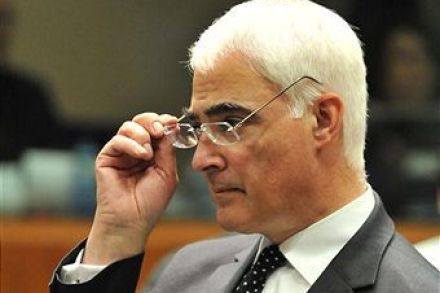
Honesty is an attractive though rare quality in a politician, and Alistair Darling’s self-awareness and morose delivery always grabs attention. Last night, the former chancellor told a conference of bankers that the 50 percent levy on bonuses over £25,000 was a failure. The FT reports him saying: ‘I think it will be a one-off thing because, frankly, the very people you are after here are very good at getting out of these things and . . . will find all sorts of imaginative ways of avoiding it in the future… what I wanted to do was send a message to them that we all live in the same world together.’ Darling’s is a curious definition of failure.

Clegg must resist temptation

From our UK edition

As Pete notes, Nick Clegg is moderating the debate over the spending review in David Cameron’s absence. It’s an unenviable task. IDS and Liam Fox have been the most cussed opponents of George Osborne, but all ministers are fighting for their budgets behind the scenes. This morning, reports suggest that Chris Huhne could break from the ranks of the silent. The Times gives details of ‘intense discussions’ over the future of nuclear clean-up and renewable energy funding, worth more than £2bn of the Energy department’s £3.4bn budget. Obviously, any reductions in environmentally friendly initiatives carry a political cost for the Liberal Democrats.

Huhne backs nuclear energy through gritted teeth

From our UK edition

You could almost hear the thumbscrews being tightened as Chris Huhne appeared on Today this morning to back nuclear power. The Energy Secretary has an, erm, patchy history when it comes to supporting nuclear – and that fact, coupled with his less than evangelical rhetoric on the matter in government, has got plenty of industry professionals worried. So there he was reassuring us that, actually, the first new nuclear power station is still on course for 2018. And he added, gritting his teeth no doubt, that "providing there is no public money involved, there will be a majority in the House of Commons favour of nuclear power stations.

Green gold

From our UK edition

Most of Tim Yeo’s proselytising on climate change must be resisted. He calls for a dramatic reduction in carbon emissions in the short-term, which would paralyse Britain’s already geriatric economic competitiveness. He also endorses a policy that would push consumer energy prices to punitive levels in the hope that their behaviour is moderated. And he is adamant that David Cameron’s Husky photo-op was the last word in political positioning. But, his central point, one shared with John Redwood and Peter Lilley, is unanswerable: ‘Working towards a low carbon economy is not a “luxury”; it is essential to our future prosperity.

Was Carter right?

From our UK edition

Today marks the 31st anniversary of President Jimmy Carter’s famous ‘malaise’ speech. On July 15, 1979, Carter, then running for re-election against Ronald Reagan, ignored the advice of his campaign team and gave Americans a grave warning. The nation, he said, was facing a fundamental "crisis of confidence". (He didn’t actually use the word malaise.)   "Too many of us now tend to worship self-indulgence and consumption," he said. "Human identity is no longer defined by what one does, but by what one owns. But we've discovered that owning things and consuming things does not satisfy our longing for meaning.

Cable begs for protection

From our UK edition

Vince Cable is announcing to Metro that "We do not want to make such deep cuts to transport, energy, science research and universities." Really? According to whom? The science budget, which has shot from £1.3bn to an indefensible £3.7bn, is a prime example of a cost that should not be borne by the taxpayer. Scientists are best left to get on with this themselves, and companies are more than capable of funding research. On energy, again, there are many expensive vanity projects just begging for the axe. Given that Cable is in charge of the universities brief - the most important part of his otherwise non-job - you can expect him to want to protect it from cuts. But to lobby openly like this is not something that Theresa May or Liam Fox would do.

A Rare Question To Which The Answer Is Actually Yes

From our UK edition

Paging John Rentoul and Oliver Kamm for this exception to the general rule that most questions asked in the press are best answered in the negative. Here's Eliot Spitzer  - or, as Radley Balko puts it, "disgraced former tyrannical prosecutor Eliot Spitzer" - flying this beauty: After reading the Gettysburg Address, does the idea of a carbon tax to finally move us away from an oil and old-energy dependence that is fouling not only the Gulf of Mexico but our entire climate, foreign policy, and economy seem so outrageous? Why, yes it does! If, that is, it's the Gettysburg Address that acts as the clincher, whatever the other merits of a carbon tax.

Pacific islands defy apocalyptic climate change scenarios

From our UK edition

The President of the Maldives can sell his snorkel: he’ll be waving not drowning. The New Scientist carries a fascinating article, examining the research of Paul Kench of the University of Auckland and Arthur Webb of the South Pacific Applied Geoscience Commission. Using aerial photographs and high-resolution satellite images, Kench and Webb have found that 23 out of 27 low-lying Pacific islands, deemed to be vulnerable to rising sea levels, have grown by up to 10 percent in 40 years. Local sea levels have risen by 120 millimetres over the period. Coral is defying the apocalyptic flooding scenarios. Reef coral surrounding the islands is eroded and deposited to form atolls or coastal spurs.