Energy prices

Is the US heading for another oil shock?

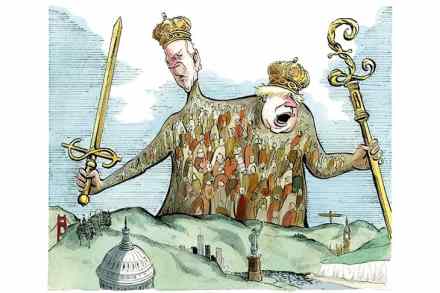
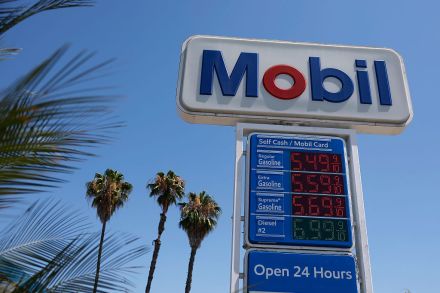
It won’t be anything on the scale of 1973, when President Nixon imposed year round daylight saving time to reduce electricity consumption as well as a 50mph highway speed limit. Nor are we likely to see the thermostat restrictions, or the standby plans for rationing, that were introduced by President Carter in 1979.  The "oil shocks" of the 1970s were not just from a different era, they were of a different magnitude as well.  Trump may well step in with some form of oil export controls Yet that does not mean that the American economy is immune to another crisis, nor that we won’t see a dramatic response from the White House - because, in reality, the US could easily run out of oil later this year.
Oil prices

Why a nightcap is a dream Christmas present

From our UK edition

Have you finished your Christmas shopping yet? I ask because there is a must-have item for 2022 that may have so far escaped your attention. And that’s a small irony because at some point in the weeks ahead it will almost certainly be staring you in the face. Whether you’re reading A Christmas Carol and enjoying John Leech’s illustrations, or relishing in the monochrome horror of Alastair Sim in Brian Desmond Hurst’s gothic version of 1951, or enjoying once again Michael Caine’s peerless performance in the Muppets’ musical adaption, you will notice that one of Ebenezer Scrooge’s nocturnal accessories is never missing: the nightcap. You don’t have to be a miser to see the benefit of this piece of forgotten headgear.

Democrats pick a bad time to punish the energy industry

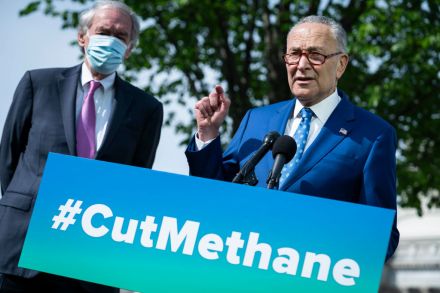
With its new Inflation Reduction Act (IRA), the government is pulling one of those infomercial tricks where they throw in a third bottle of OxiClean ABSOLUTELY FREE! Acting as if the cost of everything hasn’t already been calculated and passed onto the consumer. The IRA, you see, contains a “Methane Emissions Charge” that will impose a $900-a-ton tax on oil and gas producers that will increase to $1,500 after two years. The left is patting itself on the back for their valiant work to cut greenhouse gas emissions drastically by 2030. But here’s the thing: the energy industry is already working hard to cut emissions; it’s in their interest to do so. And when the government fines them for not capturing enough methane, guess who gets to foot the bill?

Why Covid means the big state is back

From our UK edition

History suggests that when the state expands in a crisis, it doesn’t go back to its pre-crisis level once the emergency is over. After the first world war, the Lloyd George government extended unemployment insurance to most of the workforce, fixed wages for farm workers and introduced rent controls. The second world war led to Attlee's nationalisations, along with the creation of the NHS and the modern welfare state. In the magazine this week I ask if Covid will lead to a permanently bigger state. There is another danger in all this intervention: can the country afford it? Last year, state spending exceeded 50 per cent of GDP for the first time since the end of the war.