Elon musk

The drive toward electric cars has been a disaster

Just two years ago, Mary Barra, chief executive of General Motors, declared: “We believe in an all-electric future.” She went on to claim that the challenges her company was facing in the EV market were merely temporary bumps on the road to net zero. But as Bob Dylan famously observed, things have changed. On January 8, GM announced it would take a $7.1 billion hit in charges against its earnings, of which $6 billion is due to Barra’s failed EV strategy. In a filing with the SEC, the company also warned that it would take more write-downs this year as part of a “strategic realignment of EV capacity.” The car companies made 5.4 million EVs in three years – and incurred an astonishing $20,887 loss on each one GM’s move came less than a month after Ford Motor Co.

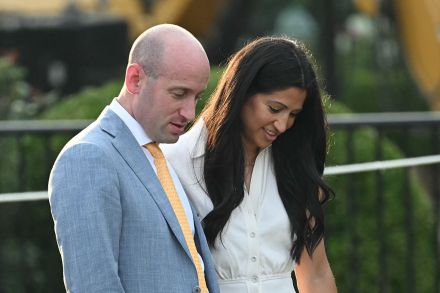
Meet Katie Miller, MAGA’s Oprah

When Trump administration figures want to do a warm, humanizing interview these days, they can’t depend on the mainstream media. It’s often adversarial or downright hostile. Chatty bro podcasters such as Joe Rogan give them room to talk, but also challenge them on policy positions. Their best bet is The Katie Miller Podcast, a show hosted by Katie Miller, the wife of Stephen Miller, Trump’s chief policy advisor. She’s quickly emerged as the Barbara Walters, or Oprah Winfrey, of the new American conservatism.

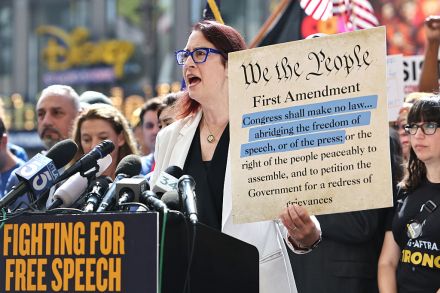
Will Congress shield the US from foreign attacks on the First Amendment?

Britain’s Online Safety Act is part of an escalating censorship war between Europe and the United States. It was sold to the British public as legislation that would protect children; in practice, it is a far-reaching internet censorship statute with explicit extraterritorial reach. The OSA purports to grant the UK’s communications regulator, Ofcom, the power to do what no one on Earth has the lawful power to do: compel US websites to censor themselves and their users. This affects everyone, not just tech firms. If the UK can impose British speech rules on US companies, then the First Amendment stops being law and becomes a suggestion. At least 29 nations, mostly America’s allies, have enacted similar laws.

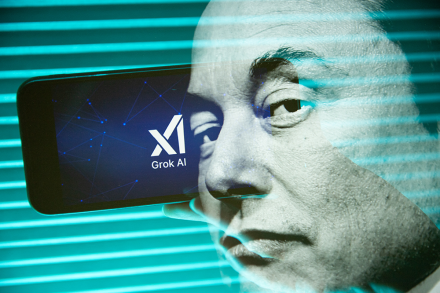
Does it really matter if Grok undresses us all?

I’ve been fat and I’ve been thin; I’ve been pretty and I’ve been plain – ugly, even. Throughout this, my self-esteem has stayed generally constant, as if you’re going to base it on something as ephemeral as physical beauty, you’re going to run out of road very quickly indeed. This objective attitude to my own appearance reminds me of a funny story from the infant days of the internet. Imagine my surprise one morning to receive a message from an unknown recipient informing me that they had film of me masturbating to online pornography which they would make available to a wider audience should I fail to pay a ransom. (Don’t judge – I was young-ish and frisky and it was all so new – I soon grew out of it.

grok

Does it really matter if Grok undresses us all?

I’ve been fat and I’ve been thin; I’ve been pretty and I’ve been plain – ugly, even. Throughout this, my self-esteem has stayed generally constant, as if you’re going to base it on something as ephemeral as physical beauty, you’re going to run out of road very quickly indeed. This objective attitude to my own appearance reminds me of a funny story from the infant days of the internet. Imagine my surprise one morning to receive a message from an unknown recipient informing me that they had film of me masturbating to online pornography which they would make available to a wider audience should I fail to pay a ransom. (Don’t judge – I was young-ish and frisky and it was all so new – I soon grew out of it.

Grok is the Botticelli of our time

From our UK edition

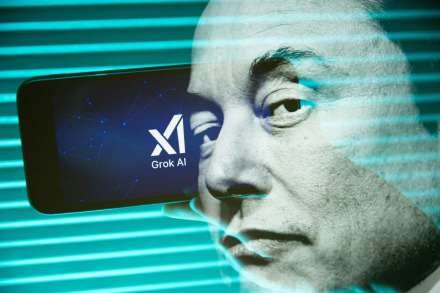
Liz Kendall, the Technology Secretary, stood up in the Commons on Monday and thundered against Elon Musk, saying the government would take urgent measures to hold him to account. The reason for her broadside is that Grok, the AI chatbot owned by Musk and now integrated into X, has been misbehaving. In the past few weeks, it has granted users’ requests to create sexualised images of women and children, causing something close to meltdown among the Musk-hating chattering classes. In the Lords, scarcely a day passes without Labour’s favourite bogeyman being wheeled out to be pelted with verbal brickbats. But how exactly does Kendall propose to rein Musk in?

How many pubs are left in the UK?

From our UK edition

Net freedoms The government was pressed to ban X over charges that Elon Musk’s AI app Grok is being used to ‘undress’ women and children. Kemi Badenoch said the Tories would copy Australia in banning under-16s from social media. What are the most extreme countries for regulating the internet and social media – using a combined score including political sites, pornography and virtual private networks (VPNs), from the most laissez-faire at 1 to the most restrictive at 12?

Why Nadhim Zahawi (and Reform) are making a mistake

From our UK edition

50 min listen

This week on Quite right!, Michael and Maddie examine Nadhim Zahawi’s dramatic defection to Reform UK and ask whether it strengthens the party’s insurgent credentials or exposes a deeper strategic mistake. Is Reform becoming a genuine outsider movement, or simply a refuge for disaffected Tories? And what does the pattern of Boris-era defections reveal about credibility, competence and the challenge of turning populist energy into a governing force? Then, Iran: mass protests against the regime have erupted onto the streets of Tehran and beyond. Are these demonstrations the prelude to real regime change – or another brutal crackdown waiting to happen? And what role should the West, and the United States in particular, play as the situation escalates?

Hegseth’s vision is more Starship Troopers than Starfleet Academy

​“Welcome to Starbase, Texas,” Elon Musk said from the stage Monday night, as the crowd whooped. “This is a city. It’s actually legally a city that thanks to the hard work of the SpaceX team, we built out of nothing. And it’s now a gigantic rocket manufacturing system. For people out there who are curious to see it, we’re actually on a public highway, so you can come and visit. Drive down the road and see the epic hardware. I think this is the first time that a rocket development program has actually been on a public highway.

Britain’s X crackdown is no joke

The internet suddenly went down in Iran last night, as courageous Iranians continued to rise up against the Ayatollah. The UK government was apparently inspired. Not by the rebels, whose plight the Prime Minister has remained remarkably quiet about – but by the mullahs’ digital crackdown. Call me a conspiracy loon, but I dare say Labour’s ire for X isn’t simply about the site’s supposedly insufficient safeguarding policies Britain’s Labour party has issued its most serious threat yet to social-media giant X – whose owner, Elon Musk, has become this rudderless government’s go-to bogeyman.

The sinister side of Grok

The X-native AI Grok exploded in popularity this weekend – as users discovered that its media tab was filled with requests to generate disrobed and scantily clad versions of images of women and children that people had posted publicly. "Put her in a bikini," users asked the AI. Grok complied with these requests freely, with no meaningful oversight or guardrails in place, automatically generating images corresponding to every prurient prompt. The ensuing discourse quickly polarized. On one side were tech nihilists, arguing that this use of AI was inevitable and therefore unsurprising. After all, anyone can already download publicly posted images and manipulate them privately.

grok

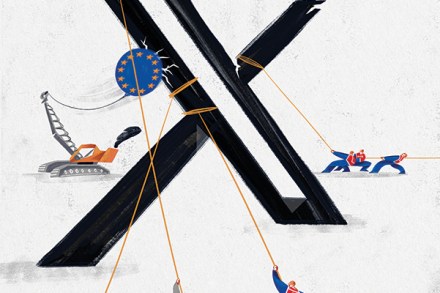
America’s free-speech war on the EU

If I were a bookie, I would be making odds now about when the European Union will finally unravel and die. Unless there is an imminent and drastic course correction, the blessed event cannot be far off.  I might need a Doomsday Clock akin to the one publicized by the Bulletin of the Atomic Scientists. Their clock hovers near midnight, which signifies nuclear Armageddon, the minute hand pushed closer or farther away from the blast depending on minatory world events. My clock would measure the EU’s proximity to implosion. Its recent decision to fine Elon Musk and his company X €120 million for “non-compliance with transparency obligations” has me nudging the minute hand closer to midnight. “Non-compliance with transparency obligations.” What do you reckon that means?

The scientific case for the existence of intelligent alien life

The foundation of science is based on the humility to learn, not the arrogance of expertise. When comet experts argued that the interstellar object 3I/ATLAS must be a familiar water-rich comet as soon as it was discovered in July, they behaved like artificial intelligence systems: only able to reflect the data sets they were trained on. For decades, the data set that established comet expertise largely comprised icy rocks in the solar system. My counterpoint is simple: humanity launched technological objects into space, so we must conclude that alien life forms could do the same. This possibility must be added to the training data set of comet experts when studying interstellar objects.

Will tech companies bend to Australia’s social media ban?

It’s all too easy to get hooked by the online world, to fall headlong into it, to spend hour upon hour immersed in it. Cyberspace has its good uses, but it also has its bad ones. Staying in control of your social media life is difficult enough as an adult, but for children it can be an especially dangerous world in which to dwell. Too often children are glued to their phones and devices, staring, scrolling, disengaged from the world around them. Many children are exposed to online harm, including bullying, grooming and shaming. Appallingly, many children are emotionally and psychologically damaged from social media exposure. Terribly, and tragically, some have taken their own lives as a result of what has befallen them online.

Trump’s cabinet is a liberal’s nightmare

“Some people will correct me. They love to correct me. Even though I’m right about everything,” President Trump was saying, but no one was about to correct the President at this December cabinet meeting, the last in a series of extremely long such affairs that TV has carried this year. At this point, YouTube might as well set up a 24-hour livestream from inside the White House, like the sorts of stunts that were popular at the dawn of the personal video era. Trump is always with us, and talking at us. Before the roundtable of cabinet members listing their accomplishments and kissing the boss’s butt, Trump talked for nearly 30 minutes.

Trump cabinet

DoGE has had its day

DoGE has been DoGE’d. The once fearsome government efficiency office has been shut down eight months before its contract officially ends in July 2026. What was supposed to be an organization that exploded traditional ways of running the federal government has turned into a damp squib.  It was established by President Trump on the first day of his second term in office. Headed by Tesla chief Elon Musk and entrepreneur Vivek Ramaswamy (who resigned early on to run for Ohio governor), it struck the kind of fear into government bureaucrats that a visit from the Red Guards might instill during Mao’s Cultural Revolution.

doge
X

The global cottage industry gaming America’s culture wars

It is the 9/11 of the blue ticks, the Hindenburg of the grifters, the dotcom bubble of the slop-peddlers. The influencer industry has been left reeling by a new function on X which allows readers to see the location from which any given account is operating. The latest update makes it possible to establish when and where an X account was set up and whether it has changed its name since then. A sensible measure, you might think, but not if X is where you make your living and do so by inserting yourself into other countries’ internal politics. There are no firm figures on how many earn a crust this way but even the most cursory glance through the Hellsite Formerly Known as Twitter will tell you the number isn’t insignificant.

The new power players running the world

From our UK edition

At the opening of The Hour of the Predator, Giuliano da Empoli describes Spain’s conquest of the Aztec empire, its doomed ruler Moctezuma II’s response (ineffective vacillation, delaying any course of action), its consequences and its relevance to politics today. It is a striking introduction to a brief, bracing and profoundly alarming book. The author argues that an alliance of tech bros and authoritarian rulers – whom he calls modern-day Borgias – are sweeping away the rules-based international order. He sees our elected leaders as comparable to the procrastinating Aztec emperor, appeasing and hesitating as the opportunity for action passes into history. Da Empoli has a peculiar vantage point.

tech

Among the lords of tech

“What’s missing?” the tech titan Peter Thiel asks me, over lunch on the hummingbird-infested patio of his house in the Hollywood Hills. He gestures at Los Angeles, laid out in the haze below us. “Cranes!” he explains. Thiel has argued for years that America has done most of its innovation in digital “bits” instead of physical “atoms” because bureaucracy, regulation and environmentalism have got in the way of the latter. While software has exploded, transport and infrastructure have stagnated. But over the next few days in Austin, Texas, and around San Francisco Bay, I see evidence this is changing.

This time it’s crypto: now the Bank of England bows to Trump

From our UK edition

The softening of the Bank of England’s stance on ‘stablecoins’ looks like another tugging of the British forelock towards the Trump regime. Stablecoins are virtual money akin to cryptocurrency, but theoretically safer because their value is pegged to the dollar or other conventional currencies. Often used by investors to buy into crypto, they’re claimed to offer a more efficient future for international payments – but also accused of facilitating crime. Two years ago, Governor Andrew Bailey decreed that stablecoins did not ‘meet the standards we expect of safe money’; other non-US regulators largely agreed. That well-known crypto player Donald Trump, however, called them ‘perhaps the greatest revolution in financial technology since the birth of the internet’.