Elon musk

The sinister side of Grok

The X-native AI Grok exploded in popularity this weekend – as users discovered that its media tab was filled with requests to generate disrobed and scantily clad versions of images of women and children that people had posted publicly. “Put her in a bikini,” users asked the AI. Grok complied with these requests freely, with no meaningful oversight or guardrails in place, automatically generating images corresponding to every prurient prompt. The ensuing discourse quickly polarized. On one side were tech nihilists, arguing that this use of AI was inevitable and therefore unsurprising. After all, anyone can already download publicly posted images and manipulate them privately. On the other were mostly

grok

America’s free-speech war on the EU

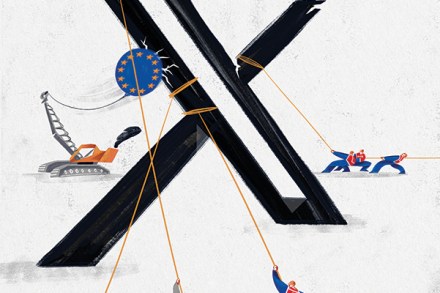
If I were a bookie, I would be making odds now about when the European Union will finally unravel and die. Unless there is an imminent and drastic course correction, the blessed event cannot be far off.  I might need a Doomsday Clock akin to the one publicized by the Bulletin of the Atomic Scientists. Their clock hovers near midnight, which signifies nuclear Armageddon, the minute hand pushed closer or farther away from the blast depending on minatory world events. My clock would measure the EU’s proximity to implosion. Its recent decision to fine Elon Musk and his company X €120 million for “non-compliance with transparency obligations” has me nudging

The scientific case for the existence of intelligent alien life

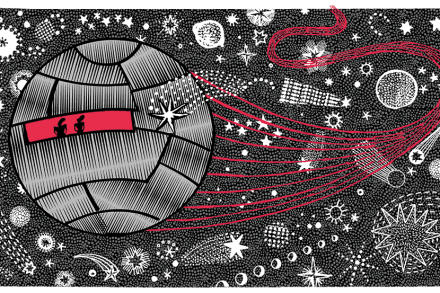
The foundation of science is based on the humility to learn, not the arrogance of expertise. When comet experts argued that the interstellar object 3I/ATLAS must be a familiar water-rich comet as soon as it was discovered in July, they behaved like artificial intelligence systems: only able to reflect the data sets they were trained on. For decades, the data set that established comet expertise largely comprised icy rocks in the solar system. My counterpoint is simple: humanity launched technological objects into space, so we must conclude that alien life forms could do the same. This possibility must be added to the training data set of comet experts when studying

Among the lords of tech

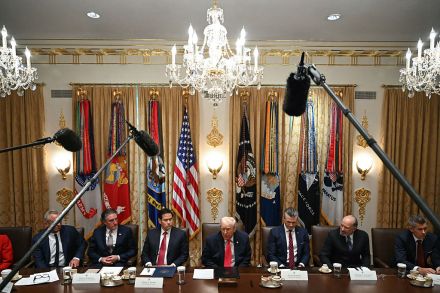
“What’s missing?” the tech titan Peter Thiel asks me, over lunch on the hummingbird-infested patio of his house in the Hollywood Hills. He gestures at Los Angeles, laid out in the haze below us. “Cranes!” he explains. Thiel has argued for years that America has done most of its innovation in digital “bits” instead of physical “atoms” because bureaucracy, regulation and environmentalism have got in the way of the latter. While software has exploded, transport and infrastructure have stagnated. But over the next few days in Austin, Texas, and around San Francisco Bay, I see evidence this is changing. Traveling with the upbeat co-founders of the Rational Optimist Society, Stephen

tech