Education

If ‘non-violent extremists’ can’t express their views at universities, where can they?

From our UK edition

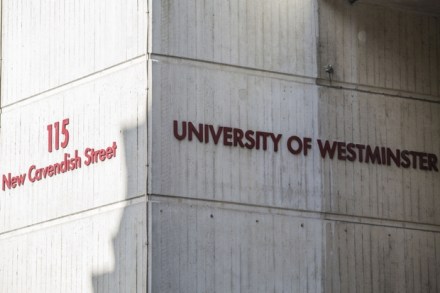
Last month, the government’s Counter-Terrorism & Security Bill became law. One provision is the legal obligation it places upon ‘specified authorities’ to ‘prevent people from being drawn into terrorism’. ‘Specified authorities’ includes universities, whose vice-chancellors made several interventions as the legislation made its way through Parliament. The Education (No.2) Act of 1996 places a duty on universities and colleges to ‘ensure that freedom of speech within the law is secured for members, students and employees of the establishment and for visiting speakers’.
E.G. West showed a way for ‘free schools’ to be truly free

From our UK edition

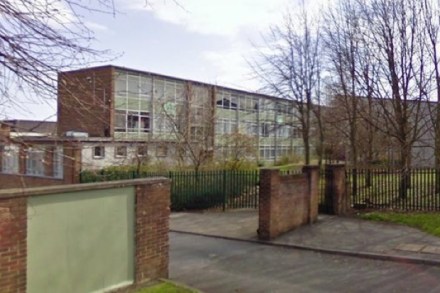
Nicky Morgan, Secretary of State for Education, has announced the closure of the Durham Free School, following scandalously one-sided Ofsted reporting about the school.  Closure would lead to less choice for parents in disadvantaged ex-mining villages here in the north-east. Local Labour MP, Mrs Blackman-Woods, says that there are surplus places available, so no free schools are required. There are surplus places, but only in schools that are perceived by poor parents as undesirable, low in academic standards and rife with bullying. There are great schools in Durham too, but these are oversubscribed. ‘Distance-based’ admissions criteria mean they’re accessible mainly to the sons and daughters of those in the best postcodes, academics, doctors and the like.

The tragedy of these sex education plans is that five year olds might miss the joke

From our UK edition

Most people look back fondly at their sex education classes, remembering the stammering, red faced teachers, the very silly jokes and the endless, irrepressible giggles. The real tragedy about this week’s proposals to teach five-year-olds about sex is that children that small may not see the funny side of it. Generations of policy makers, teachers and journalists have spent years agonising over the question, while generations of schoolchildren have spent the happy hours of the PSHE classes passing notes, thinking up absurd innuendoes and flirting outrageously, eyes shining with laughter. But perhaps the privilege of having whole lessons given over to such cheerful pastimes was only ever to be a flash in the pan.

Immigration, not money, will improve Scotland’s most deprived schools

From our UK edition

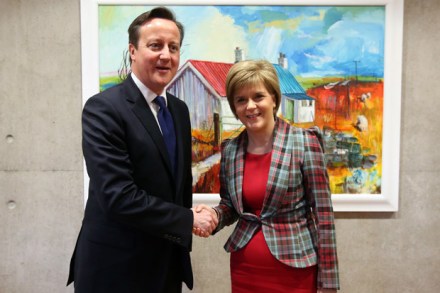
I suppose we should be thankful that Nicola Sturgeon has acknowledged there’s a problem with Scotland’s public education system, even if she’s hit upon the wrong solution. Earlier this week, the First Minister announced that the Scottish -government would be trying out its version of ‘the London challenge’, a programme carried out by the last government, to address the chronic underachievement of Scotland’s most deprived children. In the past, the SNP has deflected criticisms of its education record by pointing out that Scottish 15-year-olds did marginally better than their English counterparts in the 2012 Pisa tests. But the difference between the two groups is minuscule and both have declined dramatically since Pisa first started testing in 2000.

The trouble with Kids Company

From our UK edition

In 2006, when David Cameron was leader of the opposition, he made an infamous speech that is remembered as an exhortation to hug a hoodie. Feral youth, he said, should be helped rather than demonised. He was reaching towards what he hoped would be a new, ‘compassionate’ conservatism inspired in part by the charismatic social activist Camila Batmanghelidjh. She was the perfect lodestar for the young Tory leader. She began her drop-in centre — the Kids Company — in 1996 and within a few years, was helping thousands of disadvantaged inner-city children. She’s colourful, powerful but also a former Sherborne girl with whom Cameron and other members of the establishment felt at ease. Cameron told his shadow ministers that Camila embodied the Big Society.

Could this be the solution to the Durham Free School dilemma?

From our UK edition

A highly respected academic has stepped forward pointing education ministers towards a potentially face-saving solution to the Durham Free School dilemma. James Tooley, professor of education policy at Newcastle University has written to schools minister Lord Nash with a proposal that he should become a governor of the school, bringing with him the expertise of other colleagues from the university’s education department to beef up DFS’s leadership and governance capacity. Campaigners hope the minister will re-think the decision to close the school if he can be persuaded the school now has the necessary skills and resources on hand to improve its performance.

The Enigma Gove?

From our UK edition

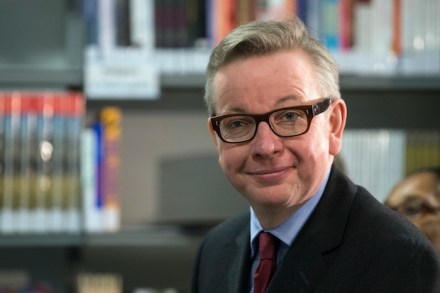
Chief Whip Michael Gove has given his first keynote speech since being politically assassinated last summer. Plucked from the frontline of reform, the former Education Secretary concluded his speech to Policy Exchange tonight, thus: 'It is often the case in history that individuals fail to appreciate the stability, the security and the steady progress they enjoy until it’s gone. It’s often the case that effective democratic institutions and progressive reforming Governments are taken for granted until they are subject to mistaken change. It is, sadly, all too often the case in politics that the urge to criticise what is in front of us rather than appreciate the risks of the untried alternative can pitch us into crisis.

One of Gove’s most important education reforms is in danger

From our UK edition

One of this week’s most important stories is tucked away in the Times’ Higher Education supplement today. It appears that one of Michael Gove’s most important reforms, putting universities—not Whitehall—in charge of A-levels, is being reversed. The article reports that the A Level Content Advisory Board (ALCAB), which was meant to check on A-levels annually, ‘is to be registered as a dormant company after it was informed by the Department for Education that it would not receive any more substantive work until at least 2017, when the first students will sit the reformed A-levels.’ Now, the Department for Education is claiming that the ALCAB has simply completed its work for the moment.

Exclusive: Nicky Morgan to approve more than 50 new free schools

From our UK edition

Nicky Morgan will announce more than 50 new free schools by the end of this month, Coffee House has learned. I understand that a protracted battle has been taking place in the Education department between the Lib Dems and the Tories, which has not been helped by a desire from some civil servants to slow down the announcement of the new schools. But I hear that Morgan has managed to secure funding from the Treasury for 54 new free schools, although fewer may appear on the approved list. Free schools are announced in three waves each year, and these 54 new free school approvals, if replicated in the second two waves, will mean the highest rate of new schools under the Tories.

Will Nicky Morgan admit she may have been wrong about Durham Free School?

From our UK edition

The education secretary gave Durham Free School (DFS) until 3 February to make representations showing why it should not have its funding agreement ended. Nicky Morgan now has the school’s response: a detailed explanation of why the DfE’s threat to close the school is unfair, disproportionate and wrongheaded. The academy trust has also served notice that it may apply for judicial review.  A critique of Ofsted’s behaviour throughout this affair has also been drawn up, saying that the chief inspector, Sir Michael Wilshaw, may have misled a commons committee.

Freezing the education budget won’t hurt pupils. Here’s why

From our UK edition

David Cameron has today been refreshingly honest about his plans for school funding in England: budgets will be flat, which (when you factor in inflation) will mean a drop of 7 per cent over the next parliament. Cue much mockery from Labour. But what will this mean for the future of education quality? Not very much, if the experience of the Labour years is anything to go by. Under Blair and Brown, school spending more than doubled while England hurtled down the world education performance tables. So if doubling the budget didn’t help, then why should freezing it hurt? The strange thing about education is that it's not so responsive to cash. A brilliant teacher is (alas) paid pretty much the same as a bad one.

If Cameron wants an ‘all-out war’ on mediocre schools, why did he get rid of Gove?

From our UK edition

It is odd to hear David Cameron promise an ‘all-out war on mediocrity’ in education. An admirable sentiment, but it’s hard to reconcile with the fact that he demoted the very person who was working so successfully for that precise aim. Here’s what he intends to say in a speech later today: 'So this party is clear. Just enough is not good enough. That means no more sink schools - and no more 'bog standard' schools either. We're waging an all-out war on mediocrity, and our aim is this: the best start in life for every child, wherever they're from - no excuses.' When a politician says ‘this is clear’ it’s a sign that he is not, really, clear. The question behind the the confusion is a simple one: how serious is David Cameron about school reform?

Spectator letters: Degrees, dishwashers, and charity catfights

From our UK edition

What’s a degree worth? Sir: Mark Mason’s article (‘Uni’s out’, 24 January) hits the nail on the head. A brief addendum: it is generally stated that graduates earn more over a lifetime than non-graduates — obviously a selling point to would-be students. This claim may be true in a very crude sense, but is meaningless without certain crucial caveats. The main caveats are so obvious they barely need stating. It depends what you study (e.g. medicine vs media studies) and what university you go to. It depends on what class of degree you get (a lower second or less may prove a disqualification for entry to many professions and jobs).

Female bishops are very, very old news

From our UK edition

Female bishops The Reverend Libby Lane was ordained as Bishop of Stockport, the Church of England’s first female bishop. — By the time the first 32 female C of E vicars were ordained in 1994, the Episcopal Diocese of Massachusetts had had a female bishop, Barbara Harris, for five years. — Yet the first Anglican woman priest was ordained half a century earlier. Florence Li Tim-Oi had been deacon at Macao Protestant Chapel in the early 1940s. When the war prevented a priest travelling from Japanese-occupied territory to administer communion, Li Tim-Oi was ordained by the Bishop of Victoria on 25 January 1944. Cash or card?

Come on, Tristram Hunt, if you think you’re hard enough

From our UK edition

For a brief moment earlier this week, I thought education might become an issue in the general election campaign. The Commons Education Select Committee’s lukewarm report on the government’s academy and free school programmes was leaked to the Guardian on Monday and the accompanying story claimed that Labour hoped to open a ‘second front’ following the ‘success’ of its attacks over the NHS. ‘It is undeniable that the last Labour government dramatically improved school standards in secondary education,’ said Tristram Hunt, the shadow education secretary. ‘But the progress that we made… is being undone by a government that is obsessed with market ideology in education.

The Tories have one real success in government – and they’re scared to talk about it

From our UK edition

The most significant achievement of this coalition, the only thing they really have any right to crow about, and possibly all that posterity will ever remember them for with anything approaching gratitude, will not be the ‘long-term economic plan’ they never cease to talk up, but the school reforms that the Conservatives seem almost to want to deny as the general election approaches. This reticence is a mistake. With many voters grown so cynical about mainstream politics that they’re ready to throw in their lot with any passing populist chancer, here is a rare success story that needs shouting from the rooftops.

Nicky Morgan: British values test isn’t just about Muslim schools

From our UK edition

Nicky Morgan has launched a rather strident defence of the government’s ‘British values’ agenda this evening, after fears that it is being used to punish schools unfairly. The Education Secretary recently announced that the Christian Durham Free School would close after Ofsted inspectors said teachers were failing to challenge ‘racist words and sexually derogative and homophobic terms’ and that it was failing to promote the values set out by ministers. In a speech to think tank Politeia, Morgan said: ‘I’m afraid I have no sympathy for those who say that British values need not apply to them, that this should purely be a special test for schools in predominantly Muslim communities or our inner cities.

Oftsed’s campaign against Christian schools: now Gove is gone, the Blob is back

From our UK edition

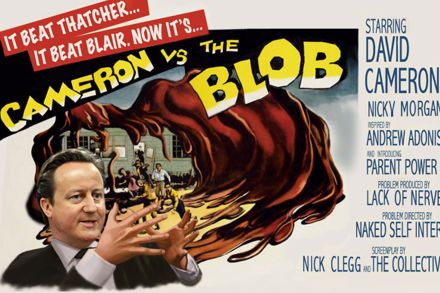
When Ofsted inspectors allegedy asked primary-age girls at Grindon Hall Christian School, Sunderland, whether they knew what lesbians did in bed, they (apparently) received insufficiently detailed answers. Also, pupils displayed scant knowledge of Hindu festivals. Now the free school has been placed in special measures. It may be that Grindon Hall is a nest of Christian fundamentalist bigotry. I rather doubt it, though. Likewise, I'm unconvinced – to put it mildly – that St Benedict's Catholic comprehensive, Bury St Edmonds, 'failed to promote British values' by neglecting citizenship classes. A better explanation comes to mind. Having claimed the scalp of Michael Gove, 'the Blob' is bouncing jubilantly around the Department for Education.

Why tomorrow’s parents won’t want their children to go to university

From our UK edition

Could the current generation of parents be the first ones who won’t want their children to go to university? Until now that mortarboard photo on the sideboard has always been the dream, visual proof that your offspring have munched their way to the top of the educational food chain. Advancement by degree. But that was before tuition fees. Now there’s a price tag attached to your little one’s ‘ology’ (to quote Maureen Lipman in those BT ads), how many people will automatically see it as a good thing? Perhaps more of us will refuse to prostrate ourselves before the great god Uni? If so, that can only be a good thing. I attended Manchester University between 1989 and 1992.

Could Labour limit its tuition fee cap to ‘useful’ subjects?

From our UK edition

One of the really big policy areas that Labour has yet to resolve before the General Election is how it can lower the cap on tuition fees to £6,000. University Vice-Chancellors have been in talks with the party for a very long time, and have been urging Ed Balls and Ed Miliband to get on with making a decision about their future funding arrangements. One of the things delaying this decision is that there isn’t really enough money to get the cap down to £6,000 for all degrees. A couple of the papers have suggested in the past few days that the party may only lower the cap for technical degrees - which are cheaper for the taxpayer.