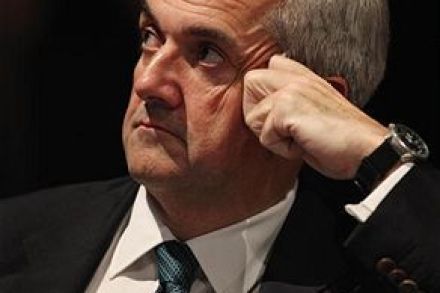
Ed miliband

Miliband’s “national mission” lacks a mission plan

From our UK edition

I didn't expect to be overwhelmed by Ed Miliband's speech to the Progress Annual Conference today, but neither did I expect to be quite so underwhelmed. This was meant to be his Great Exposition of how, as he put it his introductory remarks, Labour "will win the next election". But what we got was a straighforward list of some of the major themes of his leadership so far: the "squeezed middle," the prospects for young people, community breakdown, and so on and so forth. These are all worthwhile areas for debate, but Miliband has dwelt on them before now, and more persuasively — such as in his speech to the Resolution Foundation in February. Repeating them may help make the point, but it doesn't mean that Labour have any solutions.

Cable’s latest warnings and provocations

From our UK edition

My favourite part of the Guardian's interview with Vince Cable today? When the business secretary says that his sermonic prescriptions from during the crash are of "enduring relevance" now. But there's more to the article than self-aggrandisement, not least Cable's gloomy overview of the British economy. It's not quite the same as Alastair Darling's Guardian interview in August 2008, but there is a touch of that here. "I think it is not understood that the British economy has declined by 6 or 7 per cent — it is now 10 per cent below trend," says Cable, "Britain is no longer one of the world's price setters. It is painful.

Miliband tries to explain himself

From our UK edition

As the weekend drifts closer, there is a case that Ed Miliband has just enjoyed his best week as Labour leader. Not really from anything he has done — although his PMQs performance had more vigour than usual — but thanks to the backwash from the Ken Clarke calamity. MiliE's spinners could barely have dreamed, even a few days ago, that their man would gain the the fiery approval of The Sun on matters of law and order. But that is effectively what they gained yesterday. "Labour is now tougher on crime," bellowed the paper's leader column, "than our Tory-led government." Even today their editorial laments, "so much for David Cameron's pledge to provide a young, modern government in tune with 2011 Britain.

Cameron faces the barmy army

From our UK edition

Ed Miliband came to PMQs hoping to turn the House into a rape crisis centre for the Justice Secretary. Quoting from Ken Clarke’s tricky Radio Five interview earlier he criticised him for distinguishing between ‘serious’ and ‘other categories’ of rape. Would the PM distance himself from his minister? Cameron claimed not to have heard the interview – conveniently enough – and pointed out that the policy is still at the consultation stage. His priority was to correct a system in which all but 6 per cent of reported rapes result in no conviction at all.

Is Clarke’s fate sealed?

From our UK edition

Ken Clarke is in the middle of a media firestorm following his comments on rape. The remarks were typical of Clarke’s dismissive attitude to the victims of crime and Downing Street is clearly furious about them. It has ruled out sacking him, but I suspect that Clarke's fate is now sealed come the much expected March 2012 reshuffle. Clarke is of the never explain, never apologise school of politics. But Number 10 clearly want him to ‘clarify’ his remarks. I suspect that Clarke, who has been busily defending his comments, will not want to do that. This could well be the cause of the next row between Clarke and the centre. Leaving aside the dubious content of the Justice Secretary's comments, his timing was also particularly unfortunate.

PMQs live blog | 18 May 2011

From our UK edition

VERDICT: That was probably the most straightforward PMQs that Ed Miliband will ever experience. Thanks to Ken Clarke, the Labour leader had several shots into an open goal — and most were excuted efficiently, if not skilfully. Cameron was left in an unforgiving position, and he just about hung in there, eventually mustering some sort of defence and then turning it around to Labour's mismanagement of the criminal justice system. It was an intriguing exchange, not least because it presaged what could become a major problem for the Tories — their crime and justice policy — and how Labour might exploit it. And it was all supplemented by a set of backbench questions that ran the gamut from blistering to blithering. For once, a PMQs to really remember.

The man who hopes to win English votes for Labour

From our UK edition

Maurice Glasman and Ed Miliband do not think as one. But Miliband's Favourite Thinker™ is an undoubted influence on the Labour party — and, as such, it's worth tuning into his ideas from time to time, if you have a tolerance for such things. Glasman's "Blue Labour" philosophy has already enjoyed heavy exposure this year, and he has an interview in today's Times (£) to explain it even further. If you're not minded to buy, borrow or steal a copy of the Thunderer, then here are a few observations. First, it's striking just how much Glasman dwells on the personal. "If you want to know everything that was wrong about Scottish Labour and Labour," he urges, "then just look at the career of Gordon Brown.

From the archives – Labour’s road to recovery

From our UK edition

The coalition is just a year old and Coffee House compiled an exhaustive Coalition A to Z to mark the occasion. It’s also a year since the Labour leadership saga opened. Writing in today’s Times (£), Phil Collins argues that party has not made much progress from its position a year ago, which he thoroughly examined for the Spectator last May. Beyond Brown and Blair, Phil Collins, The Spectator, 15 May 2010. So, they were looking in the wrong place all along. For years now the Labour party has been seeking a steely assassin to deal with its unelectable leader. Finally, where James Purnell failed tragically and Geoff Hoon failed farcically, Nick Clegg has succeeded.

Gove takes the attack to ailing Burnham

From our UK edition

There are intriguing manoeuvres on the education front today. Michael Gove has written a letter to Andy Burnham, calling on his counterpart to guarantee to protect the Academies programme. There’s nothing unusual in this: politicians are always writing pointless letters to each other. But the timing of this one is quite significant, coinciding as it does with former Blair spinner Peter Hyman’s decision to create a free school, with, it is understood, the tacit support of Andrew Adonis. As I’ve written before, Burnham has forsaken his reforming instincts. Convinced that Gove is a weak link, he has not seen the need to leave ‘old Labour’s’ comfort zone on education. Now the mood seems to be turning against him.

Garnering third party support

From our UK edition

Third party support is an important political asset. Nobody trusts politicians any longer (when did they ever?) and so it’s useful to draft in supposedly apolitical backers to support your plans. Yesterday’s PMQs was a case in point, with David Cameron and Ed Miliband competing for support from GPs. As Jim Pickard writes over on the FT blog, having 42 GPs on side is a little less impressive than having support from the Royal College of GPs, which has 42,000 members. So the PM is seen to have emerged from the exchange as the loser. Therein lies a problem for the government. Since the general election, the Tories seem to have become decidedly worse at garnering third party support for their policies. Before the poll they did excellently.

Attacking Harry Flashman is a Fool’s Game

From our UK edition

So Ed Miliband brought up the Flashman thing at Prime Minister's Questions today. How rum. Now I think it would be sensible for the Prime Minister to be polite to his opponents. There's no need to belittle Mr Miliband when he does such a good job of doing so himself. If Labour think attacking Cameron's privileged background is a winning tactic then good luck to them. I rather suspect the public have already priced that in to their view of Cameron (and George Osborne) and so this ploy cannot do much more than entertain Labour's backbenchers. I suppose Labour are thinking of the Harry Flashman* of Tom Brown's Schooldays.That Flashman was a bully eventually expelled from Rugby (for drunkeness).

The Coffee House A-Z of the Coalition: G-M

From our UK edition

Here are letters G to M in our alphabetical guide to the Coalition's first year. A-F were covered here. G is for Gaffes The coalition, happily, has not endured anything like a Gillian Duffy moment. But there has been a decent smattering of embarrassments and gaffes. Below is a brief selection, but CoffeeHousers can nominate others in the comments section: https://www.youtube.com/watch?v=0nOhqo-47P8 https://www.youtube.com/watch?v=6_bFjZ27_ug https://www.youtube.com/watch?v=1wgZFb0Ycmg H is for Hidden talents A brief mention for those ministers who have exceeded expectations, or who have been quietly effective in their roles. Foremost among them has to be Theresa May, the Home Secretary.

A mixed bag for the coalition at PMQs 

From our UK edition

So much for the de-Flashmaning project. At PMQs, a tetchy Cameron doled out his usual number of insults, comparing Ed Miliband to Eddie the Eagle Edwards. Frankly, I don’t think this really matters as long as Cameron appears to be in control of his temper, which isn’t always the case. But Ed Miliband definitely raised a chuckle when he told Cameron to ‘calm down, dear.’ But, perhaps, the most noticeable thing about today’s PMQs was the behaviour of the Liberal Democrats. Nick Clegg joined in with all the jeering at the Labour front bench, something which he very conspicuously didn’t do in the last few weeks. Chris Huhne happily chatted away to Michael Gove and two Lib Dem MPs asked patsy questions of the PM.

PMQs live blog | 11 May 2011

From our UK edition

VERDICT: An inconclusive sort of PMQs, where neither leader particularly triumphed, nor particularly sank. Ed Miliband was persistent, and more aggressive than usual, with his questions on the NHS — but failed, really, to properly discomfort the PM. Cameron dwelt lazily on the extra money going into the service, but it was enough to carry him through the session. Perhaps the most striking moment was when, during the backbench questions, Cameron pointed out that "[the Tories] were the only party at the last election to promise [real-terms spending increases for health]. If it wasn't for us, it wouldn't be happening." This is, I suspect, all part of the new drive to distinguish the two parties of government. But it will have jarred with some listening Lib Dems nonetheless.

Labour’s New Strategy: Fight the Tories

From our UK edition

You might think this should have been their strategy all along. But just as Labour in Scotland misidentified their primary enemy, concentrating on the Conservatives when they should have been opposing the SNP so Labour in London has spent the past year looking for monsters in all the wrong places. Peeved by being thrown from office after saving the world, Labour have since moaned and whined and whinged about how beastly the Lib Dems are and how, in some rum fashion, it's unfair that they've broken their promises and are dancing with the Conservatives. Never mind that the Tories made a better offer.  Still, while this has not been much fun for Nick Clegg and his camp followers it's been quite good news for David Cameron.

Huhne on the rack

From our UK edition

It may not be reflected in the popular vote, but politics is still mostly about the Liberal Democrats this morning. We have Ed Miliband's latest sally for their affections. We have the usual veiled threats and dread innuendo from Vince Cable. And then there's the weird, but piercing, accusation on the cover of the Mail on Sunday: Chris Huhne pressurised others – and, specifically, a constituency aide – to take speeding points on his behalf, as he didn't want to lose his driving licence. The accusation, it is said, is inspired by rumours spread across Westminster – and now by testimony from Huhne's former wife. While, for his part, the Energy Secretary is denying it all. Whomever you believe, the story has flared up at an intriguing time.

It’s official: Britain says NO to AV

From our UK edition

The count hasn't quite finished yet, but the Noes already have it – having crossed the threshold for victory only a few minutes ago. The official Electoral Commission website is lagging a bit behind, but it captures just how comfortable this win has been for the defenders of FPTP. So comfortable, in fact, that you imagine we're done with major voting reform for at least a generation. And for the Lib Dems, Ed Miliband and the Yes campaign, the recriminations that were simmering away earlier can now come to a boil. What joy. We will update this post as soon as the final tallies are available. UPDATE: Final results shown in the pie chart above.

Another disappointment for Ed Miliband

From our UK edition

The final tally from Wales is just in — and it's a minor disappointment, on a day of many disappointments, for Ed Miliband. There was a time when Labour looked set for a comfortable overall majority in the country. But it isn't to be. They did gain four seats, yet that leaves them one short of an overall majority. Now, with thirty seats — exactly half of those in the Welsh Assembly — they will have to make do with a tighter, working majority. Far from terrible, but not the red groundswell that Miliband might have hoped for. The problem for Miliband is the overall picture: a precarious sort of victory in Wales; solid, but unspectacular, results in England; an evisceration in Scotland; and, most likely, defeat for AV.

Surprise, surprise … the Lib Dems are taking a battering

From our UK edition

If you fell asleep expecting heavy losses for the Lib Dems, then you will not have been disappointed upon waking up. At time of writing, around 100 English councils, comprising roughly 2,400 councillors, have declared their results – and the yellow brigade have already lost four of them, along with 270 councillors. There's some way to go yet, so the picture could alter, but Labour appear to making sweeping gains, while the Tory vote is holding unexpectedly firm. As it stands, the local wing of Cameron's party has actually gained a council, along with 22 councillors in the process. Stir in the likely result of the AV referendum, and the Tory leader is looking like a net winner on the night.

The ghost of David Miliband hovers over Ed’s election results

From our UK edition

While the focus remains fixed on the dramas of Coalitionville, it's worth remembering that today's votes are meaningful for Ed Miliband too. The Labour leader may not be facing the prospect of resignations, nor even outcry, at their various outcomes. But this is, nonetheless, the first major electoral moment of his leadership. He might well be judged on it. In which case, much will depend on the extent to which Labour advances in England have already been priced into the electoral calculus. If the party's footsoldiers regard sweeping gains — of perhaps around 1,000 seats — as some sort of default, then attention may turn instead to the turnaround in favour of the SNP in Scotland, and to the likely defeat for Yes to AV.