Ed miliband

Why are the unions frightened?

From our UK edition

Labour has only ever won a general election from the autumn of 1974 onwards when its leader has been called &"Tony Blair”. Four other leaders tried, but they were not called &"Tony Blair,” and Labour paid the price. I find it hard to credit the left’s failure myself sometimes, and, equally, find it easy to understand how Labour supporters became riddled with self-hatred and self-doubt as they saw ‘their’ Blairite government in action. But it is going a bit far for Paul Kenny of the GMB to deal with the compromises of the past by calling on Labour to declare the Blairte think tank Progress an anti-party organisation and ban it     I won’t detain you for long with the obvious objections.
Another voice: It is time for new trade unions

From our UK edition

The attack on Progress by the GMB union at its annual conference is odd and reflects the uncertainty of trade unions as they try and work out their role and status in a 21st century which is proving very unfriendly to trade unions across the world. In the United States, only 7 per cent of the private sector workforce is unionized. The figures in France are similarly low. In Britain, TUC membership has shrunk for the fourth year in succession.   Union bashers may rejoice, and certainly there are Tory MPs who think the last great bit of Thatcherite unfinished business is the extirpation of organized labour.

Lord Leveson’s generation game

From our UK edition

It was back to the future at the Leveson inquiry today, as Sir John Major suggested how the press might be regulated. He was calm and confident, launching the odd softly-spoken salvo at former enemies, among them Rupert Murdoch. He said: "Certainly he [Murdoch] never asked for anything directly from me but he was not averse to pressing for policy changes. In the run up to the 1997 general election in my third and last meeting with him on 2 February 1997 he made it clear that he disliked my European policies which he wished me to change....If not, his papers could not and would not support the Conservative government.' This account does not quite chime with Murdoch's evidence to the inquiry in which he said, 'I have never asked a prime minister for anything.

Miliband plays the national identity game

From our UK edition

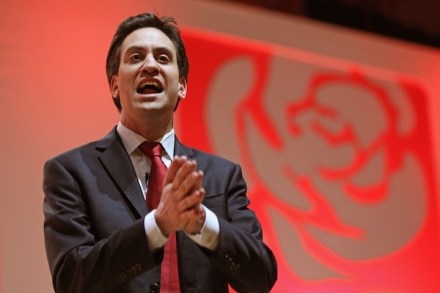
Ed Miliband's speech last week, in which he grappled with questions of Britishness, identity and Unionism, was a worthy effort. By which you will grasp that it was also, in the end, not quite good enough. The Labour leader spoke as though he had only recently appreciated — or had brought to his attention — that national identity on these islands is often a matter of choice and that — insert obligatory Whitman reference here, please — many people have multiple, layered identities that may, at times, even seem to contradict one another. Gosh, you think?   And, alas, he foundered in the Q&A when he told one inquisitor: ‘People can be Scottish and British, it's OK. And if they feel primarily Scottish that's fine too.

Labour’s October putsch against Hodges

From our UK edition

Comrades! There is a traitor in our midst. Word reaches Mr Steerpike that the phones are red hot in Labour circles as party hacks consider expelling a vocal enemy of the leadership.    Dan Hodges — Labour insider turned Telegraph writer — has been a vociferous critic of Ed Miliband. He also hated Ken Livingstone so much that he urged his readers to vote for Boris. Now delegates to this year's Labour Party Conference are being sounded out on whether they would support a motion to have the fiery scribe banished from the party.    The motion will appeal to the Labour National Constitutional Committee to expel Hodges on grounds that he campaigned against an official Labour Party candidate.

Labour’s education dilemma

From our UK edition

The Labour Party has a problem with education. On the one hand, it recognises that the academies programme which it inaugurated is very popular with parents. But on the other hand, it knows that the unions, upon which it depends financially, are opposed to reform. This creates tension where policy is concerned: how can the party satisfy voters and the unions? This tension is embodied by the reform-minded shadow education secretary Stephen Twigg (a driving force behind the original adoption of academies), who appeared on Andrew Neil’s Sunday Politics earlier this morning. His words (and there were a lot of them) speak volumes about the party’s difficulty with the word ‘academy’.

Ed Miliband embraces Englishness, but still has to grasp the nettle on immigration

From our UK edition

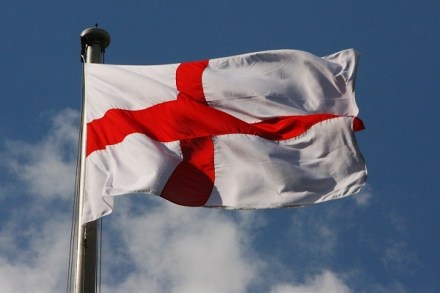
I hope that CoffeeHousers, regardless of political affiliation, will welcome a speech by a Labour leader that is explicitly patriotic, about England as well as the United Kingdom. As Ed Miliband said today, Labour has too often seemed either uninterested in Englishness or embarrassed by it, when there is nothing in its history and values that justifies this. Miliband was also right to emphasise the legitimacy and strength of ‘multiple identities’ — whether English and British, Scottish and British, Indian and British, or British and Muslim. And he was right to urge the English to ‘embrace a positive, outward looking version’ of national identity.

Miliband resists temptation

From our UK edition

There has been much speculation that Labour might insist on a referendum on Europe. This has been fuelled by numerous factors: the parlous state of the Eurozone, the increasingly likelihood of a 2-speed Europe and, above all, the fact that David Cameron doesn’t want the Tories to ‘bang on about Europe’, especially when in coalition with the Lib Dems. There have been a series of high-profile Labour interventions on the subject in recent weeks. Both Peter Mandelson and Ed Balls, arch-schemers both, have mulled the question in public, and the appointment of Jon Cruddas, a pronounced Eurosceptic, as the party’s policy reviewer, tickled fancies still further.

Cameron’s attack on Balls is strangely endearing

From our UK edition

Ed Miliband had it easy at PMQs today. The government is bleeding in all directions. And a further haemorrhage has arrived in the shape of Adrian Beecroft, a government adviser, whose proposal to relax employment law has delighted the Tory right and incensed the soft-and-cuddly Lib Dem left. ‘A proposal to fire at will’, is how Mr Miliband described the Beecroft plan. Did the Prime Minister support it or did he agree with the Business Secretary who has covered it in scorn? Cameron didn’t so much duck the question as swan straight past it. He pretended it wasn’t there. Instead he cherry-picked some positive footnotes from yesterday’s IMF statement on our economy and announced that everything is rosy in the garden.

All eyes on Hollande

From our UK edition

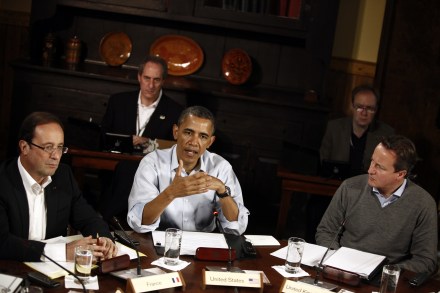
Have you noticed the weird hold that François Hollande has over our politics? If you haven’t, then let me tell you: his name has been almost inescapable in Westminster over the past couple of weeks. Even in PMQs this week, David Cameron and Ed Miliband couldn’t resist of spot of Hollandery. Behind-the-scenes, too, there is much consideration being given to how the new French President should be treated. Political strategists recognise, as I’ve suggested before, that his election could be a significant moment in the life of the Eurozone and the European Union.

Cameron can no longer laugh off Ed

From our UK edition

The Cameroons have long taken comfort in their belief that Ed Miliband will never be Prime Minister. They have seen him as a firebreak between them and electoral defeat. Three things have driven their conviction that the Labour leader will never make it to Number 10. First, their belief that he fails the blink test: can you see him standing outside Number 10? Second, the next election will almost certainly be fought on the economy, Labour’s weakest area. Their final reason was a sense that he would never get the full support of those on the Labour side who know how to win elections. But recent events suggest that this confidence that Miliband will lose the next election might be misplaced.

The View from 22: Greece is burning

From our UK edition

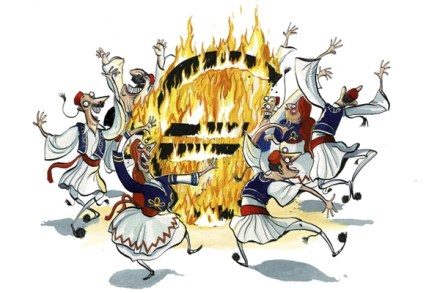
The upcoming Greek elections will push the nation into a confrontation with the European authorities, reports Faisal Islam, the economics editor of Channel 4 News, in his cover feature for the latest issue of The Spectator. And in this week's episode of The View from 22 podcast he provides an insight into the changing attitudes he witnessed during his most recent visit to Athens last week: 'Six months back, there was certainly a high stakes game of poker. But to me, it was pretty clear 6 months ago that the Greek people would do what was necessary to stay in the Euro. When you asked people on the streets, politicians, businessmen, yes things were taken to the edge of the abyss. They were told to peer over but they would still go for the Euro.

Cameron injects some anger into a playful PMQs

From our UK edition

Strange mood at PMQs today. Rather good-natured. Like a staff awayday with both sides joshing each other for fun. A Tory from the shires, Pauline Latham (Con, Mid-Derbyshire), stood up in her best garden-party dress and made this lament: ‘My constituents are having a very difficult time at the moment.’ Labour MPs cheered like mad. They wouldn’t have done that before the local elections. Cameron and Miliband were in a similarly playful mood. After an enforced separation of two weeks they seemed almost glad to see one other. Ed Miliband charmingly conceded that today’s drop in unemployment was welcome. And Cameron welcomed this welcome from his opponent.

PMQs live blog | 16 May 2012

From our UK edition

<a href= "http://www.coveritlive.com/mobile.php/option=com_mobile/task=viewaltcast/altcast_code=b4764a0fc6" _fcksavedurl= "http://www.coveritlive.com/mobile.

Miliband’s reshuffle isn’t necessarily to the left

From our UK edition

Ed Miliband’s reshuffle turned out to be a rather small affair. The news out of it is that control over the policy review passes from Liam Byrne to Jon Cruddas, although Byrne continues to shadow Iain Duncan Smith. Given that Byrne is a Blairite who has been pushing for a tougher line on welfare, and that Cruddas rebelled to vote against the second reading of the welfare reform bill, some will see this as a shift to the left. But Cruddas is a more interesting thinker than that. The Blue Labour philosophy that he is an advocate of is, in many ways, a rather socially conservative view of the world. He’s also a Eurosceptic; he was the link man between the No to the single currency campaign and the unions.

Jokes and jibes follow the ‘gracious speech’

From our UK edition

The Queen’s Speech debate is a unique mix of parliamentary variety show and proper politics. The debate was opened by Nadhim Zahawi — who combined humour with some serious points to good effect — and Malcolm Bruce, who gave a rather worthy speech. Ed Miliband then kicked off the more political part of proceedings. Miliband, who no longer has a kick-me sign attached to him when he gets up to the despatch box, is clearly still exulting in the local election results. He scored the best hit of the debate when he complimented Zahawi on his speech. Noting that the Tory MP was the co-founder of YouGov, Miliband joked ‘I’ve spent the last 18 months thinking he has a lot to answer for.

Have the Milibands got Hollande fever?

From our UK edition

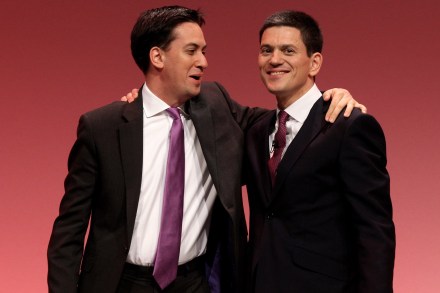
We’ve grown so used to regarding Ed and David Miliband as mutual nemeses that it’s strange to see them operating as a tag team today. The younger brother has delivered a fiery attack on the ‘unfairness and economic failure’ of the coalition, while the elder brother has an article in the Mirror arguing that the government is ‘Wrong about how to grow the economy in the modern world’. There’s also another article by the latter in the Times (£), just in case you haven’t had your fill of MiliCommentary. Much of what they say is unsurprising, but some things do stand out from their twin attacks nonetheless. The first is their insistence that the coalition isn’t just incompetent, but also ‘wrong’.

The Boris factor

From our UK edition

Boris Johnson’s victory in London is a remarkable achievement. He has won re-election in a Labour-inclined city against the backdrop of a Tory-led government making cuts and a country in recession. He has defied the national trend and, indeed, the trend in the capital itself given the results in the assembly elections. This triumph proves his vote-winning credentials in a way that his victory four years ago, secured in very favourable circumstances (Labour was in a poor state as Gordon Brown stumbled from disaster to disaster), did not. In Downing Street, there’s relief that Boris made it over the line; a Labour victory in London would have made this undeniably Ed Miliband’s night. But Boris will now be a force in the land.