Economy

Both leaders left smiling after PMQs

From our UK edition

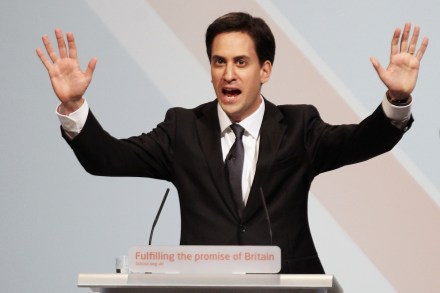
Today was one of those PMQs when you sensed that both sides were fairly happy with how it had gone. Ed Miliband turned in one of his stronger performances, cleverly splitting his questions and so allowing himself to have a go at both the economy and the coalition’s troubled NHS reforms. Cameron, for his part, got through what was always going to be a difficult session for him after this morning’s negative growth numbers.   Strikingly, there were four planted Tory questions on the benefits cap. The Tories know that Labour’s vote against it compounds one of their biggest vulnerabilities, the sense they are the party for people on benefits and not those in work.

Bad news doesn’t have to be surprising

From our UK edition

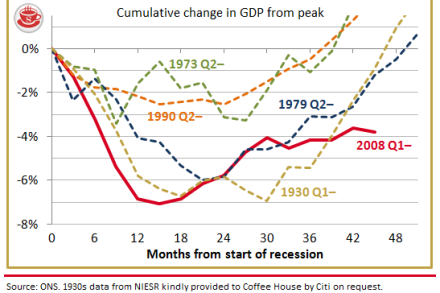
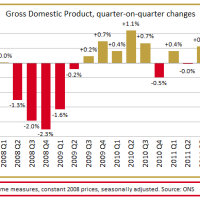
I'm still of the mind that Westminster fusses too much about these quarterly growth figures, particularly when parts of the country have been in economic decline for decades. But there's no doubting that they have the capacity to shift the political mood, both here and around the country. There is something disheartening about the idea that the economy returned to shrinkage in the final quarter of last year (even if today's preliminary figure of -0.2 per cent might be revised upwards, or downwards, in due course). You can expect Ed Miliband to make much of it in this afternoon's PMQs. The politics of the situation are not stacked entirely against George Osborne, though. His major consolation today is that everyone expected this sort of minor contraction.

Obama delivers his pitch for a second term

From our UK edition

A Romney-seeking missile. That was what much of Barack Obama's State of the Union Address amounted to last night. He didn't mention the Republican presidential challenger by name, of course. That would have been too obvious. But he did dwell on those sorts of issues around taxation and jobs — including his ‘Buffett Rule’, by which, we learn, millionaires should pay at least a 30 per cent tax rate — that have been causing Romney trouble. To underline the point that ‘a billionaire [should] pay at least as much as his secretary in taxes’, Warren Buffett's secretary was even among the Obamas' guests for the evening. Obama's ploy, when presenting all this, was to be upfront about his own privilege.

Osborne owes Darling an apology

From our UK edition

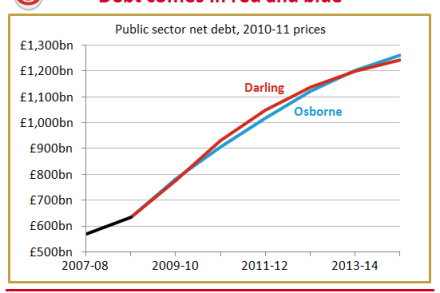
Britain's national debt rose to over £1 trillion last month, and will never return below this threshold. George Osborne is increasing net debt by 61.5 per cent in real terms over this parliament, more than the 59.9 per cent which Labour proposed when it fought the last election. Here's how the OBR's current projections for debt contrast with what Darling proposed in his last Budget: At the time, Osborne said Labour's debt plan was reckless and unsustainable. I think he owes Alistair Darling a generous apology. Then, Darling said he'd halve the deficit over four years. Too slow, said Osborne. Now, he's taking five years to do it – as the below graph shows: Osborne has kept to his spending plans, which cut departmental totals by 2.

UK government debt hits £1 trillion

From our UK edition

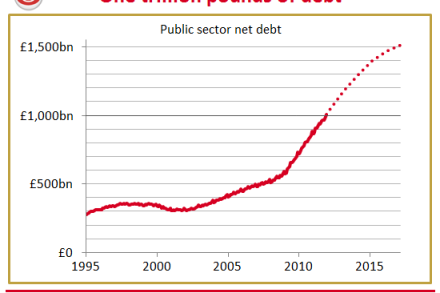
New figures out today show the UK's public sector net debt at just over £1 trillion for the first time ever. In the first 19 months since it took over, the coalition added £225 billion to the £779 billion debt it inherited. And it's projected to rack up another £390 billion by the next election.

A Chris Huhne prediction that didn’t come true

From our UK edition

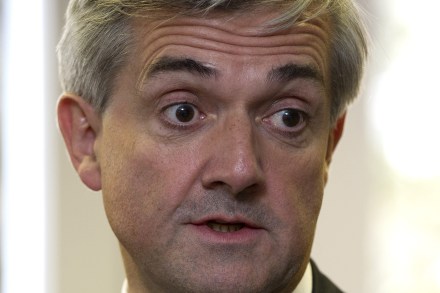
Chris Huhne attacked David Cameron for the EU veto in Cabinet back in December. At the time, one Cabinet minister told me that part of Huhne’s critique was that Cameron had scuppered the chances of a Liberal Democrat MEP, Sharon Bowles, being reelected as chair of the European Parliament’s Economic and Monetary Affairs Committee, which deals with financial services.   But Bowles has been reelected. In a Lib Dem press release welcoming this, Nick Clegg declares that: ‘As party leader, I am proud that we have a leading Liberal Democrat in such a prominent and powerful position on the international scene. As UK Deputy Prime Minister, I am delighted and relieved to know that the EU financial services brief is in such expert hands.

Sorry, Tristram — but capitalism is just what the British public does

From our UK edition

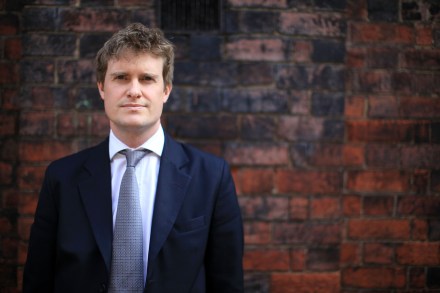
Tristram Hunt, the historian and Labour MP, has written a brilliant rebuttal to my piece in the Telegraph last week, in which I said that capitalism is hardwired in Britain’s DNA. Socialism, he says, is also hardwired into our country’s mindset. Writing for Comment Is Free, he says: ‘There is another story of Britishness a long way from the template of Cameron and the Spectator.

What today’s immigration numbers tell us

From our UK edition

During the leaders debates before the last general election, David Cameron declared that he wanted to make immigration a non-issue and he would go about it by reducing immigration numbers from hundreds of thousands a year to tens of thousands a year. He hasn’t succeeded in the second objective — more than half a million people arrived here in 2010, only 30 per cent of whom were from the EU — and he most certainly hasn’t succeeded in the first. At least if the reaction to today’s revelations about immigrants on benefits is anything to go by.

Cameron’s capitalism

From our UK edition

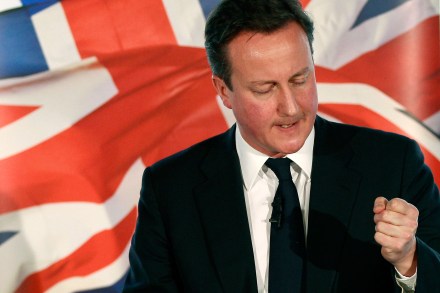
Ever since Ed Miliband’s ‘predatory capitalism’ speech at the Labour Party conference, the future of capitalism has been a subject that has much occupied our MPs. Clegg made his speech on Monday, and Cameron delivered his yesterday. I have had plenty to say about the coalition government’s inadequate economic policy, and its inability to stoke growth. But Cameron’s speech was impressive, and it’s worth going into in some detail. I look at it in my Telegraph column today. Much rot is spoken about capitalism. It is not an ideology, there is no rule book you can tweak: it is simply the name given to the system where people trade with each other the world over.

How Cameron sees the economy

From our UK edition

Today’s speech by David Cameron is one of those ones that give you a real insight into how he sees the world. Cameron said that he wanted to see an ‘insurgent economy, where we support the new, the innovative and the bold’. He talked about the need to ‘encourage the adventurous spirits who challenge the status quo and declared that he admires ‘more than almost anything the bravery of those who turn their back on the security of a regular wage to follow their dreams and start a company’. This reveals something important both about Cameron personally and how he sees the economy. The people that Cameron respects are not the CEOs of established companies but the entrepreneurs who are creating dynamic, new companies.

Miliband’s proximity problem

From our UK edition

Ed Miliband is on unusually assertive form this morning. His observation in the FT that ‘my speech to Labour’s annual conference was not — I think it is fair to say — universally well-received’ is not, I think, intended self-deprecatingly, but rather self-congratulatory, as though he were the only politician calling for a ‘responsible capitalism’ at the time. And he's repeated that suggestion elsewhere: in a short statement for Which?, and in a Labour briefing document — entitled Who is he trying to kid? — that has been filtered around the crowd at David Cameron's speech. Ed is trying to crash Dave's party, and bring it crashing down. Like I say, he's being unusually assertive.

The lesson from today’s PMQs? Unemployment makes Cameron uncomfortable

From our UK edition

What’s the point of Ed Miliband? Does the Opposition leader have any purpose in life other than to provide ritual entertainment for the Tory wrecking crew at PMQs? Having spent the New Year listening to lethal attacks from his dearest supporters, Mr Miliband has now seen his leadership shrivel to a pair of policy statements which rival each other in desperation and barminess. The first, outlined by Liam Byrne this morning, is a fantasy tax on banking, ‘to create 100,000 jobs’. The second is Labour’s new position on the government’s austerity programme. This would baffle the dippiest and trippiest resident of Alice in Wonderland. We hate the cuts. We back the cuts. We oppose the cuts. We endorse the cuts. We accept the cuts.

What Boris Island tells us about Cameron

From our UK edition

He already has his bikes and his buses, but might Boris get his island too? Today's Telegraph reports that David Cameron is going to announce a consultation into building a new airport in the Thames estuary, as was first proposed by the London Mayor. The PM will wait until that consultation is over before making a final decision, but he's said to be 'provisionally supportive' of the plan at the moment. Nick Clegg, by the sounds of it, is more provisionally negative. Even the very prospect of Boris Island is a triumph for the Mayor, and not least because Cameron and George Osborne were previously opposed to it. It also says much about the more general shift in attitude of those Tories in government.

Inflation at 4.2 per cent is nothing to cheer

From our UK edition

Are today’s inflation figures cause for celebration? The Consumer Price Index rose a mere 4.2 per cent in the year to December, down from 4.8 per cent in November. So, yes, a sharp drop — but only a statistical boffin could describe this as good news. Sure, a similar drop can be expected when the VAT rise drops out of the comparison figures next month. But the prices confronting British shoppers are still rising at twice the supposed inflation target, and will keep rising above this target for months to come. The following graph shows the trajectory we can expect for CPI and RPI over the next few years: The misery that inflation inflicts on the public is, of course, mitigated by pay rises.

Clegg versus vested interests (and the Tories)

From our UK edition

‘Another week, another speech about the evils of capitalism.’ So joked Nick Clegg at the start of his speech to Mansion House earlier, and there was some truth in this particular jest. All three parties are jostling to be seen as the harbingers of a new economy at the moment — one that doesn't reward failure; that benefits everyone ‘fairly’; that won't seize up as the old one did; that etc, etc. Ed Miliband sketched out his rather insipid vision for this economy last week; David Cameron will hope to do a better job later this week. Today, though, was the Deputy Prime Minister's turn. So what did Clegg say?

Osborne visits China, but can’t escape Europe

From our UK edition

Yet another day here in Westminster that's all about the economy. Nick Clegg has just delivered a speech on the subject to Mansion House, focusing on ‘responsible capitalism’, which we'll blog shortly. And two prominent forecasting groups, the Ernst & Young ITEM Club and the Centre for Economic and Business Research, have suggested that we're effectively back in recession. They both reckon that the economy shrank in the final quarter of last year, and is wilting even further in this current quarter. But, like the OECD, they also predict that this ‘double dip’ will be relatively short-lived and relatively mild. Against that backdrop, enter George Osborne.

Miliband, dented but defiant

From our UK edition

In the news bulletin after Ed Miliband’s interview on the Andrew Marr show, the headline was about Miliband saying he does listen to criticism of his leadership. It rather summed up Miliband’s problem at the moment: he can’t get beyond all the chatter about his leadership. In terms of the substance, Miliband’s explanation of Labour’s new economic position showed just how difficult it is going to be to explain it to the public. Miliband argued, as Balls did on Saturday, that the cuts are currently going ‘too far, too fast’ but that he can’t promise to reverse them. As one Tory said to me yesterday, Labour is saying that the cuts are the problem but we might have to adopt them.

Labour’s new strategy in the cuts blame game

From our UK edition

Even as Ed Balls embraces the need for austerity today, he takes a very different position to the coalition on why it’s necessary. The government has always blamed the need for cuts on the ‘awful economic inheritance’ bequeathed it by Labour. Balls, on the other hand, puts the blame squarely at George Osborne’s door. In his Fabian Society speech, he said: ‘George Osborne’s economic mistakes mean more difficult decisions on tax, spending and pay.’ His argument is that, by cutting ‘too far and too fast’, the coalition has caused the economy to stagnate and thereby created the need for more austerity. Labour has, of course, long been trying to shift the blame for the cuts away from themselves and onto the coalition.