Dystopia

Our brave new world

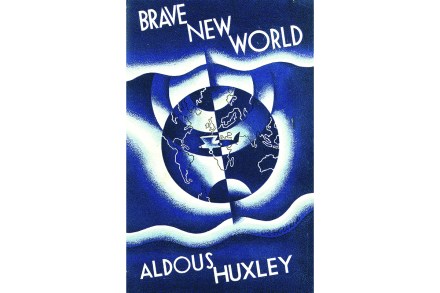
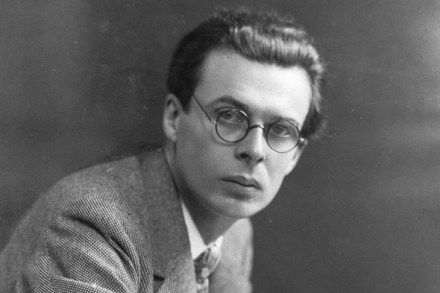
In 1961, just two years before he died in Los Angeles, the polymath, philosopher and novelist Aldous Huxley gave humanity a warning. Much of his prophecy about society in Brave New World had come to pass, he said, which made him even more certain that the standout problem of the future would be our inability to resist becoming enslaved to our own technology. Now, more than 60 years after his death – and with an entire generation of children frying their brains with smartphones and nobody able or willing to do anything to stop them – it is hard to deny that he was onto something. The man was destined to be a prophet for our gadget-addled age.
Technology

The babyishness of Hunger Games on Stage

From our UK edition

The Hunger Games is based on a 2008 novel  about a despotic regime where brainwashed citizens are entertained with televised duels between teenagers. Not a bad idea. We go behind the scenes and watch Katniss (Mia Carragher) being selected to fight Peeta (Euan Garrett) who secretly adores her. As soon as the plot starts, it seizes up. Instead of a gripping tragedy about two lovers forced to kill each other on TV, we’re given a masterclass in the show’s elaborate format. The duellists take part in interviews, coaching sessions, target practice, public parades and a popularity contest which permits them to attract ‘sponsors’ whose role is opaque. At the same time, we get a civics lesson.

Is work really more fun than fun?

From our UK edition

Wouldn’t it be marvellous if instead of going to work every day we could contract out the tedium to avatars of whose daytime activities we could remain blissfully unaware? This, in essence, is the premise of the dystopian drama Severance, but I’m not sure it’s a fantasy many of us actually nurture. Noël Coward once said: ‘Work is more fun than fun.’ And though I wouldn’t push it quite that far – it would be true only if you were a huntsman or a Master of Fox Hounds – I think most of us would be pretty bereft without the adrenaline buzz of deadlines, the thrill of office flirtations, the rapier play of banter, the juice of gossip and the creativity of fiddling your expenses and getting one over on your fatuous, irritating, know-nothing superiors.

Waifs and strays: Gliff, by Ali Smith, reviewed

From our UK edition

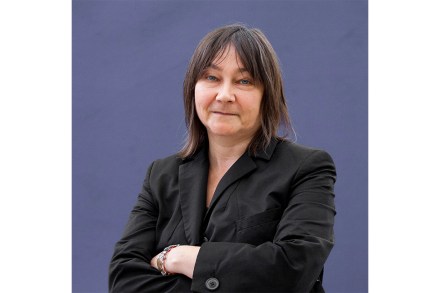
‘Gliff’ is a word which can mean ‘a short moment’, ‘a wallop’, and ‘a post-ejaculatory sex act’; to ‘dispel snow’, ‘to frighten’, and to ‘escape something quickly’. It’s ‘really excitingly polysemous’, says one of Ali Smith’s characters. It’s certainly an apt title for a book which can’t seem to define itself. At its centre are two children, Briar and Rose, who have been abandoned. Their mother is absent, caring for a sick sister, and their other responsible adult leaves to find her. The children exist in a stock dystopian world (people are surveilled by CCTV cameras and zombified by screens) with a twist: they repeatedly wake up to find that a red line has been painted around their house or camper van. They are on a list of ‘Unverifiables’.

Nordic dream or nightmare?: The Mark, by Frida Isberg, reviewed

From our UK edition

Imagine a society, a high-minded psychologist tells his curmudgeonly father, ‘in which people are like cars. They have to go in for inspection once a year’ in order to assess their emotional fitness for the shared highway of life. As for the ‘psychopathic percentage’ whose ‘moral disorders’ lead them to fail this spiritual MoT, never fear: state-funded therapy will get them on the road again. And should they refuse? Surely, as we learn later in The Mark, everyone longs to stand ‘on the right side of history’. The Nordic dream of close-knit, high-trust, mutually supportive welfare societies has always had its internal critics: mavericks, naysayers and backsliders, who prize autonomy beyond, even against, community.

1984 on Audible is a deliciously chilling immersion experience

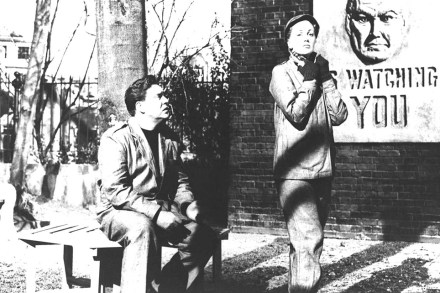
Forty years on from the year in which it is set, and released on the date of Winston Smith’s first diary entry, George Orwell’s seminal dystopian novel Nineteen Eighty-Four (not 1984, despite how this most recent retelling has chosen to style the title) has received perhaps its highest-profile adaptation since Michael Radford’s film. Andrew Garfield plays the reluctantly rebellious Winston, and man-of-the-moment Andrew Scott is a smoothly vicious O’Brien. Cynthia Erivo makes for a suitably feisty Julia, and Tom Hardy reprises his Bane boom as Big Brother, although his contributions are wisely kept to a minimum.

george orwell nineteen eighty-four audible

Caught in a Venus flytrap: Red Pyramid, by Vladimir Sorokin, reviewed

From our UK edition

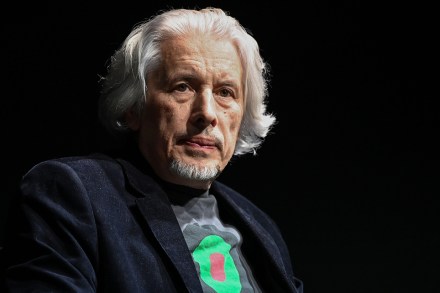
Interest in Vladimir Sorokin’s works in translation tends to focus on their extremism and dystopia – trademarks of his fantastically-rendered observations of the Soviet Union and contemporary Russia under an infinite bureaucracy. Less emphasis is placed on the empathy that elevates the stories from violence and a pre-occupation with bodily fluids to a discomforting sense of familiarity. In his introduction to Red Pyramid, Will Self writesthat Sorokin’s detractors accuse him of peddling pornography. But its relevance is without question. If reality is said to be stranger than fiction, Sorokin’s fiction goes further, to make the point that the pornographic, as he writes it, is a way of bearing witness to the past and present.

Back to the world of Big Brother: Julia, by Sandra Newman, reviewed

From our UK edition

Sandra Newman’s Juliahas a connoisseur’s nose for body odour. When she gets close to another person or animal, she almost always notices their smell – manly, dusty, dungy, a hint of talcum powder. When she suppresses emotion, she sweats. She sprains her wrist and tears rise ‘of themselves like sweat’. In a pivotal scene, she unblocks a gruesomely overflowing toilet. This abundance of bodily functions feels like a reminder of George Orwell’s original Julia in Nineteen Eighty-Four, whose physical abandon makes her an object of desire and symbol of rebellion. This fantasy is punctured in Julia. Bodies are sensuous but they are also skin-crawlingly horrible. Mutilated wrecks, with teeth and nails removed in the Ministry of Love, creep around London on all fours.

Spooky, classy dystopian sci-fi: Apple TV+’s Silo reviewed

From our UK edition

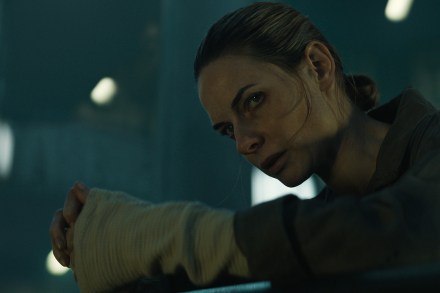
Back once more to our favourite unhappy place: the dystopian future. And yet again it seems that the authorities have been lying to us about the true nature of reality. This time – in Silo – the lie concerns the nature of the world outside the enormous silo in which our heroes and about 10,000 other survivors have been hiding for the past 100-odd years since some nameless apocalypse. Is it really as dangerous as the Powers That Be say? Or is this an illusion, maintained over a century of relentless official propaganda, designed to keep the enclosed populace frightened and in check? Silo began life in 2011 as a self-published short story by Hugh Howey – called Wool, not Silo – which he put out through Amazon’s Kindle Direct.

The deeply human Walking Dead

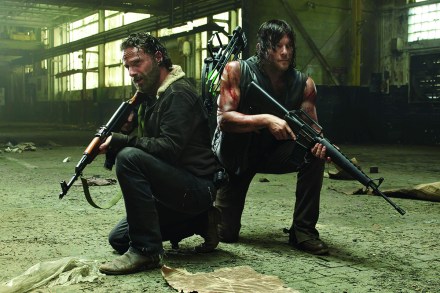
It was the middle of July 2007. The dead-summer streets of Phoenix, Arizona, were fairly smoldering, so I went into a comic-book shop to beat the heat. I was shipping out to Iraq with the Marine Corps in two days and needed something to distract me. Indulging in a bit of casual melodrama, I asked the half-stoned employee behind the desk what he would read if he had two days to live. Without a second’s pause, he gave a knowing smile and said: “The Walking Dead, man.” Robert Kirkman never expected his comic to turn into the dominant media phenomenon it has become over the past two decades. But nerd culture has a funny way of jumping the bridge into mass media.

walking dead

Let’s ban the metaverse and colonize space

The way I see it, there are two options for the future: a transplanetary society or a transhuman one. What got me thinking about this was right-wing billionaire Peter Thiel’s recent interview with Mary Harrington, which she wrote up in UnHerd. As Harrington puts it, Thiel’s diagnosis of modern social ills is not that “progress is inevitably self-destructive,” but that we’ve been making the wrong kind of progress. "We’ve had continued progress in the world of computers, bits, internet, mobile internet, but it’s a narrow zone of progress. And it’s been more interior, atomizing and inward-focused,” Thiel said. Meanwhile, “there’s been limited progress in the world of atoms.” So far, so good. But then the interview took a strange turn.

How green is your Soylent?

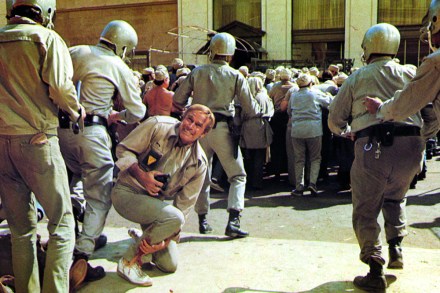
In 1966, when Harry Harrison penned his dystopian thriller Make Room! Make Room!, which began life as a serial in Impulse magazine, he predicted that by 1999, there would be more than 7 billion people on earth, and a robust 35 million in New York City alone. The 1973 film adaptation of Harrison’s novel, Soylent Green, altered several aspects of Harrison’s novel, including the year in which the thriller is set: 2022. Now that we’re there (and decades past 1999), it’s worth asking: did Soylent Green director Richard Fleischer and his writer, Stanley R. Greenberg, get things right?

Soylent

How science fiction novels read the future

The pandemic is not quite over, but we are getting used to its inconveniences. What disaster will be next? An antibiotic-resistant strain of the bubonic plague? Climate collapse? Coronal mass ejection? Will the next catastrophe be natural — perhaps a massive volcanic eruption, the likes of which we have not seen for more than two centuries, since Tambora in 1815? Or will it be a manmade calamity — nuclear war or a cyberattack? And might we inadvertently descend into a new form of AI-enabled totalitarianism in our efforts to ward off such calamities? To all these potential disasters it is impossible to attach more than made-up probabilities. So what can we do about them? The best answer would be that we should strive to imagine them.

science fiction

Dystopian horror: They, by Kay Dick, reviewed

From our UK edition

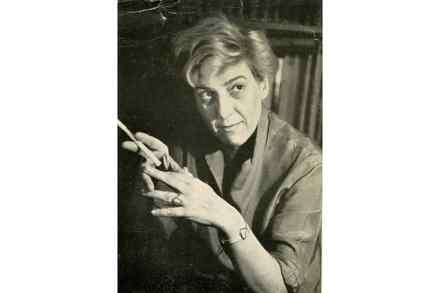
Her name has faded, but the British author and editor Kay Dick once cut a striking figure. She lived in Hampstead with the novelist Kathleen Farrell for more than 20 years, among a mid-20th-century literary set that included Stevie Smith and Ivy Compton-Burnett. Her most acclaimed novel was The Shelf, the story of a lesbian affair which drew heavily on her own life and circle. In 1977, she published They, a dystopian horror quite unlike her other work. It won the South-East Arts Literature Prize but soon went out of print, where it remained until a literary agent chanced on it in a charity shop. Reissued with an introduction by Carmen Maria Machado, another master of the uncanny, They makes its second entrance, into a world that has caught up.

All change: The Arrest, by Jonathan Lethem, reviewed

From our UK edition

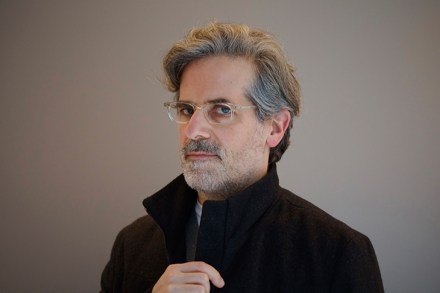
This is an Exquisite Corpse of a novel — or if you prefer another name for that particular game, Heads, Bodies and Legs, or Combination Man, or perhaps most appositely Consequences. The parlour game involves creating something and then passing along the hidden creation to which another then adds, and The Arrest reads like Jonathan Lethem playing the game against himself. He is a novelist whose work has always experimented with, and evaded, genres. In this one, he is juggling dystopia, Thoreau-like idealism, science fiction, folk horror, sentimentality, revenge plot and quite a lot more. It is also very funny. I did want to say that it is like Cormac McCarthy animated by Hanna-Barbera, but Lethem gets there first, since one scene is a — loving?

Primal longing: Blue Ticket, by Sophie Macintosh, reviewed

From our UK edition

Sophie Macintosh’s Blue Ticket is not classic feminist dystopia. Yes, it is concerned with legislated fertility, a world where women’s bodies are monitored like science projects by condescending medics.But the horror here is not impregnation but unwanted childlessness. Blue tickets, dispensed (randomly? It’s not clear) by a machine on a girl’s first bleed, decree a childless future; white tickets the opposite. Victims are not raped handmaids but sexually liberated working women, desperate to conceive and forbidden from doing so. Our narrator is Calla, a blue ticket, who grows increasingly dissatisfied with her lot, nurturing a ‘new and dark feeling’ inside herself.

A view from 2027

March 17, 2027Whenever the Pink Shirts come by for a check, Inez hits the discreet button beneath the kitchen counter that releases the trap door into the cellar where she now keeps her most expensive shoes and we’ve got about 30 seconds to get inside.Inez tells us much about the outside world that we’ve missed for so long. That the Pink Shirts are now knocking on doors daily to ask if any Deplorables live there. If so, they are immediately taken away to one of the Cal State campuses for reeducation but Inez says no one has ever returned. We fear only death awaits us at Cal State.They often have lists. Inez says the Beverly Hills Autonomous Zone District Commander is the foulest person she’s ever seen.

2027

A tide of paranoid distrust: The Sunken Land Begins to Rise Again, by M. John Harrison, reviewed

From our UK edition

Over the past 50 years, M. John Harrison has produced a remarkably varied body of work: a dozen atmospheric novels and five volumes of finely controlled short stories that have ranged from austere realism to operatic fantasy. He is not easily pigeon-holed — an intentional state of affairs, but one that has denied him a large readership. The worlds of his science fiction are truly strange, yet he conjures them with piercing lucidity. For instance, Light (2002) is largely set 400 years in the future. The cosmos Harrison visualises is a place of splintery disruptions, but it is peopled with cruel and slovenly characters whose minds churn in entirely familiar ways.

Brave New World Revisited, revisited

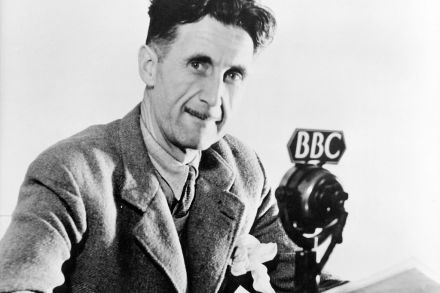
When the West’s Days of Reckoning came in 2016, we naturally turned to George Orwell, master of modern dystopia, to make sense of Trump, Brexit and the return of the far-right in Europe. We took to the streets — or rather Twitter — crying, ‘It’s just like 1984!’ Dystopia had made a comeback. We lapped up The Handmaid’s Tale, Black Mirror and Blade Runner 2049 with gleeful horror. Our concern shot Orwell’s novel to the top of Amazon’s chart. These are cautionary tales for dangerous times. Stories of science-fictional wastelands, malevolent totalitarian governments and vengeful AI that warn us of what we might become. Yet we often ignore Aldous Huxley’s Brave New World. This is curious.

aldous huxley brave new world