Drama

Unholy land

‘The rule in our household is: if a TV series hasn’t got subtitles, it’s not worth watching,’ a friend told me the other day. Once this approach would have been both extremely limiting and insufferably pompous. In the era of Netflix and Amazon Prime, though, it makes a lot of sense. There’s something about English-speaking TV — especially if it’s made in the US — that tends towards disappointment. Obviously there have been exceptions: The Sopranos; Band of Brothers; Breaking Bad; Game of Thrones. But too often, what’s missing is that shard of ice in the creative heart that drama needs if it’s to be truly exceptional. American drama is a slobbering puppy dog.

Fresh and wild | 31 May 2018

From our UK edition

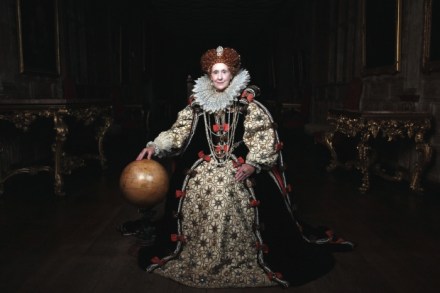
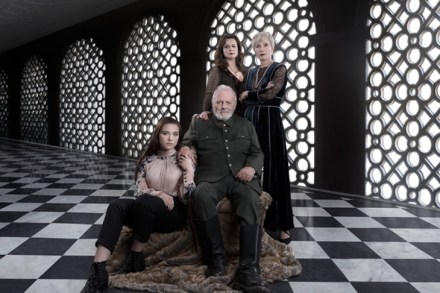
I recently came across a theory of the American poet Delmore Schwartz’s that Hamlet only makes sense if you assume from the beginning that all the characters are drunk. Given Schwartz’s own fondness for booze, this idea perhaps smacks of drunken hyperbole itself. But it certainly sprang to mind while watching BBC2’s King Lear (Monday), where Anthony Hopkins spent quite a lot of the first half swigging enthusiastically from a hipflask.

Friday night refreshment

From our UK edition

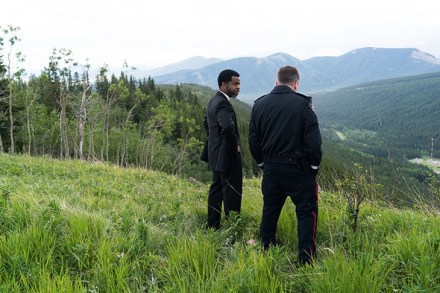
BBC2 has a new drama series for Friday nights. The main character is a world-weary middle-aged police inspector with an unshakeable commitment to smoking. His work partner is a feisty female officer in her twenties who combines salt-of-the-earth irreverence with being a damn good cop. Between them, they’re investigating the murder of an attractive young woman who their colleagues immediately assumed was a prostitute, and whose death reminds the inspector of a previous investigation that continues to haunt him — which is why his boss is constantly trying to take him off the case. But if this makes you think that The City & The City is yet another identikit crime drama, then you couldn’t be more wrong.

Why the arts are needed to put the ‘A’ into ‘STEAM’

From our UK edition

Amongst the good places to be in Britain, the National Theatre and the RSC in Stratford-upon-Avon are up there. What I see or do when in these places is almost secondary to being there.  Soaking it up in the National Gallery is a close second. Knowing that this country once had the courage to provide the necessary subsidy to create a national theatre; it is daily fillip to see what a beacon our two great theatres are for work that makes us think about how we live. This feeling is compromised by knowing what is going on in maintained schools at the moment. Writing in The Guardian, the Director of the National Theatre, Rufus Norris, asked why we are squeezing the creativity from our schools.

Losing the plot | 22 February 2018

From our UK edition

ITV’s Marcella (Monday) represents another triumphant breakthrough in the portrayal of female cops on television. Of course, thanks to more or less every other crime show around, we already know that women in their forties can be senior police officers. But what Marcella makes even clearer than, say, Vera or No Offence is that so can women in their forties who are entirely unsuited to being senior police officers. For a start, the eponymous heroine suffers from regular mental collapses during which she often turns violent before handily forgetting — and forgiving herself for — anything bad she may have done. She also seems to specialise in cases where she hasa deep personal involvement that might cause a lesser woman to worry about a conflict of interests.

Hare-brained

From our UK edition

Shortly after my rave review of McMafia eight weeks ago, I got a long message from an old friend chastising me for being so horribly wrong. Could I not see that the series was boring, convoluted and badly acted? Was I aware of how many better series there had been on Amazon and Netflix recently because, if I wasn’t, she could give me a few recommendations… Several other people wrote to me in a similar vein and I felt terrible. Life is short and TV production is so voluminous these days that now more than ever we need critics to sift the bullion from the dross. Sure, reviews are a snap judgment, usually based on just one episode and written under pressure. Even so, if you can’t be trusted to get it right, say, 90 per cent of the time, that makes you a critical fail.

Adult entertainment | 16 November 2017

From our UK edition

Any readers of the Sun who excitedly tuned in to Howards End on Sunday night with their pause button at the ready will, I fear, have been in for a disappointment. Before the programme went out, the paper had assured them that this new BBC1 adaptation would ‘do a Poldark’, with ‘a hot cast’ providing ‘a sexed-up remake’ of the 1992 Merchant Ivory film. (The sub-editors may have missed a trick by not headlining the piece, ‘It’s E.M. Phwoar-ster!’) In the event, what they got was a quietly thoughtful exploration of Edwardian intellectual life. The first episode, in fact, didn’t differ very much from the non-sexed-up film version — and when it did, it was generally by being even more faithful to the book.

Playing it safe | 5 October 2017

From our UK edition

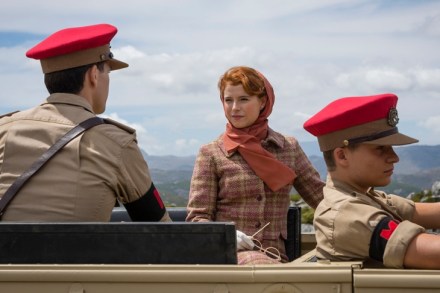
BBC1’s latest Sunday-night drama The Last Post, about a British military base in Aden in 1965, feels like a programme on a mission: that mission being to avoid getting shouted at by either the Guardian or the Daily Mail. To this (possibly doomed) end, it goes about its business very gingerly, with an almost pathological devotion to balance, and a safety-first reliance on the trusty methods of the well-made play, where each scene makes a single discrete point and the characters are as carefully differentiated as the members of a boy band. The first episode opened with the base’s new captain landing at Aden airport with his wife. ‘It must be a hundred degrees,’ she said scene-settingly as they descended from the plane.

Loose ends

From our UK edition

On Sunday night, Holliday Grainger was on two terrestrial channels at the same time playing a possibly smitten sidekick of a gruff but kindly detective with a beard. Even so, she needn’t worry too much about getting typecast. In BBC1’s Strike, she continued as the immaculately turned-out, London-dwelling Robin, who uses such traditional sleuthing methods as Google searches. On Channel 4, not only was she dressed in rags, with a spectacular facial scar and a weird hairdo, she was also living in an unnamed dystopian city, where her detective work relied on a handy capacity to read minds. This was the first and highly promising episode of Electric Dreams, which has set itself the ambitious task of adapting ten sci-fi stories by Philip K.

Rockies horror show

From our UK edition

Tin Star, the latest Sky Atlantic drama, has a comfortingly familiar premise: Jim Worth (Tim Roth), an ex-detective from London with an alcohol problem, heads out to rural Canada with his family to start a new life only to find himself embroiled in crime, violence and personal tragedy far worse than anything back home. It begins well. There’s a lovely establishing scene where Roth walks down the street with his new Canadian sheriff’s badge and everyone greets him, as people presumably do in sleepy Canadian Rockies towns like Little Big Bear, where everyone’s got time for one another. In the police station, his two junior officers have so little crime to solve they’re playing video games.

Nut job

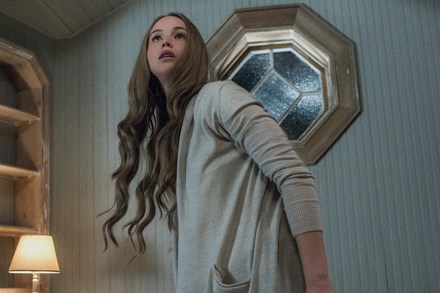
The film-maker Darren Aronofsky says he wrote Mother! in five days as if in a ‘fever dream’ and, as a general rule, what happens in a fever dream should stay in the fever dream, as the content will be plainly nuts. This is plainly nuts. This is even plainly nuts with an exclamation mark. Plainly nuts! However, it’s never plainly dull, so it does have that going for it. I think. Described as a psychological horror thriller, the set-up has a poet and his younger wife living in a magnificent, isolated house in the countryside that she is doing up. She is Mother (Jennifer Lawrence) and he is Him (Javier Bardem). She is in thrall to Him, and exists only to serve Him, while he is suffering from writer’s block and is distant.

Made in Port Talbot

From our UK edition

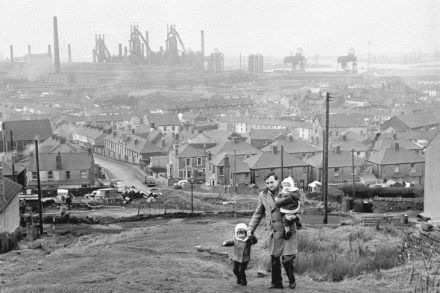
Port Talbot, on the coast of South Wales, is literally overlooked. Most experience the town while flying over it on the M4, held aloft by concrete stilts planted in terraced streets. From that four-lane gantry, the only landmarks are the dockyard cranes and belching steelworks. Over Easter in 2011, National Theatre Wales staged a piece of street theatre that was crafted as a civic resurrection. The Passion of Port Talbot featured Michael Sheen as a Messiah-like teacher who harkens to oral memories. ‘I remember!’ he hollered on the third day, while attached to a crucifix on a traffic island by Aberavon beach, before reeling off a litany of local names: of villages, streets, sweet shops, pubs, clubs, mountains.

For goodness’ sake

From our UK edition

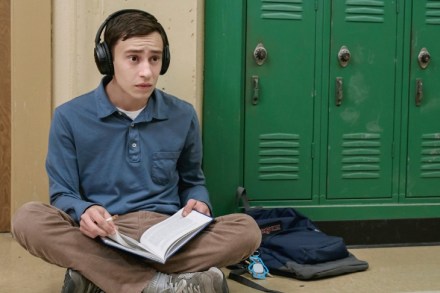
Most new Netflix series are greeted not merely with acclaim, but with a level of gratitude that the returning Christ might find a little excessive two minutes before Armageddon. In this respect, then, Atypical is proving rather atypical. The reason for the mixed reception is that its 18-year-old protagonist, Sam, has autism — and, as we know, in these righteous times fictional characters are judged not on whether they’re convincing individual creations but whether they’re virtuous enough as representatives of an entire group. Happily for the bloggers, by that all-important criterion, Atypical was bound to fall a little short.

1967 and all that

From our UK edition

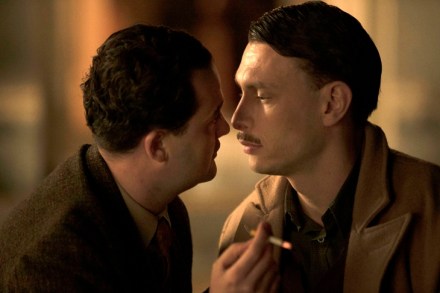
As you may have spotted, the BBC is marking the 50th anniversary of the decriminalisation of male homosexuality with an extended gay season. (And if you haven’t, I can only assume you’ve seen and heard no BBC trailers for months.) The centrepiece this week was Against the Law (BBC2, Wednesday), which dramatised the story of Peter Wildeblood, a Daily Mail journalist imprisoned for 18 months in 1954 for the possibly overlapping crimes of buggery and gross indecency. But — double entendre alert — Wildeblood didn’t take this lying down. After his release, he published a book making the case for legalisation.

1944 and all that

From our UK edition

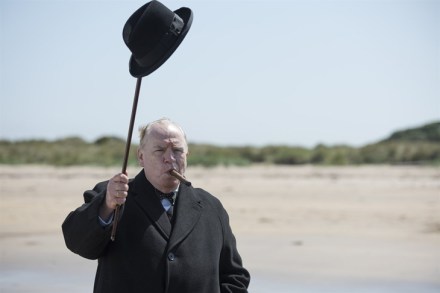
The star of this film is the music, composed by Lorne Balfe. I really liked it, which was just as well, because it plays for about half the 98 minutes, while a superannuated Churchill, played by Brian Cox, moons about on beaches, deeply penitent for his catastrophic authorisation of the Gallipoli disaster in which a quarter of a million Allied troops lost their lives on the beaches of Turkey. It is the summer of 1944, and an apparently almost pacifist Churchill is timidly begging Eisenhower and Montgomery not to go ahead with the Normandy landings. He dreads the loss of life, you see. Not being a Churchill scholar, indeed being, I must admit, Churchill-allergic, I have no idea if this is true or false.

All bark and no bite

From our UK edition

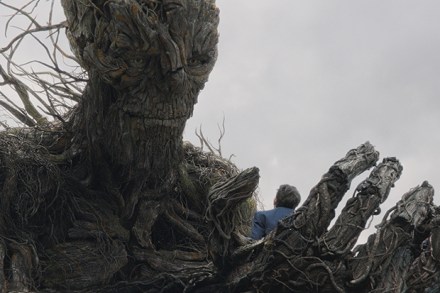
A Monster Calls is a fantasy drama about a young boy whose life is crap, basically. His mother is sick. His father has scarpered. He is being bullied at school. He may also have an itch he can’t get at, for all we know. (Always hateful, that.) But he finds an ally when the ancient yew tree he can see from his window morphs into the giant tree monster who’ll take him on a journey of ‘courage, faith and truth’. This has its visually wondrous moments, and the lead (Lewis MacDougall) is a true find, but there’s too much bark, too little bite. This is no Pan’s Labyrinth, for example. Wish that it were, but it is not. Based on the bestselling book by Patrick Ness, and directed by J. A.

Tangled web | 30 June 2016

From our UK edition

Mike Bartlett’s curious blank-verse drama Charles III became an international hit. His new effort examines the cut-throat world of dark-web espionage. An American traitor named Andrew (Edward Snowden presumably) is hiding out in a Moscow hotel. Enter a flirty, giggling Irishwoman played by Caoilfhionn Dunne, who claims to be British and who teases Andrew over his betrayal of his homeland’s secrets. She evinces an interest in Oscar Wilde and the pair lock horns over footling minutiae. Andrew points out that Barbie dolls are called Sindy in the UK and this seems to demonstrate his familiarity with Britain. But he fails to spot the false cadences of her accent and he doesn’t query her use of the strange term ‘British Metropolitan Police’.

Impure thoughts

From our UK edition

Spoiler alerts aren’t normally required for reviews of Shakespeare — but perhaps I’d better issue one before saying that in BBC1’s A Midsummer Night’s Dream (Monday) Theseus dies near the end. Not only that, but Hippolyta and Titania fly off on butterfly wings to become lovers, and the mechanicals’ play goes down a storm. Personally, I’ve never been sure about the existence of that mysterious tribe known as ‘Shakespeare purists’. If they do exist, though, Russell T. Davies’s heavily cut and cheerfully tweaked adaptation seems almost deliberately designed to flush them out.

That’s entertainment | 5 May 2016

From our UK edition

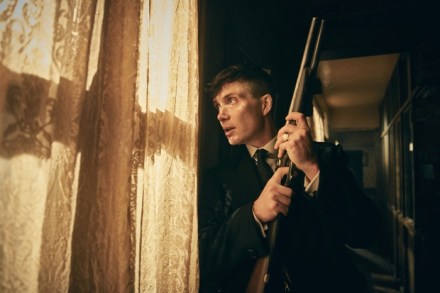
The big returning show of the week began with servants laying out the silverware at a large country house in 1924. But rather than a shock comeback for Downton Abbey, this was — perhaps even more unexpectedly — Tommy Shelby’s new home in Peaky Blinders (BBC2, Thursday). Which explains why so many of the guests were carrying guns, and why the family matriarch was using the word ‘fuck’ a lot more than Lady Grantham ever did. When we last saw gang-leader Tommy (Cillian Murphy), he was still based in the Birmingham backstreets. He was also having a fairly tough time — what with juggling two women, trying not to get murdered and being required by the government to start the Irish Civil War. Two years on, however, things are clearly looking up.

Just what the doctor ordered

From our UK edition

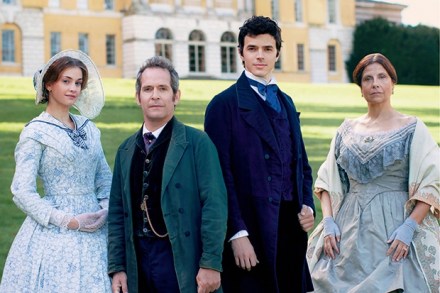
Every now and then, a costume drama comes along that’s so daringly unconventional as to make us re-examine our whole idea of what the form can achieve. ITV’s Doctor Thorne, though, isn’t one of them. Instead, Julian Fellowes’s adaptation of Anthony Trollope observes the usual rules with almost pathological fidelity. Extras dance gamely in ballrooms, scheming matriarchs stand in the way of sweet young lovers and characters express deep fury with the words, ‘Good day to you, madam.’ In the first scene, we even had a handy refresher on the genre’s use of hats as a social signifier. (Basically, toppers for the toffs, peaks for the proles.