Donald McNeil Jr

Who will stand for free speech?

The primary feeling is a sense of dread. The oily scent of torches set aflame is in your nostrils, and the glint of pitchforks in moonlight appears on the horizon. You have, either accidentally or intentionally, said something that aroused the anger of a mob. Those of your friends who enjoy a good scrum send you laughing messages; those who are born afraid of such things ask quietly if you are all right. Your name is trending nationally and, amid it all, you worry it will never end. This is an experience that too many Americans have had in the era of social media.
speech

Free speech folly at the New York Times

I suppose we should be grateful that the New York Times has finally come out in favor of free speech. After more than four years of hysterical denunciations of anyone who questioned the tactics, rhetoric or punishments employed by #MeToo, Black Lives Matter or transgender activists — some of which were inspired by the Times’s own reporting and editorials — America’s “paper of record” has apparently become woke to the problem of mob intimidation and its deleterious impact on what the mainstream media likes to refer to as “robust” democratic debate.

new york times

Journalism’s class problem has gotten worse

It’s very unlikely that I’d be a reasonably successful journalist today if I hadn’t come from an upper-middle-class family. Fresh out of college, I got a series of non- or low-paying internships. It wasn’t until spring of the following year that I found a staff position with benefits (and a salary of $33,000, which at the time seemed like plenty to live on). Because my parents provided financial support and because I had no debt, I was able to gain the experience and connections that helped launch my career. Somewhere, surely, there is a 37-year-old who is very similar to me and who wanted to be a journalist, but who is now doing something else because it just wasn’t feasible, financially.

class

Which New York Times staffers are worth fighting for?

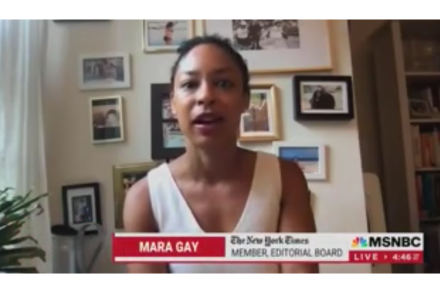
The New York Times fiercely defended editorial board member Mara Gay this week after she faced ridicule on Twitter for comments she made on MSNBC's Morning Joe. Gay had told the Lucy and Desi of cable news that she was 'disturbed' by the sight of American flags flying high in Long Island on Tuesday. She apparently witnessed anti-Joe Biden flags standing alongside the Stars and Stripes. This horrid scene prompted her to fear that Donald Trump's supporters did not see a difference between 'whiteness' and 'Americanness'. 'We have to figure out how to get every American a place at the table in this democracy...how to separate Americanness, America, from whiteness,' Gay said. 'I was really disturbed,' she continued. 'I saw...

mara gay

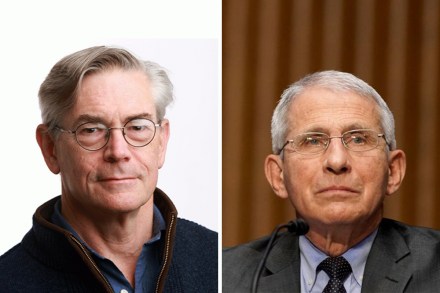
Donald McNeil described Americans as ‘selfish pigs’ in email to Fauci

There are some wondrous revelations in Dr Anthony Fauci's over-3,200-page email trove acquired by BuzzFeed and the Washington Post through the Freedom of Information Act. A number of people — particularly Republican politicians — are fixating on the several emails from other experts mentioning the possibility that the SARS-CoV-2 virus may have been engineered at and emerged from the Wuhan Institute of Virology. They are right to do so — but there are some other gems in there too. A tipster pointed Cockburn to a February 2020 email from then-New York Times science writer Donald G. McNeil Jr, in which he describes how Americans 'tend to act like selfish pigs'. In contrast, McNeil tells Fauci that 'a lot of average Chinese behaved incredibly heroically'.

mcneil

Why the media is melting down

It’s 2021, and as your new Spectator media columnist I’m here to tell you that the American media is a disaster. It’s not that there aren’t still many exceptionally talented reporters and editors doing good work, against all odds — there are. It’s that the overall scene is being destroyed. Newspapers are on the verge of extinction. Newer, supposedly more agile online-only outlets are shedding staff or shuttering as well. No one has come close to developing a replacement for the funding model that kept journalism humming along nicely until the internet came along and broke everything. Of course, the destruction has birthed creation. Journalistic startups pop up frequently, though few do anything that seems worthwhile and sustainable.

Media

Journalism is pure madness

On January 21, a Canadian online news outlet called the Tyee published a hit piece on Angelo Isidorou, a 24-year-old journalist for the Post Millennial, another online Canadian magazine. Isidorou had made himself a target by becoming a board member of the Non-Partisan Association, a municipal political party in Vancouver which, in spite of its name, is center-right. Isidorou’s sin, as captured on the Tyee’s front page, was that he had been photographed ‘flashing a symbol favored by hate groups’. The symbol in question was the thumb-to-index-finger ‘OK’ sign, which according to the Tyee’s reporter is a ‘widely recognized white power signal’.

journalism

‘The N-word Republic’ is a disgrace!

John 'Rick' MacArthur, the president of Harper’s, is one of those old-fashioned cats on the American left who think that journalism should be lively, provocative, interesting to read. He doesn’t think that the purpose of all writing is to treat every reader as a vile racist who must be reeducated through endless hectoring. That makes him a heretic, of course, in New York media circles, so the knives must come out. Somebody called Ryu Spaeth, a school-hall monitor manqué who’s had to settle for the less elevated role of features editor at the New Republic, has decided that enough is enough. 'John R. MacArthur is a disgrace,’ his latest article declares. A disgrace! Oh dear, what has Rick done now?

n-word