Dinosaur

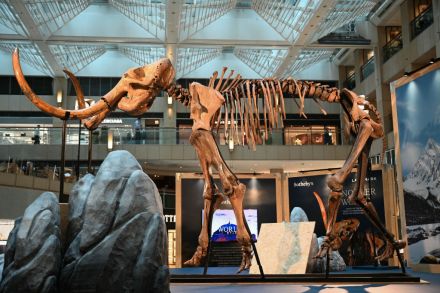
First came the dire wolf – the wooly mammoth is next

With all the insane news this week surrounding President Trump’s tariff and trade drama, only one non-political story was significant enough to break through the news cycle: a Texas-based company called Colossal Biosciences has bred three dire wolves and is currently keeping them in a secret 2,000-acre natural habitat somewhere in the United States. That’s right: dire wolves. An extinct species. A beast so mythical that we only really know of it from Game of Thrones. In fact, as we learned in an interview with a comic book magazine, Game of Thrones creator George R.R. Martin has even visited the dire wolf reserve. There is a non-AI-generated photo of him online cradling a dire wolf pup and weeping tears of joy.  Immediately, skepticism blew up online.
65 is a better B-movie than it has any right to be

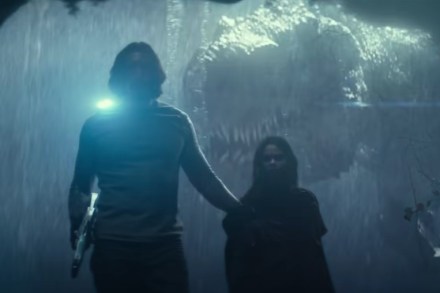
Growing up, one of my favorite books was Gary Paulsen’s Hatchet, the story of a boy whose plane crash-lands in the Canadian wilderness and who must then fend for survival with only a single tool. 65 tries to pull off something similar, but with dinosaurs and sci-fi weapons. And bizarrely enough, it's a far better B-movie than it has any right to be. Yes, the setup of this film is seriously convoluted. Adam Driver stars as Mills, a long-haul space shipper who works for a spacefaring human civilization based on a planet other than Earth. When his vessel collides with an unexpected asteroid belt, he’s forced to crash-land on Earth — 65 million years before the present day. That’s right: this film takes place a long time ago, but in a galaxy not quite so far away.

The Jurassic series is ready for its asteroid

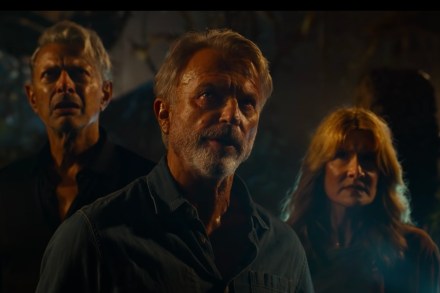
The third — and apparently final, if rumors are to be believed — Jurassic Park film arrived in American theaters last weekend. Entitled Jurassic World: Dominion, one of those meaningless names that looks good on a poster, it was released to critical scorn: “the last time dinosaurs were subjected to a disaster this bad, an asteroid was involved” was a typical comment. Although Dominion opened to a mighty $145 million at the box office, terrible word of mouth is likely to see the gross plummet before very long. This is very much not a Top Gun: Maverick situation, where the most unlikely people have found themselves raving about a brilliant film. This is a bad, generic summer blockbuster, and it will be forgotten in due course, like all bad, generic summer blockbusters.

The art of extinction

From our UK edition

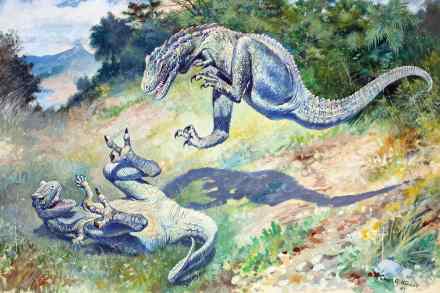
In one of Italo Calvino’s fables, a single dinosaur survives the extinction of his kind. After a few centuries in hiding, he comes out to discover that the world has changed. The ‘New Ones’ who have taken over the planet are still terrified of dinosaurs; they tell each other terrifying stories about the time when the reptiles ruled the world, or secretly fantasise about being brutalised by them, but they don’t recognise the survivor for what he really is. They no longer know what a dinosaur looks like. The newcomer is given a name – the Ugly One – and invited into their society. Eventually, they find a heap of dinosaur bones in a melting glacier, and take their new comrade to gawp at it.

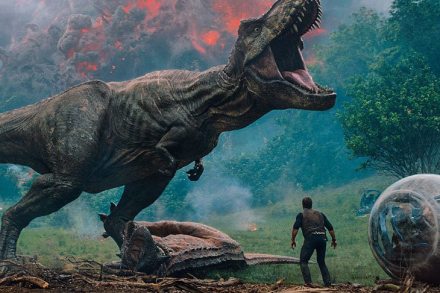
Cynical, one-dimensional and oddly colourless: Jurassic World – Fallen Kingdom reviewed

Back in the mists of prehistory, when I was eight, dinosaur films followed a set pattern. The dinosaurs themselves would be cheerfully unpalaeontological; women would wear improbable outfits; volcanoes would explode. Then, in 1993, courtesy of Steven Spielberg, came a sea-change. Jurassic Park was that cinematic rarity: a science fiction film that succeeded in influencing the science it was fictionalising. The story of a theme park populated by resurrected dinosaurs, it offered a portrayal of Mesozoic fauna that was as close to authentic as could then plausibly be achieved. For the first time, computer-generated imagery was used to portray dinosaurs as scientists had come to envisage them: agile, bird-like, smart. The impact was profound.