Destruction

Surviving the Dresden firestorm: Slaughterhouse-Five revisited

From our UK edition

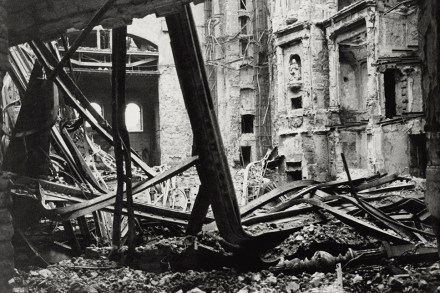
I was in my teens and a bathtub when I first read Kurt Vonnegut’s Slaughterhouse-Five. Published in 1969, the novel is about an American prisoner-of-war, Billy Pilgrim, who is held captive in Dresden during the Allied bombing that destroyed the city. This was an experience shared by the author, who in a postmodern flourish meets his own protagonist in the filthy latrines. I opened my mother’s slim 1970s paperback, began to read – ‘All this happened, more or less’ – and kept on reading until I had finished it, by which time the bath was cold and my fingers were as pulpy as the pages. When I re-read the same copy for this review it fell to pieces. So it goes.
From the Odyssey to The Wizard of Oz: Praiseworthy, by Alexis Wright, reviewed

From our UK edition

Among many other prizes for her stunningly original work, Alexis Wright has won Australia’s greatest literary honour, the Miles Franklin Award, for a novel of the highest literary merit representing Australian life. It is ironic, but sadly apt, that her epic Praiseworthy should be published in the year that Australians, offered a chance to give greater political rights to their indigenous peoples, have voted not to. Everything blends together: dream and reality, donkeys and butterflies, the Odyssey and The Wizard of Oz Wright is an Aboriginal activist as well as a writer. Praiseworthy, which has already won the Queensland Literary Award for Fiction, is an impassioned environmental Ulysses of the Northern Territory, and not an easy read. It does not care to be.

A bird’s-eye view: Orbital, by Samantha Harvey, reviewed

From our UK edition

This slender, gleaming novel depicts a day in the life of six astronauts at the International Space Station – but a day isn’t a day for a crew orbiting Earth at more than 17,000 miles an hour. Space ‘takes their 24 hours and throws 16 days and nights at them in return’. Weaving a line of philosophical enquiry through her luminous prose has become something of a trademark for Samantha Harvey, who probed the elasticity of time through a portrayal of Alzheimer’s disease in her prize-winning debut The Wilderness and, in All is Song, transported Socrates to the 21st century.

The man who loves volcanoes

From our UK edition

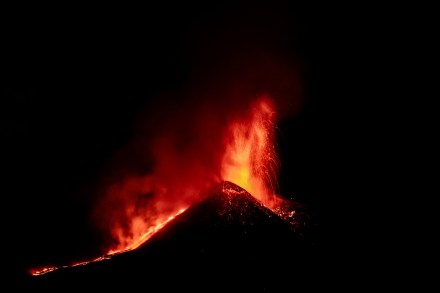
Being a volcanologist demands a quiverful of skills. You need to be in command of multiple branches of science, including geophysics, geochemistry and seismology. But you must also understand people for whom science matters less than sorcery: people living near volcanoes, for whom they are sacred places, homes to ancestors, sites of miracles, mountains where God’s intervention in human affairs is made manifest in ash, fumes and flame. And you have to be brave. When it comes to studying volcanoes, risk and reward go hand in hand. So a volcanologist must be willing to peer over the edge of a crater, breathing in smoke ‘inconvenient to respiration’, crying acid tears.