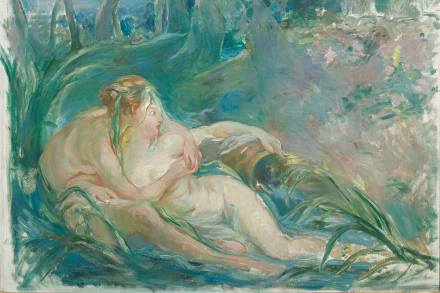
What makes Berthe Morisot’s nudes so unique?
In the years before the French Revolution saw heads roll down the boulevards, revolutionaries murdered in the bath, and endless numbers of fluffy lap dogs forced to fend for themselves after their mamans met their untimely ends, one art critic made his name with his fearless criticism of Paris’s annual art exhibition, the “Salon.” The prominent style in mid- and late-eighteenth century France was Rococo — think impossibly ornate, gold-swirled furniture; paintings of pink, fluffy nymphs in gilt-edged, asymmetrical frames; and portraits of women in dresses so large, and so embellished, that they resemble iced wedding cakes more than human beings. In the face of endless walls of this style of art, the critic Denis Diderot was caustic.