Defence

Yet more good money after bad

From our UK edition

So, the government is tying the taxpayer to £11bn of new IT contracts before the election, making the Tories’ planned immediate IT cuts very expensive. Is this latest example of a scorched earth policy? Or Labour ‘getting on with the job’? With the polls narrowing, I can’t see Labour setting a fiscal booby-trap that they could well have to de-fuse. But there’s the rub. Brown scorches the turf beneath his feet as he governs: he cannot stop spending money. An £11bn bender is irresponsible in this climate, plus Labour has a baleful record on IT contracts. It has bungled a staggering £26bn on flawed IT systems, many of which were introduced without pilot schemes.

Brown seems to have blustered his way through yet another potential crisis

From our UK edition

Yesterday, Gordon Brown argued that he curbed defence spending to prevent the public finances from spiralling out of control – but added that he had still given the MoD everything they had asked for.  So, when it's anything but defence spending, he boasts of all that extra "investment".  But when it comes to defence, he suddenly grows a fiscal conscience, of sorts.  If we weren't talking about our country's ability to fight two wars, there'd be something crudely hilarious about it all. Today, various defence figures have rounded on Brown; arguing, rightly, that his tractor statistics avoided the fundamental point – that, despite increases in the defence budget, the military was consistently underfunded from 1997 on, and especially during Iraq and Afghanistan.

All quiet on the Chilcot front

From our UK edition

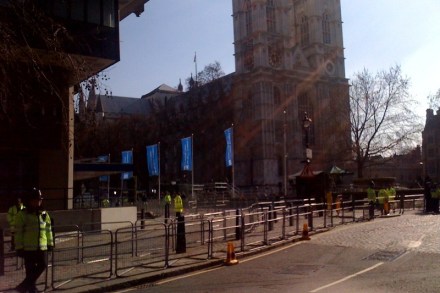
I just took a quick stroll around the block from Old Queen St, to check out the situation on the ground outside the Chilcot Inquiry.  The most striking thing is how few protestors there are – about ten at most, I'd say, and a fraction of the number that marched out against Blair a few weeks ago.  Brown doesn't even make one placard's list of – and I quote – "Lying R. Soles," which includes Blair, Campbell, Straw and Goldsmith. It's all rather suggestive of how Brown has managed, over the years, to separate himself from those who made the political and moral case for war.  But there lies the problem.  In distancing himself from Blair et al, Brown has emphasised how he – as Chancellor – did little more than control the purse strings.

Brown’s betrayal of Basra is the real issue here

From our UK edition

Might Gordon Brown get away with it at the Chilcot Inquiry today? I suspect so. The media seems obsessed with the run-up to war, whereas the real crime was the betrayal of Basra. Brown made false claims to Parliament about the fall of violence in the city which, as he would have known, was being left in the hands of Shiite death squads. He would have known that, as the Chilcot Inquiry established, we had just a couple of hundred soldiers trying to keep peace in a city of millions. He misled Britain out of Basra as knowingly and mendaciously as Blair led Britain into Iraq - leaving the people of Basra at the mercy of the militiamen. That is, until the Iraq army (with US support) invaded the city again, and expelled the murderous regime to whom Britain had, under Brown, handed power.

Brown faces his interrogators

From our UK edition

Tick, tick, tick ... there's only an hour or so to go before Brown's appearance in front of the Chilcot Inquiry.  And, athough I generally feel that this whole process is a waste of time, effort and newsprint, there's still something grimly fascinating about today's proceedings. Brown has, after all, always tended to keep a low profile when it comes to Iraq.  Let's see whether Chilcot & Co. can trudge their way through the murk of tractor statistics and other obfuscations. We all know, broadly, what they'll be asking.  How did Brown feel about the Iraq War?  And did he, as Chancellor, provide enough money for it?  In which case, there's a sense that Brown has set himself up for a fall today.

Wanted: The Hague Doctrine

From our UK edition

Out of the conference hall, and back on to the campaign trail, it would nice to see the Tories talking about the things which make them ready for government.  In particular, William Hague should make a foreign policy speech setting out what ideas he has, and which would merit him being referred to as the likely “greatest foreign secretary in a generation” by David Cameron. Hague’s past foreign policy speeches have been solid, but unspectacular. He ticks off the likely issues, talks about global trends and looks knowledgeable about the crises that could emerge. But there is no overaching concept, such David Miliband’s idea of Britain as a "global hub". There is no Hague Doctrine.

Defence debate? No thanks, we are British

From our UK edition

A few days ago, BBC Newsnight ran in effect the first live TV debate between the three parties when Secretary of State for Defence, Bob Ainsworth, Shadow Defence Secretary, Liam Fox, and Liberal Democrat defence spokesperson Nick Harvey shared a platform at the Imperial War museum. The programme was meant to focus on the main issues facing the future of British defence and security. In the event, it defaulted to a discussion about Afghanistan. Despite Jeremy Paxman’s prodding, many of the strategic questions were shirked as an audience of generals and airmen fought each other over which service had played a bigger role in the Afghan theatre, and the issue of veteran’s care took centre-stage. Liam Fox came out best, but you would expect that given who he was surrounded by.

Byrne’s cuts deception

From our UK edition

Liam Byrne has caught the Brown bug - not for raging in his underpants you understand, but for fiscal conceits. Tony Wright, the Public Administration Select Committee Chairman, called Liam Byrne (and the opposition as well) to task for misleading the public on the dire effects of cuts. Wright may be proved right: frontline services could well be decimated by the cessation of funding. But he missed Byrne’s deception. The indispensible Andrew Sparrow reports: ‘Byrne said that between 1985-86 and 1988-89 public spending as a share of GDP dropped by 8.6%. Between 2011-12 and 2014-15 it is forecast to drop by 5.9%.

Mars & Venus Revisited

From our UK edition

Bob Gates' criticism of european defence shortcomings yesterday was couched in unusually harsh terms. Then again, NATO faces an uncertain future and there's a growing sense in the United States, I think, that europe is failing to lift its weight when it comes to defence matters. As Gates pointed out just 5 of NATO's 28 members spend more than 2% of GDP on defence. Consequently: The demilitarization of Europe — where large swaths of the general public and political class are averse to military force and the risks that go with it — has gone from a blessing in the 20th century to an impediment to achieving real security and lasting peace in the 21st. And: Right now, the alliance faces very serious, long-term, systemic problems.

Blair on Chilcot…

From our UK edition

...well, sorta.  5:25 into his interview with Mike Huckabee, our former PM gives his take on the constant stream of Iraq inquiries: You can certainly see his point. Although I doubt the government will be too impressed with Blair trawling through all the Iraq stuff on American television, only weeks before he hits the campaign trail for Labour.

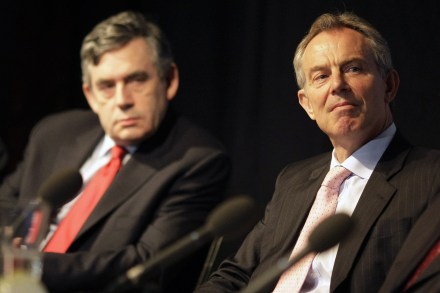
Brown and Blair, together again

From our UK edition

Strange that there's really only one major political point arising from Gordon Brown's interview in the Standard today.  But, then again, maybe that is the point.  Like the PM's interview with the News of the World a few weeks ago, the emphasis is far more on the personal than anything else: his relationship with Sarah Brown, the death of his daughter Jennifer, his upbringing, and so on.  We even learn why his handwriting is so bad ("due to the way he was taught to write at school," apparently).  And with a TV appearance alongside Piers Morgan in the schedules, it does seem that Brown is keen to present a more human front. As for that political point, it's Brown's confirmation that Tony Blair will play a "major role" in Labour's election campaign.

The Iraq War may or may not have been a crime – but was it in the national interest?

From our UK edition

If you read the press after Clare Short’s testimony to the Iraq inquiry you would be forgiven for believing that there are only two ways to judge the Iraq War – whether it was legal or not, and whether Tony Blair lied. But while these are important issues, they get in the way of another key question: was it in Britain’s interests? There are many problems with looking simply on the issue of legality. First of all, international law is not domestic law. It is a framework without an overarching "sovereign", so "enforcement" of international law is different than in the domestic context. International law is also based, at least in part, on norms. But norms change – thus changing what the law means.

Brown meets his Waterloo

From our UK edition

Lord Guthrie had it right with his well-directed expletive: Gordon Brown just doesn’t get defence. His record, both as Chancellor and PM, leave him vulnerable to criticism on the subject; but today, Brown has been confronted by a khaki-clad nightmare. After suffering his first reverse at PMQs for months, beaten decisively by a beautifully executed Tory plan, former permanent secretary at the MoD, Sir Kevin Tebbit, informed the Chilcot Inquiry that Brown ‘guillotined’ the defence budget with annual reductions of £1bn. Geoff Hoon’s testimony disclosed the full effects of Brown’s single act of stringency. The timing could not be better for the Tories, who have been intent on self-destruction of late.

Better MPs, please…

From our UK edition

  As we all know Her Majesty's Armed Forces have spent the last seven years fighting in far-flung parts of the world. Their deployments have hardly been uncontroversial. So you'd think that the release of a new Green Paper on the "way forward" for the armed forces might be a moment of some interest and, indeed, even at this stage of the electoral cycle, some importance. Not so. At least it doesn't interest our parliamentarians. As Think Defence points out only one in twenty MPs bothered turn up to listen to and debate the Green Paper. I think that's a grand total of six Labour MPs on the governmentback-benches.

Cameron blitzkriegs back into the game

From our UK edition

Dave bounced back today. After a couple of lost months he showed up at PMQs and gave a thoroughly convincing display. Shrewd tactics, sound principles, headline-friendly quotes and some decent gags. The Chilcot Inquiry is proving a handy prosecution witness in the case against Brown. Cameron quoted a fistful of top generals who believe the former chancellor was a serial under-funder of the military. Brown’s response was a classic example of bluster and confusion. Good arguments arrive singly. Bad arguments enter in rowdy swarms. He gave five different replies to the main charge: the 2002 defence review had been the best in 20 years; fourteen billion pounds has been spent on Iraq: the rising defence budget would rise even further; the Tory manifesto in 2005 promised a £1.

Leaked MoD report says, well, nothing really

From our UK edition

What is the difference between a sieve and the Ministry of Defence? If you think of good punch-line send it in; in the meantime, suffice it to say that department seems to be leaking any and every sensitive document in its possession. Ministry of Defence staff have apparently leaked secret information onto social-networking sites sixteen times in 18 months. Over the week-end, it happened again: Sky News obtained a paper, which will form the basis of the forthcoming Strategic Defence Review. I have not seen the paper, but judging from the Sky reports there is not much to get excited about. Everyone accepts that the nature of warfare is changing, that traditional battle-lines are being re-drawn and that a new form of warrior will be required for future conflicts.

The World According to Gilbert & Sullivan

From our UK edition

Sunday evening: a roaring log fire, a calming glass of claret and listening to HMS Pinafore. For once, cruel world is vanquished. For a time anyway. And, of course, Pinafore helps illuminate our Britain too. Here, for instance, is how Bob Ainsworth became Secretary of State for Defence: And here is what the Barmy Army, if they had any wit about them at all, would sing* every time Kevin Pietersen** comes to the crease: *If sing they must. **Or Strauss, Trott and Prior too.

An election victory is only the start of the battle for Cameron

From our UK edition

The News of the World has done its poll of marginal seats today (story here, Anthony Wells here) – a hugely expensive operation, but worthwhile because British elections are decided in marginal seats. National polling, while interesting, can be a misleading indicator of outcome. The result is that the Tories have a safe lead of 13 points (take a bow, Lord Ashcroft), but would still end up with just a 38-seat majority due to Westminster’s unfair voting system. As I say in my column, this is nowhere near a ‘safe’ majority, because it means the government can be defeated by 20 rebels.

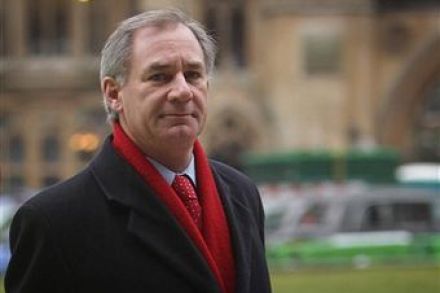
Geoff Hoon, silent assassin

From our UK edition

And so it came to pass that nothing came to pass. Geoff Hoon gave evidence to the Chilcot Inquiry on the same day as a convention of anaesthetists visited the QE Conference Centre. Perhaps their presence contributed to the somnolent proceedings. Beneath the apparent narcolepsy, Hoon made two important points. First, he was convinced that the intelligence contained in the two dossiers established the threat of WMD “beyond doubt”, which will assist Blair when he gives evidence, especially after Alastair Campbell’s recent ‘clarification’.

Rompuy wants the EU to slither onto the world stage

From our UK edition

Well hello there, Rompuy. We haven’t heard much from the new EU president so far – he was upstaged by Barroso at the Copenhagen conference, showing that the EU stage only has room for one super-ego*. But with the Lisbon Treaty ratified, in defiance of public opinion in Britain (and Labour’s manifesto pledge), he now has powers to advance the EU project further. His idea today: the possible development of a "humanitarian rapid reaction force" for the EU. This rung a bell with me. When I did my tour of duty in the Scottish Parliament, this was a goal of the SNP. They want to creep on to the world stage, without asking permission. One step is to send “observers” to various committees. But aid is the softest target.