Defence

Labour leaves behind contractual IEDs for the coalition to clear

From our UK edition

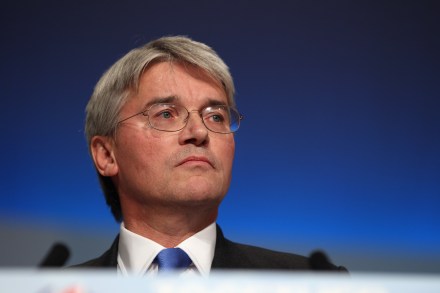
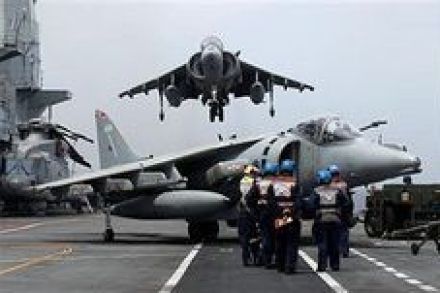
Before they left office, Labour laid a number of contractual IEDs, primed to blow up sooner or later. Last year, the SDSR revealed that the Government had to buy the two aircraft carriers – whether they were needed or not – lest the taxpayer lose even more money. Now the Sunday Telegraph reveals that the coalition is powerless to stop money from Britain's overseas aid budget being spent on hosting coffee mornings and salsa dancing to "raise awareness" of poverty abroad. Keen to scrap all such schemes, International Development Secretary Andrew Mitchell has found to his frustration that contracts signed by the Labour government cannot simply be scrapped, but need to be reviewed first. At least he has called for a halt to any further payments.

Sherard v The Generals

From our UK edition

As wars begin to end, arguments about their conduct begin. Such is the case with the British campaign in Helmand. In a submission to the Foreign Affairs Committee, the former British ambassador in Kabul – and one of the best diplomats of his generation – Sir Sherard Cowper-Coles blasted the Army: "Almost by definition, good soldiers are irrepressibly enthusiastic, unquenchably optimistic, fiercely loyal to their service and to their own units within that service, and not especially imaginative." But his strongest criticism was reserved for the Army's strategy of seeing Helmand through the prism of the SDSR – looking to save brigades from being cut, not looking primarily to win the war.

Help for Helmand

From our UK edition

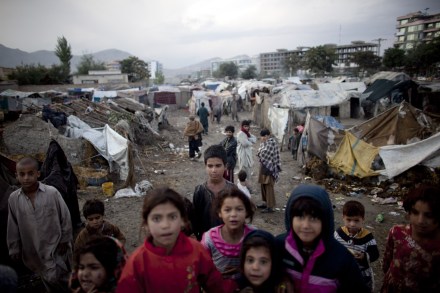
With 2011 promising to be another difficult year in Afghanistan, my friend Alex Strick van Linschoten – a noted scholar of the region – has decided to do something to help. He is organising to get some charcoal to refugee families from Helmand, who have fled the fighting between NATO and the Taliban and now live at a makeshift refugee camp just outside Kabul City. Like millions of refugees, the people at the camp have seen things they will rarely forget: "The sight of a woman’s hair entangled in the mulberry branches, her legs strewn far away in the dirt. Or the sounds they heard as they hid in an underground hole, counting the bombs to pass the time, praying the American troops would leave.

Obama STARTs anew

From our UK edition

Barack Obama has had a great couple of weeks. First DADT was repealed and then START was ratified by the Senate, safeguarding a major Obama foreign policy initiative In truth, both issues are peripheral to voter concerns. To them, the jobless recovery is what matters. New figures show that the unemployment rate in the US has jumped to a seven-month high of 9.8 per cent. Nor did the White House get all it wanted from Congress recently. As the Senate was debating DADT, the House of Representatives killed a provision in a defence bill to transfer detainees from Guantanamo to the US. But in politics having momentum - the Big Mo - is one of the most important, if intangible, factors. Recently, Obama could not even find Lil' Mo, Big Mo's smaller brother.

DfID’s role put to the test

From our UK edition

At a speech to the Royal Defence Academy earlier in the year, Andrew Mitchell outlined the costs of overseas conflict to Britain and offered a number of lessons for the future. The most important, he argued, was the need to help prevent wars before they start, starting with being “better at identifying the potential for conflict.” The Cabinet’s only ex-soldier, Mitchell has seen up close the cost of conflict, burns with anger about the Rwandan genocide and knows that development funds will forever be wasted if people are mired in violent conflict.

What is the MoD for?

From our UK edition

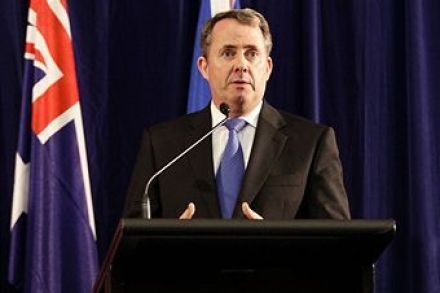
Yesterday, Liam Fox vowed to install a tougher procurement system in the Ministry of Defence and appointed the bureaucracy-busting Bernard Grey as Chief of Defence Materiel. The Defence Secretary said that it is important to start from first principles if reform is to take place. The ministry, he said, "exists to provide the Armed Forces with what they need". But is that right? The MoD exists, first, to maintain civilian and democratic control of the armed forces; and, second, to support effective operations. Supporting the military is a corollary of the second task, but not the same thing. In desiring to reform the MoD and cut costs, there is a real risk the government loses some of the capabilities the department needs to deliver its core tasks.

Gray heralds the latest shake-up

From our UK edition

The coalition is taking it to the MoD, Whitehall’s most intransigent department.  The FT’s Alex Barker reports that Bernard Gray has been appointed Chief of Defence Materiel.  Gray is a revered and original defence specialist with a history of criticising the MoD in plain terms. Resentment persists over his savage report into procurement, which exposed the full extent of the wasteful ‘conspiracy of optimism’ that pervades the department’s operations and its relations with contractors. He argued: ‘Industry and the Armed Forces have a joint vested interest in sponsoring the largest programme at the lowest apparent cost in a ‘conspiracy of optimism’.

Holbrooke’s war ends

From our UK edition

He was known as brash and abrasive. A gale force wind. The "bulldozer" some called him based on his time bullying Slobodan Milosevic during the Dayton negotiations to end the Bosnian War in the 1990s. However, veteran US diplomat Richard Holbrooke, who died last night, had a far greater register. When he visited London before assuming his latest post, as President Obama's AfPak envoy, he surprised the US embassy staff by travelling alone, with no bag-carrying entourage, and exhibiting none of the airs he was expected to have. His first experience of the Balkans was not as the all-mighty diplomatic trouble-shooter, but as a normal citizen eager to highlight the plight of the refugees. He braved sniper fire and dangerous roads to document Yugoslavia’s tragedy.

The clot at the heart of the MoD

From our UK edition

Gibbon wrote that the Roman Empire collapsed under the weight of its own stupendous fabric. So too is the Ministry of Defence. An investigation by the Times (£) has revealed that bureaucratic intransigence has cost the taxpayer £6bn and several servicemen their lives. We have been here before with the Nimrod disaster and the subsequent Gray and Haddon-Cave reports. ‘A culture of optimism’ in procurement and maintenance leads to unsustainable costs, expensive delays, and, occasionally, the indefensible loss of life. At last, the Commons Public Accounts Committee is volubly shocked and has called for urgent reform.

Time for jaw-jaw

From our UK edition

Today I joined number of leading Afghan experts, from Ahmed Rashid to Gilles Dorronsoro, in calling on President Obama to change the American strategy in Afghanistan. Based on our work in and on Afghanistan, we wanted to make a number of points just as the White House begins reviewing its strategy: First, that the cost of the war is now over $120 billion per year for the United States alone. This is unsustainable in the long run. Second, despite these huge costs, the situation on the ground is much worse than a year ago because the Taliban insurgency has made progress across the country. The military campaign is suppressing, locally and temporarily, the symptoms of the disease, but fails to offer a long-term cure.

Time for an Afghan Inquiry

From our UK edition

The Iraq Inquiry had been conspicuously silent, but now John Chilcot's team has called Tony Blair to give evidence again. It's expected that our former PM will make the trip to the Queen Elizabeth II centre early next year. That would push the expected deadline for the inquiry's work finishing – at the end of this year – into 2011. Few people, however, expect the inquiry to say anything novel or get Tony Blair to say anything different than before. Its well-phrased final report may change policy in the margins – but in the security establishment there is little question of what needs doing.

Wiki-danger

From our UK edition

Now the Wikileaks are beginning to become dangerous. Before, the leaks contained high-level tittle-tattle, confirmation of existing analyses and embarrassingly accurate portraits of world leaders. I still thought it wrong to regurgitate this data, as it will lead to more secrecy, bilateral problems and potentially even conflicts – the things that Julian Assange claims he is seeking to avoid. Yet I told NPR that the idea of prosecuting the Wikileaks founder for treason was far-fetched; he is not a US citizen and it was not clear to me what kind of charges could be brought against him in the US courts. Now, however, with the publication of data which will be useful background reading for any would-be terrorist, the situation has changed.

The mundanity of espionage

From our UK edition

And the most curious political story of the day has to be the one about Mike Hancock's 25-year-old parliamentary researcher, Katia Zatuliveter. If you haven't seen it already, she is facing allegations of spying for the Russians – and looks set to be deported as a result. It's the first time that a Commons employee has been arrested on charges of spying since the Cold War thawed out twenty years ago. There's some lively colour in this tale, but the full picture is, as yet, shaded from view. For his part – as per the video above – Hancock has denied that Zatuilivter is a spy. But the only Cabinet minister to comment on the matter so far, Iain Duncan Smith, has said that the allegations have to be taken seriously.

Some perspective on the Helmand Wikileaks

From our UK edition

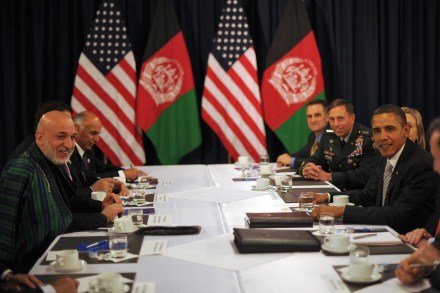
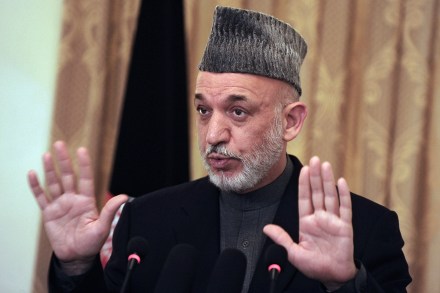
Today's Wikileaks will make uncomfortable reading for all parts of the British defence establishment – ministers, both old and new, and the senior military leadership. As a senior military officer told me, "this isn't going to be good." The diplomatic cables reveal that US officials and President Hamid Karzai at some point thought that British forces had bitten of more in Helmand than they could chew. The US NATO commander, General Dan McNeill, is quoted as saying three years ago that British forces have made a mess of Helmand. This is backed up by a comment, more than a year later, suggesting that President Karzai also agreed that British forces were "not up to the task of securing Helmand" without US assistance. Cue headlines of British military failure.

Pakistan’s double game comes under the spotlight once again

From our UK edition

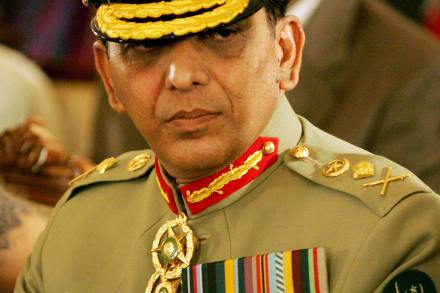
The leak that keeps on leaking has one or two embarrassing titbits about our domestic policymakers this morning. Yet far more noteworthy are the documents on Pakistan. While they don't tell us too much that is surprising – being mostly about the duplicitous game that country is playing with the West – they do highlight some potentially worrying trends. Chief among them is the growing influence of General Ashfaq Pervez Kiyani, the head of Pakistan's army. His name is littered generously throughout the US briefings, and it is often connected with dangerous conspiracy and double-dealing. One document, for instance, suggests that Kiyani was prepared to overthrow the Pakistani President, Asif Zardari, last year.

Julian Assange: the new face of anti-Americanism

From our UK edition

Like everyone else, I have poured over the latest cache of Wikileaks - the publication of which I find irresponsible and destructive. There are several pieces of information now in the public domain that will cause the US diplomatic embarrassment or worse may even help the regimes in Tehran, Pyongyang and Moscow. Just ask yourself a few questions. Will the West be safer if the Saudi leader cannot trust that a conversation he has with a US envoy will remain secret? Will that help or hinder Iran's nuclear prpgramme? Will US-German links be improved by the knowledge that US diplomats are sceptical of Angela Merkel's policies? Will that aid G20 coordination or hamper it?

Nato – from the glass half empty point of view

From our UK edition

Nato leaders are in Lisbon and Daniel Korski has argued that the most successful military alliance in history isn’t done yet. Writing in the Independent, Patrick Cockburn gives an alternative. He contends that Nato will never recover from the Afghan mission, and he has three substantive points: 1). Nato's solutions are the problem. ‘It is not just that the war is going badly, but that Nato's need to show progress has produced a number of counter-productive quick fixes likely to deepen the violence. These dangerous initiatives include setting up local militias to fight the Taliban where government forces are weak. These are often guns-for-hire provided by local warlords who prey on ordinary Afghans.’ 2).

Neo-isolationism is NATO’s greatest enemy

From our UK edition

As NATO leaders gather for a key summit in Lisbon, expect the newspapers to be full of the usual “why bother” commentary. NATO, they will argue, was founded for a different age and is not relevant for dealing with today’s threats – from cyber-attacks to nuclear non-proliferation. It is even struggling to deal with older threats, such as the Taliban insurgency. Most Europeans do not seem to mind. They feel safer than at any time before and worry predominantly about post-material threats, not conventional attack, as a think tank report showed recently. As a result, Europeans are set to spend less on defence. Germany expert Hans Kundnani has an excellent piece on Berlin’s anti-militarism over on ECFR’s new blog.

Dave on the defensive

From our UK edition

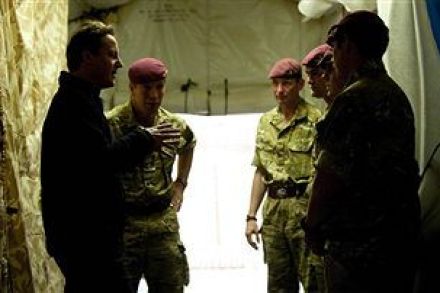
There is no sign of the heir to Blair at the Commons Liaison Committee this afternoon; in fact, David Cameron has been possessed by the ghost of Gordon. So far the Prime Minister’s answers have been cumbersome and statistic-heavy; and his delivery has had the dexterity of a three-legged elephant. He will have expected cannons to the left of him, but to the right as well? If he imagined that Tory backbenchers would coo appreciatively he will have been sadly disabused. Andrew Tyrie, James Arbuthnot and Bernard Jenkin have eviscerated him over the conduct of the strategic defence review. They deplored the culture of leaks and counter-briefing and probed Cameron for his role in the process.

A 2015 Afghan exit will be tricky

From our UK edition

William Hague told the Foreign Affairs Select Committee that British combat troops will leave Afghanistan in 2015 - even if parts of the country remain violent. Speaking to a number of senior military officers and civilians who have recently returned from Kabul and Helmand, I have come away with the clear sense – whisper it – that the tactical tide is in fact turning against the Taliban insurgency but that a number of facts will complicate further progress. First, the next few months in Helmand may unfortunately be quite bloody.