David tennant

How come the only Palestinians Louis Theroux met were non-violent sweeties?

From our UK edition

Louis Theroux: The Settlers was never likely to be a programme with much of a narrative arc – and so it proved. In the first 30 seconds, Louis put it to a Jewish householder on the West Bank that his house was ‘quite deep in what are called the Palestinian Territories’. ‘You call it the Palestinian Territories,’ the man replied. ‘I call it the heart of Judea.’ And that, on the whole, was that. Louis travelled from one Jewish settlement to another, doing his best to challenge the inhabitants with his faux-naif questions and impressive range of quizzical expressions. And yet, of course, none of them budged an inch.

Who’s still laughing at Donald Trump’s hair?

From our UK edition

At last month’s Bafta ceremony, David Tennant attempted to make a joke about the state of Donald Trump’s hair, but it barely raised a chuckle. Not surprising, perhaps, when you consider the dramatic vibe-shift sweeping the western world. In a desperate attempt to stay relevant many on the progressive left are suddenly choosing to distance themselves from the luxury beliefs they once held as sacrosanct. But this has led to confusion, especially when it comes to comedy. For progressives, laughing at the right jokes became an indicator of moral virtue and political allegiance, so it was highly amusing to see all those nervous thesps wondering which segments of the ceremony they should be finding funny.

Is Rivals the most outrageous show on television?

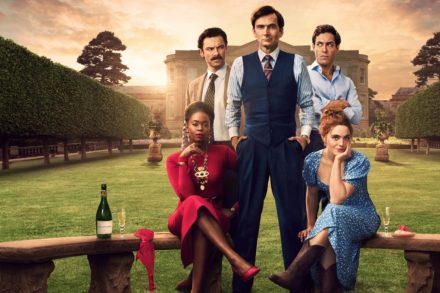
By now, television viewers should be inured to watching scenes of sexual congress on their screens. With any number of explicit programs airing over the past few years — given that mainstream cinema has more or less abandoned the sex scene, it is little wonder that it has snuck into the privacy of our homes — watching graphically depicted coupling should be nothing especially remarkable. But even so, the sheer amount of intercourse that is depicted in Hulu’s new adaptation of Jilly Cooper’s hugely successful novel, Rivals, comes as a surprise.

rivals

Calm down, it’s a joke

From our UK edition

I have never been a contributor to Twitter, partly because my comments would not be subjected to the intensive hygiene and cleanliness vetting which goes on here, for example. Instead it would all spew out untreated and lumpily noisome, like a Thames Water pipe on to your nearest beach, and I would be toast within about 60 minutes. There are other reasons – it seems to me a convocation of obsessive, perpetually furious morons, plus I loathe its modernity in reducing the discussion of complex issues into 75 words of bile, usually ending ‘just like Hitler’ – but self-preservation is the main one.

How progressive will the new Doctor Who be?

The fourteenth series of Doctor Who returns to international screens imminently — and this time there’s a twist. Thanks to the heavy financial investment of Disney+, who have become co-financiers with the BBC, the show now has a considerably higher budget than it has done before, of around $130 million per season. Little wonder that the BBC’s director-general Tim Davie commented, only slightly tongue in cheek, that “we’ve got to thank – a lot – our partners, Disney+, who came on board so that the Doctor can travel even more widely across the planet in a slightly flashier Tardis.

doctor who

CBBC’s The Famous Five shows you can update a classic without trashing it

From our UK edition

The new Doctor in Doctor Who has blond hair, blue eyes and a firm handshake, dresses in a splendid red coat and has an exciting catchphrase: ‘Hounds are running! Tally ho!’ No, not really. The new Doctor is so very much what you’d expect the new Doctor to be like that you can guess without my telling you. And it’s not that I think that Ncuti Gatwa is going to be bad as the Doctor. On the contrary, from what little I’ve glimpsed of him so far, he seems charismatic, energetic, and fun. But I do wish the BBC commissars responsible for the series would try to make their social programming agenda a bit less insultingly obvious. Like all the best propaganda, Doctor Who is often gripping and visually enticing ‘It’s not aimed at you.

This production needs more dosh: Good, at the Harold Pinter Theatre, reviewed

From our UK edition

Good, starring David Tennant, needs more dosh spent on it. The former Doctor Who plays John, a literary academic living in Germany in 1933, whose cosy life is disrupted by troublesome females. His mum is a cranky basket case dying in hospital and his wife is a manic depressive who can’t look after their kids. Both women speak with Scottish accents. John has a fling with a third Scotswoman who studies Goethe at his university. Weirdly, all three women – mum, wife and girlfriend – are played by the same actress. Couldn’t the producers fork out for a proper cast? They certainly didn’t spend more than a fiver on the set, which looks like an abandoned bomb shelter made of cardboard.

Around the World In Eighty Days is the worst TV this Christmas

From our UK edition

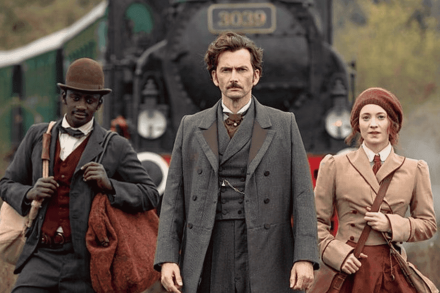
'In many ways, Phileas Fogg represents everything that's alarming and peculiar about that old sense of British Empire. Potentially, it's a story about an England that should elicit very little sympathy,' says David Tennant, explaining, better than any review ever could, exactly why every fraction of a second's time spent watching him in Around the World In 80 Days (BBC1) is life spent utterly squandered. Truly if David Tennant had been offered the role of a giant, steaming dog turd, he could hardly have approached it with less enthusiasm than he gives to his sour, bloodless, joyless impersonation of Jules Verne's upper class English adventurer.

The best theatre podcasts

From our UK edition

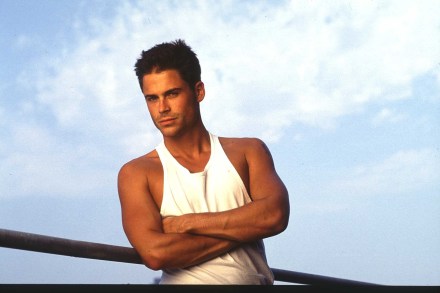
All the world’s on stage again so where to go to for insight into what to see and why? Podcasts, of course. Lowe’s ‘luck’ is that he happens to be friends, neighbours, or have starred, with everyone he interviews Let’s start with Literally! With Rob Lowe. An hour-long conversation between the most swoonable actor in the world who we’ve all forgotten, and everyone he knows and likes, from Alec Baldwin and Oprah Winfrey to St Elmo’s Fire co-star Demi Moore. It’s a wonderful and eye-opening listen. Lowe combines the enthusiasm and curiosity of the best interviewers with a knowledge and experience that makes conversation flow until the cup spilleth over.

Watch Mark Kermode find 1950s political attitudes in 1950s films

From our UK edition

The new series of Mark Kermode’s Secrets of Cinema began with an episode on British comedy films. As ever, Kermode was terrific at demonstrating how persistent certain characters and ideas in his chosen genre have proved to be. He traced the theme of ‘the little man’ from George Formby and Norman Wisdom to Paddington Bear, paying due attention to its origins in Britain’s most successful early film export, Charlie Chaplin. Moving on to the subset of little men who think they’re bigger than they are, his judiciously chosen clips revealed how much Captain Mainwaring owes to Captain Waggett in 1949’s Whisky Galore!