David cameron

Barack Obama’s decision to consult Congress pays David Cameron the highest compliment

From our UK edition

When seeking election, both David Cameron and Barack Obama promised to seek a vote before going to war. Until an hour ago, it seemed that the Prime Minister was as good as his word but the president was not. His decision to follow Cameron's example and consult Congress has stunned Washington, not least because popular support for a missile strike is even lower in America than in Britain (about 20pc). So what helped shift opinion in Washington? Obama did not attempt to disguise it. Those asking him to recall Congress, he said, were... "undoubtedly... impacted by what we saw happen in the United Kingdom this week when the Parliament of our closest ally failed to pass a resolution with a similar goal, even as the Prime Minister supported taking action.
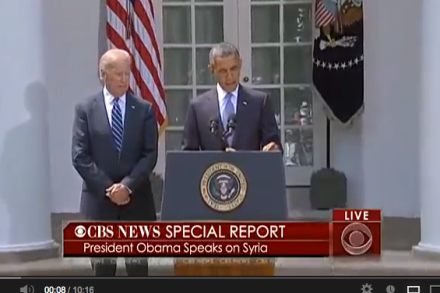
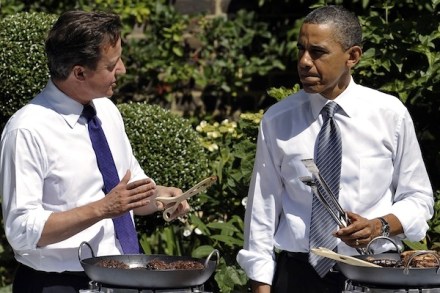
Obama follows Cameron by seeking Congressional approval for Syria strike

From our UK edition

As he licks his wounds after this week's Commons defeat on Syria, David Cameron will have been given a huge boost this evening to hear that President Obama has decided to seek approval from Congress before starting any strikes. Obama said: 'Over the last several days, we've heard from several members of Congress who want their voices to be heard. I absolutely agree.' This suggests that those who tried to certify the special relationship dead probably need a refresher course in vital signs as it clearly isn't headed for the mortuary, rather an acute unit (and Fraser explained why that assessment was wrong this morning). Perhaps it shows that Obama is aware of the trouble the US caused Cameron in initially setting out a tight timetable for strikes.

Cameron and Obama: our relationship is still special

From our UK edition

David Cameron and Barack Obama spoke this evening about their special relationship. Normally when people start talking a lot about their relationships in public, it's because something is wrong (or they've just started out and like to hold loud and impressive conversations about whether to cook the salmon or the homemade ravioli in front of as many people as possible). So the fact that the importance of the special relationship was not just raised in the call, but included in the Number 10 readout suggests the pair were calling in the marriage counsellors. A No 10 spokesperson said: 'The President stressed his appreciation of his strong friendship with the Prime Minister and of the strength, durability and depth of the special relationship between our two countries.

MPs didn’t want to kick Cameron, but they didn’t want to trust him either

From our UK edition

One of the lines doing the rounds this morning in the post-mortem of what this means for David Cameron's leadership is that it shows yet again that backbenchers do not trust the Prime Minister. This is true, but it is worth being as specific as possible. This rebellion was not like the other revolts over Europe and House of Lords reform, where it was as much about sticking two fingers to the leadership for not listening to MPs as it was about the issues at stake, serious though they are. The number of conversations I've held with backbenchers in the run-up to and aftermath of those votes made it quite clear that if they didn't hate Cameron so much, they might have calmed down. But this rebellion stuck more closely to principle than politics.

‘Cameron looked like he was about to vomit’ – View from 22 Syria special podcast

From our UK edition

Following David Cameron's historic defeat on Syria in the House of Commons yesterday, the Spectator's Fraser Nelson and Isabel Hardman discuss why both the government's and Labour's motions were defeated, the implications for the Prime Minister and Ed Miliband's political standing and what this means for Britain's place in the world. You can subscribe to the View from 22 through iTunes and have it delivered to your computer every week, or you can use the embedded player below: The View from 22 — Syria special.

Don’t be daft – last night’s vote was nothing to be ashamed of

From our UK edition

Are you ashamed of your country and depressed following last night's vote against intervening in Syria?  David Aaronovitch  the journalist is. I do not give a fuck what this means for Miliband and Cameron. It's the message it sends to Assad that counts. I am ashamed. — David Aaronovitch (@DAaronovitch) August 29, 2013 Tim Shipman of the Daily Mail is. Glad I'm in France today, a country that understands the responsibilities of being a military power — Tim Shipman (Mail) (@ShippersUnbound) August 30, 2013 So is Sarah Vine, the columnist, as well as, apparently, her husband Michael Gove. Paddy Ashdown says that Great Britain is plunging towards 'isolationism'.

Syria defeat: What next for David Cameron?

From our UK edition

Having lost last night’s vote, David Cameron needs to spend today fighting back. There are quite a few ways he can do so. He can easily brush off the more excitable charges: that he faces a leadership challenge, or that Tories will come for him at party conference. They won't. Cameron was elected to fix Britain, not Syria, and he’s doing quite well with the day job. Employment is at a record high, schools and welfare are being reformed, crime’s down. Cameron has not been defeated on a cornerstone of his foreign policy, but on a plan to join an American missile strike that may not take place. It was a grave error for Cameron to put his reputation on the line and portray the Syrian missile strike as a moment that would define Britain for good and for ill.

Syria defeat: what happened to the whips?

From our UK edition

There are a number of serious implications of tonight's result. But it's worth briefly considering the whipping operation in the hours leading up to this vote. Firstly, there was no rebel whipping operation (as in, no backbenchers leading others to revolt, totting up numbers and issuing rebuttals of government claims) as there has been on other votes such as the Lords and EU budget and referendum rebellions, which means MPs were only being pulled away from the government position by their own instincts. Or they were being left to wander away from the government position. From the conversations I've had with MPs, the government whipping operation continued to be pretty low-key until the middle of today, when the whips started to panic.

David Cameron attacks Blair’s ghost in Syria debate

From our UK edition

Tony Blair would have had less of a presence in today's Commons debate on Syria if he'd actually turned up to it. The former Prime Minister was threaded throughout the speeches, and no more so than in David Cameron's address to MPs. Cameron was keen to emphasise at every opportunity the difference between the government's response to the current situation and the Blair government's handling of the Iraq war. He was quick to refer to it, saying 'I am deeply mindful of the lessons of previous conflicts', and later said that Iraq 'poisoned the well' of public trust on military intervention.

Decline in net migration stalls

From our UK edition

Good news today for the OBR (who want a constant flow of more than 140,000 immigrants a year to support Britain's debt burden and ageing population) and bad news for David Cameron (who thinks immigrants are a drain on Britain's welfare state). Statistics show that in the year ending December 2012, net migration to the UK was 176,000, up from 153,000 in the year ending September 2012.The latest figure is equivalent to 482 more people a day entering the country than leaving it. Net migration is the figure that Cameron wants to be down 'in the tens of thousands' by the end of the parliament. It's been heading down since June 2011.

The View from 22: Peter Hitchens and Alan Mendoza debate British intervention in Syria

From our UK edition

Is David Cameron pushing Britain into a war without a purpose? On the latest View from 22 podcast, the Mail on Sunday’s Peter Hitchens vigorously debates Alan Mendoza from the Henry Jackson Society on this week’s developments in Syria. Why should Britain increase its involvement in Syria? What benefit would it bring to our nation? And how has the Prime Minister evolved from a leader who once said ‘democracy should not be dropped from 40,000ft’ into a foreign policy hawk? Fraser Nelson and Isabel Hardman also discuss how this week’s parliamentary business on Syria will play out between the coalition partners. Are the Tories and Lib Dems united?

David Cameron’s wars: How the PM learned to love precision bombing

From our UK edition

What is the one consolation for an MP who has beaten all their colleagues to the top job? It can hardly be the luxury of having your life, circle and income open to alternate snorts of envy and derision. Nor can it be the quagmire into which nearly all attempts to solve the nation’s domestic problems now fall.  Only one thing allows prime ministers of a country such as Britain to feel they have power. That is exercising it. And nothing exercises power more than deciding which wars to fight. In opposition, David Cameron did not much like the idea of war, and derided his colleagues for their admiration of Tony Blair. Yet in office — as Syria is revealing — he is treading a very similar path.

Cameron’s retreat on Syria vote: why it happened and what it means

From our UK edition

To be fair to David Cameron, he's not the only leader who's performed a volte-face in the past 24 hours. If you'd listened to Ed Miliband yesterday afternoon, you might have been forgiven for thinking that he was quite likely to support the government's motion on Syria, so long as it was and 'legal' and had specific and limited aims.

Audio: politicians mull intervening in Syria

From our UK edition

Their holidays interrupted, MPs are trying to decide what they think about Syria as they return to Westminster for tomorrow's House of Commons debate on military action. For those trying to make up their minds, and work out what everyone else thinks, Coffee House has compiled a helpful briefing of audio clips from across the political spectrum.

Syria is not Iraq (but at least the Iraq War had a clear objective)

From our UK edition

A decade ago, I was sure that going to war in Iraq was the right thing to do. I persisted in that belief for a long time too, well beyond the point at which most supporters of the decision to remove Saddam Hussein from power had recanted their past enthusiasm. The link between 9/11 and Iraq was quite apparent. Not because (despite what some mistaken people insisted) Saddam had any involvement in the atrocity but because removing tyrants and dictators seemed the best way of spreading the pacifying forces of commerce and democracy that might, in time, render Islamist extremism and terrorism obsolete. Why Iraq? Because it was there and because it could be done. Besides, there was unfinished business. Not just from 1991 but from 1998 and Operation Desert Fox as well.

David Cameron and Barack Obama’s latest call on Syria – a readout

From our UK edition

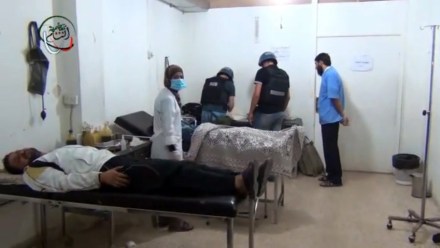
David Cameron and Barack Obama spoke last night again about the situation in Syria. Below is a readout of the call from Number 10: 'The PM spoke to President Obama last night to further discuss the serious response to last week's chemical weapons attack in Syria. 'Ahead of today's NSC, it was an opportunity for the PM to hear the latest US thinking on the issue and to set out the options being considered by the Government. 'Both leaders agreed that all the information available confirmed a chemical weapons attack had taken place, noting that even the Iranian President and Syrian regime had conceded this. And they both agreed they were in no doubt that the Assad regime was responsible.

Audio: Cameron, Clegg and Miliband on Syria and what their statements tell us

From our UK edition

David Cameron, Nick Clegg and Ed Miliband this afternoon gave statements on Britain's response to the use of chemical weapons in Syria. There were important similarities between the statements which are worth examining. Here is what we learned: 1. The action must be legal. Miliband told the cameras after the meeting that 'when I saw the Prime Minister this afternoon I said to him that we the Labour party would consider supporting international action, but only on the basis that it was legal'. Meanwhile Clegg and Cameron both insisted that the measures being considered were legal. Clegg said: 'Any steps we will take will have to be legal. This Government, this Coalition Government, of course is not going to act outside the remit of international law'. 2. The action must be proportionate.

Cameron and Obama warn Assad of ‘serious response’

From our UK edition

David Cameron spoke to Barack Obama yesterday about the situation in Syria. A Number 10 spokesman gave the following read-out of the call: 'They are both gravely concerned by the attack that took place in Damascus on Wednesday and the increasing signs that this was a significant chemical weapons attack carried out by the Syrian regime against its own people. The UN Security Council has called for immediate access for UN investigators on the ground in Damascus. The fact that President Assad has failed to co-operate with the UN suggests that the regime has something to hide. 'They reiterated that significant use of chemical weapons would merit a serious response from the international community and both have tasked officials to examine all the options.