David cameron

Cameron’s reaction to the Charlie Hebdo attacks has been depressingly predictable

From our UK edition

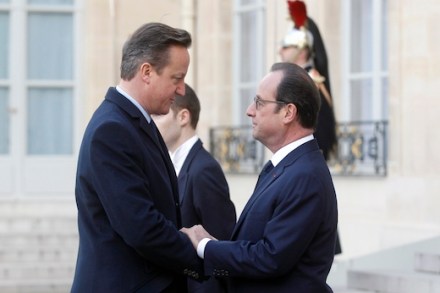
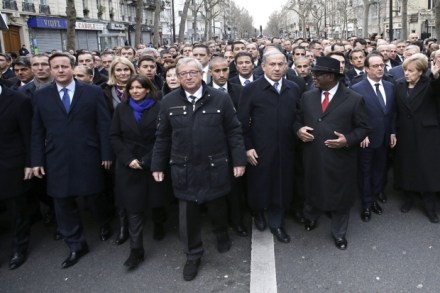
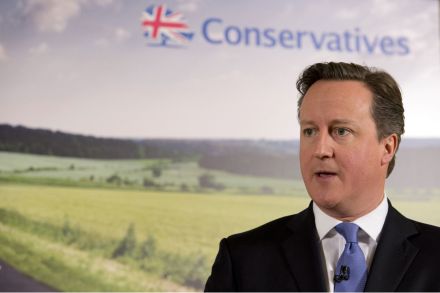
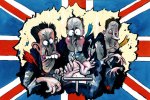
Last Sunday, David Cameron marched through Paris in solidarity, so it seemed, with those who stand up for free speech. Anyone who thought he meant it must now be crying out, ‘Je suis un right Charlie!’ Hardly had the march finished than the Prime Minister had rediscovered his other side: the one which reacts to terror by threatening yet more surveillance, more state control. He has promised to revive, in the Conservative manifesto, the ‘-snooper’s charter’ which would allow the state to retain indefinitely information about every email we ever send, every telephone call we ever make. Not only that. He added a further measure: he wants to ban all kinds of encrypted communications which the security -forces struggle to decipher.
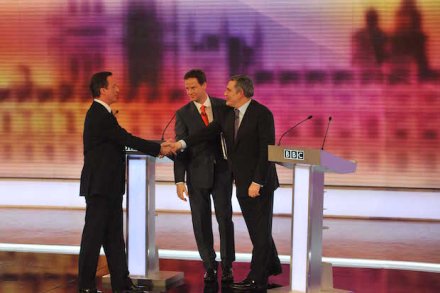
Sign up to TV debates or we’ll go ahead without you, leaders warn Cameron

From our UK edition

Labour, the Lib Dems and Ukip are having quite a bit of fun with their identical letters from their respective leaders demanding that David Cameron take part in the TV debates - or risk having something done to him that is even worse than a noun being turned into a verb (the latest threat is that he will be ‘empty-podiumed’, which sounds considerably more unpleasant than being ‘empty-chaired’ and possibly as bad as someone ‘weaponising’ something).

‘Boring is good’ Cameron tells Tory MPs

From our UK edition

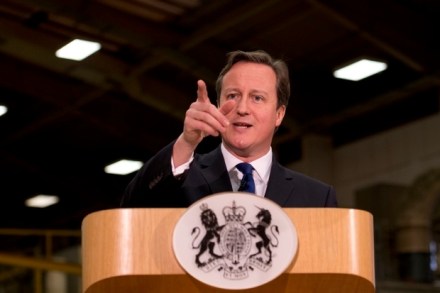
David Cameron and George Osborne addressed Tory MPs this evening. The meeting was to update the Tory parliamentary party on the economy and its place in the party’s election strategy. Cameron told them that whatever the question was, the answer was that you can only have it with a strong economy and urged them to repeat this message as much as possible. He said, ‘Boring is good’. Addressing the assembled MPs, Osborne emphasised that the economy was the heart of this debate. He argued that this was first time since 1992 that Labour and the Tories had gone into an election with different spending planes. Most of the questions were fairly loyalist.

David Cameron ‘wholeheartedly’ defends right to publish Charlie Hebdo cover

From our UK edition

The latest issue of Charlie Hebdo goes on sale tomorrow, with around 1,000 copies expected to be available in the UK. Some people have decided that buying it shows ils sont Charlie, but both David Cameron and Nick Clegg don’t appear to be joining the rush for copies. The Deputy Prime Minister told the Today programme that ‘I’m not sure I’m going to buy it’, while the Prime Minister’s official spokesman said ‘I’m not sure he necessarily will, but I’m sure that he will see the image that I think people are understandably asking me about today. Whether he will buy a copy, I confess I’m not sure’.

Tories drop weak policy areas for ‘six election priorities’ launch

From our UK edition

Why have the Conservatives left out immigration and the NHS - two of the three issues that voters consistently cite as the most important in forming their decision about who to back in the General Election - out of their list of six priorities? Among the deficit, jobs, taxes, education, housing and retirement there is no room for the health service, immigration or Europe: which also tend to be the things David Cameron and Ed Miliband fight most vehemently over at Prime Minister’s Questions. Labour is very pleased about this, and is pretending to be very cross that the Prime Minister is ignoring the NHS.

Islam had nothing to do with this (and other fibs you’re likely to hear)

From our UK edition

I don’t always agree with Peter Hitchens but this is by far the best piece I’ve seen on the political reaction to the Paris attacks. As far as Cameron, Miliband and Clegg are concerned, we must all sign up to these shibboleths: The attack was nothing to do with Islam. Almost all Muslims, here and abroad, found those attacks repugnant. The attacks were perpetrated and supported by a minuscule number of people who can simply be defined as 'terrorists'. Immigration and multiculturalism were in no way contributory causes of either the Paris attack or the attacks which we might experience in the future or have suffered in the past. All four of those easy, expedient, shibboleths are palpably wrong.

Charlie Hebdo attack: French march in defiance alongside world leaders

From our UK edition

Up to 0ne million people are expected to march through the streets of Paris today, in defiance of the terrorist attacks on the city during the past week. David Cameron will join the march, alongside approximately 40 other world leaders, including French President Francois Hollande. Security has been increased around the city, with more than 5,500 police officers expected to be on guard.

Why Cameron doesn’t want any TV debates

From our UK edition

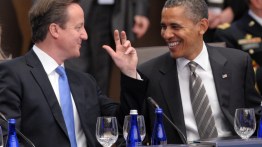
Before Christmas, David Cameron tightened up the rules about ministers going overseas. He wanted them in this country campaigning as much as possible. But, unsurprisingly, his visit to President Obama in Washington this week hasn’t fallen foul of his edict. This trip to Washington is the source of much satisfaction at the heart of government. There are some serious issues on the agenda—the world economy and cybersecurity—but as one of those involved in preparing for it admits, ‘‘There’ll be some crunchy stuff, but it’ll be a very nice photo op, too!’.

The Tories need to ‘weaponise’ Ed Miliband’s incompetence

From our UK edition

Ed Miliband was on Andrew Marr's sofa this morning, drawing 2015 battle lines. It all looked very encouraging – if you are a conservative, that is. Miliband started discussing the Paris attacks, saying he wants to give the security services what is necessary — but as MI5's director-general said on Thursday evening, that means more than money. It means the powers to put a wire on the bad guys, intercept emails and do so quickly. Does Miliband agree that these capabilities are also needed? On the deficit, he tried to play the fiscal hawk... "Most Labour leaders go into elections saying we’re going to raise spending. “I’ve got great news”, they say, “we’re going to raise spending in every area.

David Cameron will refuse to take part in the TV debates if the Greens are not included

From our UK edition

Unsurprisingly, David Cameron has this afternoon said he won’t take part in the TV election debates if the Greens are no included in one of the line-ups. Currently the proposal is for Cameron vs Miliband, then Cameron vs Miliband vs Clegg, then Cameron vs Miliband vs Clegg vs Farage. The Greens have been excluded, as have the SNP and Plaid Cymru. This is the exchange between the Prime Minister and ITN’s Tom Bradby: Me; 'Time is running out; are you saying you are not going to go in as it stands unless at least the Greens are in?' Him; 'Correct.' — tom bradby (@tombradby) January 8, 2015 Why is Cameron so anxious about the Greens all of a sudden?

Five reasons why winning in May won’t be that much better than losing

From our UK edition

Defeat in May would be dire for either Cameron or Miliband. It would end their political career in ignominious failure. But winning would not be much better: they would be the weakest PM in living memory. Here’s why it won’t be easy for either of them: Miliband would be a prisoner of his own MPs: The best that both Labour and the Tories can hope for is the narrowest of outright victories. The 21 seat majority that John Major ground out in 1992 is, probably, beyond either of them. Miliband would then find himself having to steer swingeing cuts past a party that is simply not prepared for them.

Podcast: the 2015 campaign begins, Charlie Hebdo and Britain’s A&E crisis

From our UK edition

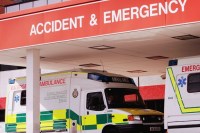
Will the next Parliament be impossible to handle? On this week's View from 22 podcast, James Forsyth and Compass' Neal Lawson discuss the latest Spectator cover feature on the challenges facing Ed Miliband or David Cameron if either manage to secure a majority on 7 May 2015. Will the Labour left or Tory right prove too troublesome for the respective leaders? Should Miliband or Cameron be the most worried? And are we on the brink of major electoral reform? Hugo Rifkind and Isabel Hardman also discuss the A&E crisis facing Britain and the problems of the NHS being used a political football. Who is to blame for the current crisis and will the government do anything in the short term? Can there even be a, rational debate about fixing the health service?

Why no one will win on 7 May 2015

From our UK edition

On 19 June 1815, after the battle of Waterloo, the Duke of Wellington declared that ‘nothing except a battle lost can be half so melancholy as a battle won’. Two hundred years later, David Cameron or Ed Miliband might feel the same way as they sit in Downing Street. Any elation over victory will be quickly overshadowed by the thought of troubles to come — in all likelihood insurmountable troubles for either man. Everyone has known for years when this election will take place, with the result that the campaign starting gun has been fired even earlier than usual. Cameron is busy prophesying economic chaos if Labour wins; Miliband is warning that the NHS won’t survive in its current form if the Tories get back in.

So the near collapse of A&Es around the country is all my fault?

From our UK edition

Oh, I see. So it’s my fault. There I was, thinking that the general swamping and near collapse of accident and emergency services in hospitals across Britain might be the result of, you know, some sort of systemic problem within the NHS. With me, a mere member of the public, just being an occasional victim. But no! Apparently it’s all because I took my wailing two-year-old daughter in, one Sunday afternoon last year, to get some antibiotics for her ear. This is good to know. For, had I not been told that all this was the fault of chumps such as me heading to such places for the sorts of trivial ailments better treated by a traditional family doctor, I might in my ignorance have been inclined to blame other people.

It’s rich of Cameron to joke about press conferences

From our UK edition

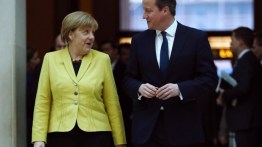
There were very few smiles at Downing Street this afternoon as a mustard clad Angela Merkel spoke of a 'moving moment'. Yet that steely resolve had to crack eventually and with the final question at her joint press conference with David Cameron, the German Chancellor's perma-frown turned into an impish grin for just a split second. Scolding ITV's Tom Bradby, Mrs Merkel announced that she 'never answered speculative questions' and she certainly would not be starting today, danke very much. 'I think the policy of not answering speculative questions will make all press conferences much shorter in the future', piped up David Cameron, seeing a chance to wrap things up. 'Another excellent German invention'.

Will Merkel throw her diplomatic weight behind Cameron’s renegotiation strategy?

From our UK edition

Before today’s awful events in Paris, the meeting between David Cameron and Angela Merkel was going to be the big news of the day. The German Chancellor does not always observe the usual rules of neutrality when it comes to foreign elections. In 2012, she endorsed Nicolas Sarkozy in a joint TV interview, declaring that it was ‘natural’ to back a fellow Conservative. Now, there was no indication that Merkel was going to offer Cameron similar backing today. But senior Tories were keen to talk up what they were calling ‘das snub’, the fact that Merkel is not meeting with Miliband. (It is also worth remembering that in 2012, Miliband was busy attacking Cameron, Sarkozy and Merkel with his warnings about Camerkozy economics).

PMQs sketch: In which today’s big loser is the NHS

From our UK edition

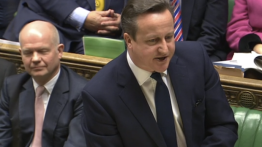
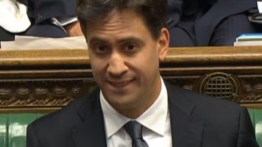
Everyone predicted a sombre PMQs. It was anything but. A mood of opportunistic and lacerating silliness dominated today’s exchanges. The NHS – poor thing – was fought over like a bunny rabbit caught by two packs of ravening hounds. Miliband’s aim was to take the word ‘crisis’ and gum it to the health service with Superglue. He accused Cameron of destroying walk-in centres, wrecking social care and wasting billions on reorganisation. In reply Cameron airily waved five billion brand new pounds to be spent on social care which he says Labour opposes. Then he blundered by asking Miliband to suggest a solution to the problem. This not only validated Miliband’s ‘crisis’ claim but it handed the Labour leader a free hit.

PMQs: Playing Punch and Judy with the NHS

From our UK edition

Today’s PMQs was, predictably, about the NHS. But the Punch and Judy nature of the session seemed particularly small in the light of events in Paris. After expressions of solidarity with the French, normal business was resumed. Ed Miliband was enjoying himself, confident that he was on his party’s chosen turf. He piled into Cameron accusing him of blaming patients for the crisis and demanding that he apologise to those who have had to wait for more than four hours. Cameron fended him off, but didn’t look particularly comfortable. However, he had a good counter-attack ready, attacking Miliband for allegedly having told the BBC’s Nick Robinson that he wanted to ‘weaponise’ the NHS. Interestingly, Miliband did not deny that he had said this.

Germany is shackled in the immigration debate. But Britain isn’t so must lead the way

From our UK edition

Today Angela Merkel will meet David Cameron in Downing Street. She will tell him what she can do – and what she cannot do – to help keep Britain in the EU. Yet she might like to begin by telling him what she plans to do to keep her own people behind the EU project, for in Germany the Eurofederalist consensus is being challenged like never before. In Germany, as in Britain, the most emotive issue is immigration. In Germany, as in Britain, people are scared to discuss this issue frankly, for fear of being branded racists. And now a new movement has emerged to fill this vacuum: Patriotische Europaer Gegen die Islamisierung des Abendlandes, aka Pegida – Patriotic Europeans Against the Islamisation of the West. Who are Pegida? What do they want?