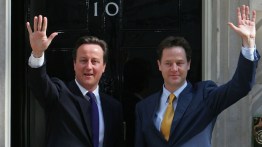
David cameron

Will Cameron’s new benefits policy ever take off?

From our UK edition

Will the Tories really dock benefits from obese people and those with drug or alcohol addictions if they refuse treatment? Even though David Cameron reaffirmed his commitment to the policy in his speech in Hove yesterday, anyone who is getting rather over-excited about it could probably expend their energy on something else as this looks suspiciously like one of those policy kites that gets flown from time to time. In the Times today, I point out that the idea cropped up several times under Labour as well as the Tories. The reason that this latest incarnation of the ‘sick people, get treatment or lose benefits’ policy might not ever become a proper policy is that it’s just one of the proposals in the review that Dame Carol Black is conducting.

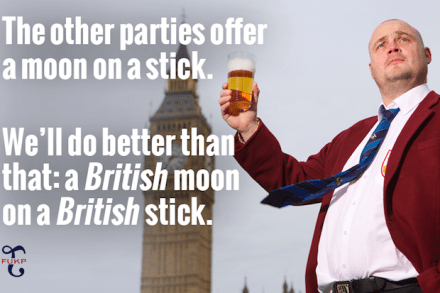
Al Murray tries to muster some funds for his FUKP campaign

From our UK edition

The Conservatives held a Black and White Tie Ball earlier this month to raise funds for their election campaign, while Ukip are reported to have recently taken a princely sum from Richard Desmond. As for Al Murray, and his Freedom United Kingdom Party, the comedian has resorted to more humble methods to muster precious campaign funds. The Pub Landlord, who is vying for the same seat as Nigel Farage, is selling FUKP stickers and badges online to raise party funds. You can now show your support for #FUKP with party t-shirts, mugs, stickers and badges. Visit http://t.co/b9AYpj8HRe pic.twitter.

Bold new Tory election strategy: Tax cuts for our chums; welfare cuts for you

From our UK edition

"There's a lot we need to do in this party of ours. Our base is too narrow and so, occasionally, are our sympathies. You know what some people call us - the nasty party." Theresa May, October 8th 2002. February 17th 2015, David Cameron announces plans to make 50,000 youths spend 30 hours a week on community service schemes to keep their "Youth Allowance" benefits. The Youth Allowance, by the way, is £57 a week. And today's announcement follows suggestions that fat people should lose access to benefits unless they lose weight. Look, it's not the goal that's the problem here. When Cameron says there is a moral quality to reducing the benefits bill he is not wrong. When he says there are people who could work  - and with the right assistance can work - he is not wrong.

Watch: Ed Miliband mucks up his lines

From our UK edition

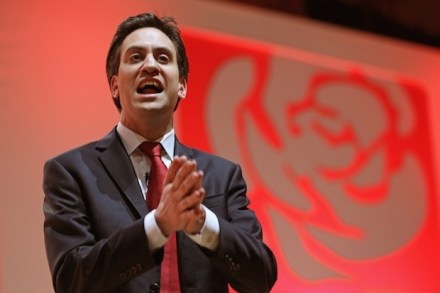
Ed Miliband appears to have found some safe ground for his party this week, attacking the Tories whenever he can over tax avoidance claims. If he plans to continue on this note, Mr S suggests that he picks his words with more care in the future. Speaking at the Welsh Labour conference on Saturday about his plan to launch an HMRC review, Miliband went off message rather badly. The Labour leader promised to ‘stand up for all those who stand in the way of the success of working families'. That couldn't be what he means, could it?

Tory MP accepts donation from banker who used same tax avoidance scheme as Jimmy Carr

From our UK edition

With the Tories currently getting flak for holding a ball for the party's super rich donors in the same week queries were raised about their tax habits, Ken Clarke appeared on the Sunday Politics to deny any suggestions of wrongdoing. He did, however, say that a 'more defensible system' should be put in place with a 'donation cap' and state funding so parties do not become overly reliant on rich individuals. Until that happens it's business as usual for the Conservatives. According to the latest register of interests, Nicola Blackwood, the Conservative MP for Oxford West and Abingdon, accepted a £10,000 donation from George Robinson.

The danger for Miliband in his tax triumph

From our UK edition

Last week was Labour’s best of the campaign so far and the Tories’ worst. The row over tax avoidance and Lord Fink’s comments reinforced the damaging perception that the Tories are the party of the rich. It also raised Labour morale, frontbenchers who used to be pessimistic about the party’s electoral prospects are now bullish. But there is a danger that this tactical victory could turn into a strategic defeat. For Miliband by denouncing tax avoidance—which is legal—and setting himself up as a moral arbiter on the issue, has made his tax affairs and those of his shadow Cabinet, MPs and donors a legitimate subject of public interest. They no longer just have to be legal and fully declared, they also have to pass the higher Miliband bar.

David Cameron’s one law for the rich shows he doesn’t understand the British

From our UK edition

The great historian of the Soviet Union Robert Conquest’s Third Law of Politics reads: 'The simplest way to explain the behaviour of any bureaucratic organization is to assume that it is controlled by a cabal of its enemies.' I have tested Conquest’s law on every bureaucracy I have covered, and it has always held up: nowhere more so than in the case of the British Conservative Party. The only way to explain it is to assume that agents of the Left, determined to lead it to destruction, have seized its leadership. The Conservatives are entering a tight election with one heavy burden. The public see them as the party of the plutocracy. On its own this would not be such a handicap. Very few people just hate the rich for being rich.

In this election, won’t someone please weaponise defence?

From our UK edition

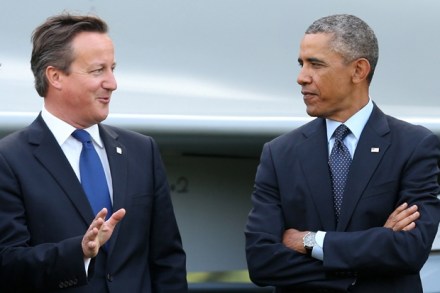
Britain is forfeiting its position on the world stage. With no national debate, we are surrendering our claim to be a major player in international affairs and undermining the Atlantic alliance that has kept Britain and Europe secure for 65 years. In these circumstances, it is easy to understand why Barack Obama has felt obliged to warn David Cameron of the damage he would be doing to the special relationship and to Nato if he failed to commit Britain to spending the bare minimum on defence. The Prime Minister has given several spending pledges — on education, health and overseas aid — so his silence on defence speaks volumes.

Peter Oborne: Ed Miliband is the most accomplished opposition leader since the war

From our UK edition

[audioplayer src="http://traffic.libsyn.com/spectator/TheViewFrom22_12_Feb_2015_v4.mp3" title="Peter Oborne and Dan Hodges discuss Ed Miliband" startat=1343] In this week’s Spectator podcast, we put a Labour and a Tory supporter next to each other to debate the virtues of Ed Miliband. The difference being that Peter Oborne is a passionate defender of the leader, and Dan Hodges his most vocal critic. Peter explains to Sebastian Payne that while he is a conservative journalist, his job is to tell the truth, and put political prejudices to one side, which leads him to conclude that Ed Miliband is a man of incredible accomplishment and bravery, whose efficacy is demonstrated by the ferocity of the press backlash against him.

The Tories are coming to believe in David Cameron’s election hunch

From our UK edition

‘You did this,’ David Cameron repeatedly declared to Tory donors as he reeled off a list of the government’s achievements at the Black and White ball on Monday night. Three months before the general election, the atmosphere at this lavish fundraiser at the Grosvenor House Hotel was self-congratulatory and more upbeat than perhaps it should have been, considering the polls. As guests made ever larger bids in the fundraising auction, the mood was one of confidence that the Tories would be in office again after May. By the end of the evening, there was heady talk of a Tory majority. But it is not the donor class who will determine whether the Tories have the seats to govern alone.

The trouble with Kids Company

From our UK edition

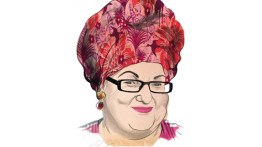
In 2006, when David Cameron was leader of the opposition, he made an infamous speech that is remembered as an exhortation to hug a hoodie. Feral youth, he said, should be helped rather than demonised. He was reaching towards what he hoped would be a new, ‘compassionate’ conservatism inspired in part by the charismatic social activist Camila Batmanghelidjh. She was the perfect lodestar for the young Tory leader. She began her drop-in centre — the Kids Company — in 1996 and within a few years, was helping thousands of disadvantaged inner-city children. She’s colourful, powerful but also a former Sherborne girl with whom Cameron and other members of the establishment felt at ease. Cameron told his shadow ministers that Camila embodied the Big Society.

David Cameron is lucky he faces Ed Miliband, not Nicola Sturgeon

From our UK edition

In some respects David Cameron has been a lucky politician. Lucky that his predecessors had failed so completely that his initial brand of so-called modernisation seemed a punt worth taking. Lucky that he faced Gordon Brown, not Tony Blair. Lucky that he could pivot from 'sharing the proceeds of growth' to 'we're all in it together' without too many people noticing (or caring too much). Lucky, above all, that he now faces Ed Miliband. Because however you dress it up, this has not been a happy government. In economic terms - the defining issue of the age - his party has missed many of its most important targets. Functionally-speaking, George Osborne's record in office has followed Alistair Darling's 2010 plans more than it resembles Osborne's own projections from five years ago.

Miliband’s attacks fell flat at PMQs

From our UK edition

The stage was set for Ed Miliband at PMQs today. Just before the session, The Guardian revealed the names of various Tony donors who allegedly had accounts with HSBC’s Swiss bank. Miliband duly went for Cameron over the matter with some of his most personal attacks yet, accusing Cameron of being a ‘dodgy Prime Minister’ and ‘something rotten’ at the heart of the Tory party. But the attack failed to hit home in the Chamber.

Here’s an election idea: why not weaponise defence?

From our UK edition

A few weeks ago, Boris Johnson posed a question in his residents’ survey for the Uxbridge and South Ruislip constituency. 'Which issues are most important for the country as a whole?' Fifteen subjects were offered for consideration. Not one mentioned defence or security, despite the threatening global scene. There is an election in May. The major parties are competing in the great NHS give-away whilst showing every sign of wishing to bury defence until well after the election, using the expected Strategic Defence and Security Review (SDSR-15) as the convenient touchstone for evasion. Yet it is highly likely that this review will either be pushed into 2016, or again prove unfit for purpose.

Want to understand the conflict in Ukraine? Compare it to Ireland

From our UK edition

What seemed this time last year to be a little local difficulty in Ukraine has metastasised to the point where a peace plan drafted in Paris and Berlin may be all that stands in the way of war between the West and Russia. Over the months, many of those watching, appalled, from the safety of the side-lines, have combed history for precedents and parallels that might aid understanding or offer clues as to what might be done. Last spring, after Russia snatched Crimea and appeared ready to grab a chunk of eastern Ukraine too, the favoured comparisons were with Nazi Germany’s 1938 annexation of Sudetenland. It was a parallel that seemed all too plausible, given the Kremlin’s statements about the need to protect Russian 'compatriots' wherever they might live.

A tip for MPs on Twitter: know the difference between social and broadcast media

From our UK edition

Entering ‘Politicians are…’ into the Google search bar brings predictable results. Well, mostly. In amongst ‘liars’, ‘scum’ and ‘all the same’, Google suggests ‘lizards’: David Icke’s reptilian illuminati are still in the spotlight. Number five on the list is predictable: politicians are ‘out of touch’. Minding the gap has been central to British politics for years. Politicians, the line goes, are out of touch with reality, and, to make things worse, spend their whole time in Westminster, only visiting their constituencies to try to hang onto the seat. Yet some canny MPs are beginning to change this impression. This is the first general election where social media will be truly pervasive.

Labour finally starts to articulate its vision for British business

From our UK edition

Why isn’t Ed Miliband at the British Chambers of Commerce annual conference? Ed Balls tried to defend his boss this morning as he arrived at the event, saying it was ‘getting a bit trivial’ to ask who was attending which conference. The Shadow Chancellor said: ‘Ed Miliband has spoken at this conference a number of times… They’ve got me and Chuka Umunna and this has been tabled and agreed for months and months and months. We’re setting out Labour’s position. As I said it’s the position of me and Ed and Chuka and the whole of the Labour party. Ed has spoken at the conference many times before.

Why Peter Stringfellow didn’t look ‘cool’ at Black & White Ball

From our UK edition

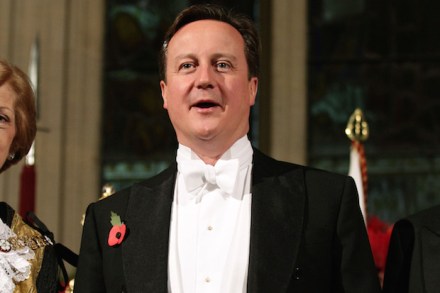
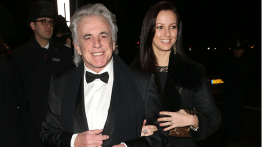
As part of David Cameron's efforts not to appear as the leader of the party of the posh, the Prime Minister is rarely seen in black tie. Last night's Black & White Ball was no exception, with guests told to dress in 'winter cool' for the lavish Grosvenor House bash. Mr S isn't sure what 'winter cool' looks like but judging from the number of scantily clad women in attendance it doesn't involve very much material. While Cameron opted for a lounge suit, one man who definitely stood out in his smart attire was Peter Stringfellow. During an interview on the Daily Politics, the 74-year-old strip club owner defended his decision to wear black tie to the ball.

Exclusive: Tories could only rely on Lib Dem ministers in second coalition

From our UK edition

Tories in Downing Street have concluded that they cannot rely on the support of any Liberal Democrats who are not ministers after the General Election, Coffee House has learned. Even though most talk of how a Tory-Lib Dem coalition would work focuses on the number of seats each party would win, I understand that the Conservatives are now working on the basis that a coalition majority could only include those Lib Dems who are on the government payroll. Most forecasts currently put the Lib Dems on around 25 seats, and the Conservatives expect that this would lead to 10 of those MPs being appointed ministers.