David cameron

Clegg rallies behind Cable

From our UK edition

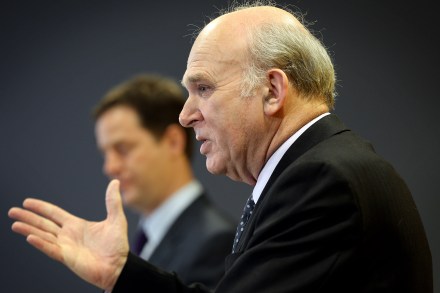
It’s no surprise that the Lib Dems aren’t keen on Adrian Beecroft’s proposals for hiring and firing. This intra-coalition disagreement has been rumbling on for months now, after all. But when Vince Cable spoke out against them yesterday, it wasn’t entirely clear whether this was his party’s line or just Vince being Vince. Other Lib Dems might have taken a more conciliatory approach. Today, however, it’s clear that they’re not going to.

Iran and oil are still on the agenda

From our UK edition

For all the talk about Greece and France and the Eurozone, it’s telling just how much our politicians are focusing on Iran. Indeed, some of the most concrete political settlements of the past few days have concerned that turbulent state. On Friday, the US Congress approved a Bill which included the blunt reminder that, ‘It shall be the policy of the United States to take all necessary measures, including military action if required, to prevent Iran from threatening the United States, its allies or Iran's neighbours with a nuclear weapon.’ And the G8 subsequently put out a statement about oil reserves that clearly had Iran in mind.

Will Nick ignore Vince and go for growth?

From our UK edition

Vince Cable’s reaction to the coming publication of the Beecroft report — which Pete blogged earlier — suggests that the memo on a more cooperative, coalition attitude to growth hasn’t reached the Business Department. The full-on hostility from Cable’s crew to the proposals shows that he remains set against any further deregulation of the labour market. The question now is whether Nick Clegg overrules the Business Secretary. Relations between Clegg and Cameron are warmer at the moment than they have been for a while, the pair dined together with their wives on Thursday night. Aides to both men have been acknowledging in recent days that both sides are going to need to give something in pursuit of growth.

Europe is set to exacerbate the coalition’s internal tensions

From our UK edition

As James suggested yesterday, the publication of the Beecroft proposals this week could be a significant moment. If the coalition can carve a constructive agenda from them, then we might have a set of growth policies worthy of the name. But if it degrades into yet another internal squabble, then that chance may be missed. So, what’s it to be? It must be said, the tea leaves aren’t terribly encouraging this morning. Yesterday, we were told that David Cameron and George Osborne are minded to unravel the red tape that surrounds businesses when it comes to hiring and firing. But, today, one of their fellow ministers has spoken out against that sort of thinking. And guess which one it is. Yep, Vince Cable.

The need for a coalition attitude to growth

From our UK edition

The publication of the Beecroft report on Thursday is a big moment for the coalition. The Lib Dems have long been dismissive of it but it is now a crucial part of any coalition grand bargain on growth. In recent days, those close to David Cameron and Nick Clegg have been talking about a more cooperative, coalition attitude to growth. There’s been a recognition that the two sides both need to make some concessions to give the coalition a more adequate growth strategy. As one senior figure puts it, the coalition needs to show ‘more radicalism and unity on growth’. This is what makes the publication of Beecroft on Thursday so important.

All eyes on Hollande

From our UK edition

Have you noticed the weird hold that François Hollande has over our politics? If you haven’t, then let me tell you: his name has been almost inescapable in Westminster over the past couple of weeks. Even in PMQs this week, David Cameron and Ed Miliband couldn’t resist of spot of Hollandery. Behind-the-scenes, too, there is much consideration being given to how the new French President should be treated. Political strategists recognise, as I’ve suggested before, that his election could be a significant moment in the life of the Eurozone and the European Union.

The strains on the Cameron-Hilton relationship

From our UK edition

I suspect that ‘Weekend secrets of the “chillaxing” Prime Minister’ (£) is one of the last headlines that Number 10 wanted to see this Saturday. It is acutely sensitive about the idea that Cameron doesn’t work hard enough, a charge that it thinks is as unfair as it is damaging. But perhaps more interesting than the details of the Prime Minister’s Sunday routine — a ‘crap film’ and a few glasses of wine at lunch — is what Francis Elliott and James Hanning reveal about the Cameron-Hilton relationship.

Cameron, Fruit Ninja shinobi

From our UK edition

In my Telegraph column yesterday, I quoted a senior adviser to the Prime Minister saying that he ‘spends a crazy, scary amount of time playing Fruit Ninja’ on his iPad. It seems No.10 has been denying it — telling The Times (£) that ‘the real culprit’ is ‘his six-year-old son’. Now, all fathers will immediately recognise this transparent defence. I used to blame my kids for my being into Glee, but it doesn't wash (they're four and two and male). I won't name the official whom I quoted, suffice to say that this was not a half-remembered conversation but a verbatim quote. And the other problem No.10 has is that Cameron has apparently admitted to his Fruit Ninja habit in the past.

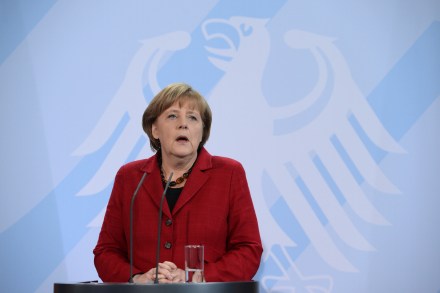
Merkel heads to the G8

From our UK edition

I doubt that Angela Merkel is looking forward to the G8 summit very much. It will mostly consist of the other world leaders telling her to give ground on austerity. But I suspect that Merkel won’t budge much, if at all. She clearly believes that the Greeks can be whipped into line by telling them that the election is really a referendum on euro membership. Hence both her suggestion of a simultaneous referendum on election-day and her backing for the European Central Bank cutting off support to Greek banks which shows that while there’s no formal mechanism for ejecting a country from the single currency there are ways of doing it. The German government, intriguingly, seems more accepting of the idea of the Greeks leaving the Euro than others do.

No time to tinker

From our UK edition

Next week, the Institute of Directors and the Taxpayers' Alliance will release what I humbly suggest will be the most powerful summary of the case for radical supply-side reform in a generation. The report of the 2020 Tax Commission runs to 417 pages, choc full of academic literature showing how big government chokes growth, and looking at what the optimal size of the state is. Broadly speaking, government spending is about half the size of economic output now and the optimal size is about a third. The recommendations are not being released until Monday, but it opens a very timely debate, which I preview in my Telegraph column. Here are my main points. 1. There is no recovery in sight.

Cameron offers parenting advice

From our UK edition

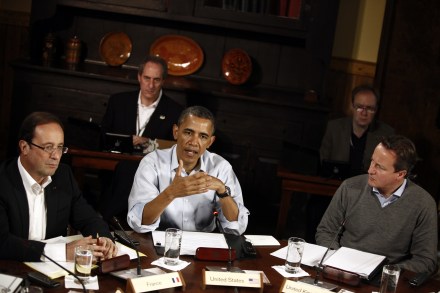
The Prime Minister will be jetting off to Camp David today for the G8 summit — and his first meeting with new French President Francois Hollande. But before going, he’s been popping up on the morning show sofas to promote the government’s new initiatives to help parents. A new digital service will allow parents to sign up to receive tips on looking after their baby via emails and text messages. The government will also offer vouchers for £100-worth of parenting classes to all parents of under-fives, although at first this will just be in trial form. Announcing the schemes in Manchester yesterday, David Cameron pre-empted the attack that these are ‘nanny state’ policies.

Cameron can no longer laugh off Ed

From our UK edition

The Cameroons have long taken comfort in their belief that Ed Miliband will never be Prime Minister. They have seen him as a firebreak between them and electoral defeat. Three things have driven their conviction that the Labour leader will never make it to Number 10. First, their belief that he fails the blink test: can you see him standing outside Number 10? Second, the next election will almost certainly be fought on the economy, Labour’s weakest area. Their final reason was a sense that he would never get the full support of those on the Labour side who know how to win elections. But recent events suggest that this confidence that Miliband will lose the next election might be misplaced.

Cameron vents his euro frustration

From our UK edition

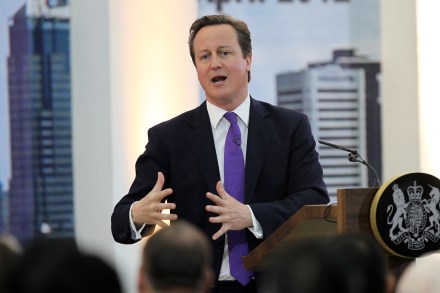
David Cameron’s speech today is a sign of his frustration with the eurozone. Numbers 10 and 11 are increasingly irritated by how eurozone leaders are refusing to accept the logic of their project. What Downing Street is keen to avoid is another wasted year as Angela Merkel gears up for her reelection campaign. So, intriguingly, we see Britain throwing her weight behind Hollande’s support for project bonds. Cameron also uses the speech to again back eurobonds, which Merkel is firmly opposed to as she knows that this would mean Germany effectively standing behind everyone else’s debt. I can’t see a resolution to this crisis coming anytime soon, though. The economics and the politics are, yet again, set against each other.

The 301 Group purge the 1922 committee

From our UK edition

The 1922 elections were not a clean sweep for the loyalist 301 Group slate, they missed out on one of the secretary position. But they have pretty much succeeded in purging the ’22 and the Backbench Business Committee of the so-called ‘wreckers’. Indeed, the only ‘wrecker’ who has survived is Bernard Jenkin who remains on the ’22 executive. But, significantly, I understand that Stewart Jackson, who spoke up in defence of Nadine Dorries at ’22 last week and was very critical of David Cameron at the weekend, came — in the words of one who has seen the actual voting numbers — ‘within a whisker’ of being elected to the executive. These elections are odd affairs, people vote on friendship as much as ideology.

Cameron injects some anger into a playful PMQs

From our UK edition

Strange mood at PMQs today. Rather good-natured. Like a staff awayday with both sides joshing each other for fun. A Tory from the shires, Pauline Latham (Con, Mid-Derbyshire), stood up in her best garden-party dress and made this lament: ‘My constituents are having a very difficult time at the moment.’ Labour MPs cheered like mad. They wouldn’t have done that before the local elections. Cameron and Miliband were in a similarly playful mood. After an enforced separation of two weeks they seemed almost glad to see one other. Ed Miliband charmingly conceded that today’s drop in unemployment was welcome. And Cameron welcomed this welcome from his opponent.

Cameron gets tough with the eurozone

From our UK edition

Today’s PMQs will be remembered for one thing, Cameron saying that the eurozone had to ‘make up or it is looking at a potential break-up’. This is a distinct hardening of the government’s line on the single currency. Cameron’s comment was particularly striking coming just days after George Osborne said that ‘open speculation’ about whether or not Greece would leave the euro was ‘doing real damage across the whole European economy’. However those close to Cameron are not resiling from the remark. Instead, I understand that we can expect more from the Prime Minister on this subject when he makes a speech on the economy tomorrow. The break-up of the euro would be extremely painful in the short-term.

PMQs live blog | 16 May 2012

From our UK edition

<a href= "http://www.coveritlive.com/mobile.php/option=com_mobile/task=viewaltcast/altcast_code=b4764a0fc6" _fcksavedurl= "http://www.coveritlive.com/mobile.

Brooks charges mean more trouble for Cameron

From our UK edition

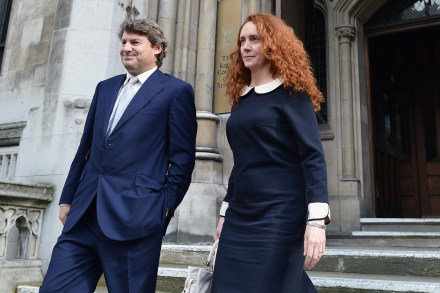
The news that Rebekah Brooks and Charlie Brooks have been charged with perverting the course of justice means that there'll be at least one trial involving friends of the Prime Minister before the next election. In cynical political terms, that Charlie has been charged as well as Rebekah creates an additional political problem for David Cameron. Part of Cameron's explanation for how close he got to Rebekah Brooks has always been that she married an old school friend of his. Undoubtedly, the Charlie Brooks connection added a genuine layer of friendship to relations between Rebekah Brooks and Cameron. I suspect that if it was not for Charlie Brooks there would have been no riding of the retired police horse and the like.

The battle for the ’22

From our UK edition

Elections to the 1922 Committee of Tory backbenchers have always been a test of the relative strengths of the right and left of the party. But this year, the split is between those who are backing the broadly pro-leadership 301 Group slate and those who view the ’22 as more of an alternative voice. The contest has become particularly heated after last week’s fiery meeting of the ’22 Committee. Intriguingly, Stewart Jackson, who was barracked when he tried to defend Nadine Dorries for her ‘posh boys’ attack on Cameron and Osborne, is standing for the executive. Given what he wrote on Sunday and that he resigned as a PPS over the EU referendum vote, the support for him will demonstrate how many MPs are dissatisfied with Cameron’s leadership.

Boris keeps on charming his party

From our UK edition

Not since Michael Heseltine has there been a politician who is so adept at finding the g-spot of the Tory faithful as Boris Johnson. His column today in the Telegraph is a classic example of this. There’s some witty and perceptive BBC bashing, mockery of the Lib Dems and their priorities, and a demand that the Tories get what they need out of the coalition. His line ‘If we are really going ahead with Lords reform (why?)’ sums up Tory feelings on the subject far better than more earnest tracts have done. ConservativeHome is certainly impressed, saying that the Mayor of London is ‘real and raw in an age when few politicians are.’ Boris is also being used by others as a stick with which to beat David Cameron.