Darfur

Do black lives still matter?

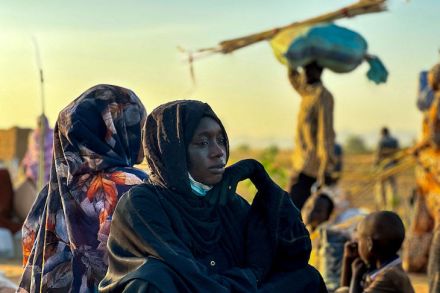
It was an ethnic massacre so bad that it could be seen from space. Satellites picked up bloodied patches of soil in North Darfur’s capital, El Fasher, after Sudan’s Rapid Support Forces (RSF) swept into the besieged city. Pools of blood and piles of bodies were identified. Thousands of people are feared to have died in the appalling violence. Many thousands more have fled for their lives. Others remain trapped in the city. The scenes of slaughter were so blatant that it should have brought marchers out onto the streets in passionate protest. But there wasn’t a peep from the usual suspects. Was this because the killings did not take place in Gaza or the West Bank, but in Sudan, one of Africa’s largest countries?

sudan darfur

A war reporter bravely faces death – but not from sniper fire

From our UK edition

When you are a foreign correspondent and have covered wars in dozens of countries, the last place you’d expect a threat to your life to come from is your own cells. Yet this was the predicament in which the New York Times reporter Rod Nordland found himself in July 2019. Despite close shaves in Lebanon, Iraq, Afghanistan, Central America and Darfur, he only really became aware of his mortality after collapsing with a seizure in India and discovering the existence of a ‘space occupying lesion’ (SOL) in his brain – a euphemism for a growth, benign or malignant. On transfer to a hospital in Manhattan, Nordland learned that his was a stage 4 glioblastoma multiforme, a primary brain cancer with a poor prognosis.