Daniel radcliffe

What future awaits the new Harry Potter stars?

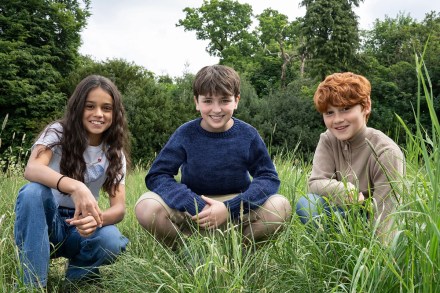
If you haven’t yet heard the names Dominic McLaughlin, Arabella Stanton or Alastair Stout, then rest assured, in a couple of years they will be entirely inescapable. They are the three actors who have been cast in the new and highly anticipated Harry Potter television series, which is going into production for HBO later this year with a likely broadcast date of late 2026 or 2027. Respectively, they’re playing Harry, Hermione Granger and Ron Weasley, and they have been picked after a long search that has seen 32,000 children put themselves forward (or, more likely in many cases, been put forward by their ambitious parents) to play the iconic trio in the new adaptations of J.K. Rowling’s wizarding series.
harry potter

Finally, a version of Merrily We Roll Along that works

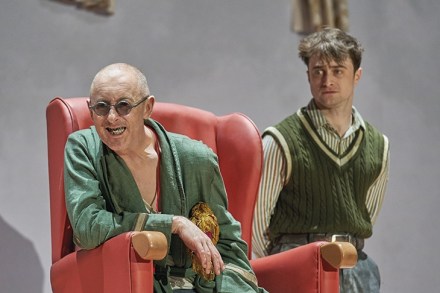
Merrily We Roll Along starts in 1976, at a party held by big-shot Hollywood producer Franklin Shepard, who is surrounded by stars (not least his second wife, a veteran Broadway siren, and his young lover, the nubile leading actress of his latest hit movie). It ends in 1957, with stars of a different kind: constellations in an inky sky that provoke awe and inspiration for a younger, more naive Frank, as he sits on a rooftop with friends Mary and Charlie, dreaming about their future. The juxtaposition — of celestial bodies with shiny, obnoxious celebrity — helps to frame this musical about the loss of innocence.

Merrily

The generation gap over J.K. Rowling

I’ve often thought that a candid fly-on-the-wall documentary about the production of the Harry Potter films would be considerably more entertaining than any of the lackluster pictures themselves (Alfonso Cuaron’s excellent Prisoner of Azkaban duly excepted). Alan Rickman’s recent diaries suggest that the sets were unhappy, frantic places where actors were seldom allowed to create memorable characters and where the focus on the juvenile performers meant that one of the finest British ensemble casts ever assembled often functioned as little more than expensive set-dressing. Yet more than a decade after the final film, the actors continue to command headlines, some of which is thanks to Harry Potter creator J.K. Rowling’s views on the trans issue.

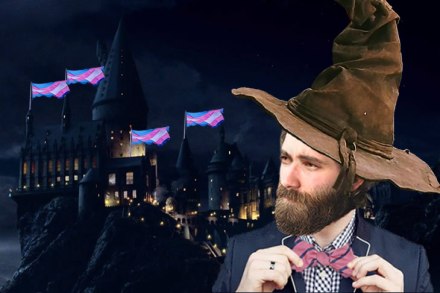
Harry Potter and the Trans-inclusive Wizarding School

Unless you have been living under a rock for the past few weeks, you will have been exposed to the bloodcurdling realization that the world’s (previously) most beloved author, J.K. Rowling, has outed herself as a transphobe, or ‘TERF’ (trans exclusionary radical feminist). After a shockingly bigoted rant on her Twitter feed, followed by a blog post in which she doubled-down on her hatred (I didn’t read it because the things it said were far too upsetting, but I’ve been told it’s filled with unspeakable hate and as such has been named ‘The Blog That Must Not Be Read’).

harry potter