Dada

Rauschenberg is a bore

Pity the security guard at the Guggenheim who must patrol the gallery in which Robert Rauschenberg: Life Can’t Be Stopped is installed. Mounted in commemoration of the artist’s centennial – Rauschenberg was born in Port Arthur, Texas, in October 1925 – Life Can’t Be Stopped includes “Revolver II” (1967), a set of plexiglass discs with images overlaid. A cord leads from the back of this contraption to a pedestal on which there is a control panel – a set of buttons placed in proximity to the viewer. These switches set the plexiglass discs in motion, and they beg to be pushed. On my trip to the museum, visitor after visitor was shushed away from “Revolver II” with the age-old plaint: “Please don’t touch the art.
man ray

Man Ray is alluring in the way a psychopath is

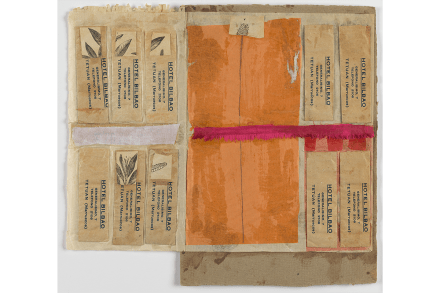
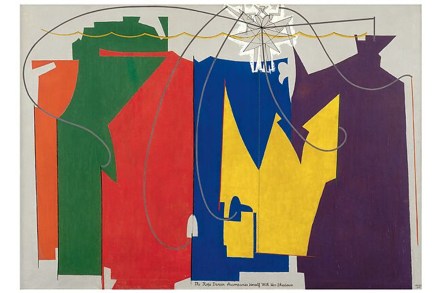
Down to his chosen name, Man Ray (born Emmanuel Radnitzky in Philadelphia in 1890) worked hard to squash anything about him you might call human. At least that’s what is suggested by the Met’s exhibition Man Ray: When Objects Dream. The show spans much of his career – he was associated with surrealism and dada, held a day job as a commercial photographer and experimented with almost every medium imaginable – but coheres around his so-called rayographs, also known, in less egotistical fashion, as photograms. Many will know this medium from elementary school: place objects on top of a light-sensitive sheet and expose them to light to yield white silhouettes against a dark background.