Crime

Review – Hawthorn and Child, by Keith Ridgeway

From our UK edition

‘The body is a multitude of ways of coming apart’ writes Keith Ridgeway in his most recent novel Hawthorn & Child. He describes these ways. It can be beaten, broken or burnt. It can fall down stairs or in to deep water. The excoriation of adult skin differs to that of a child’s. Ridgeway begins with not a character but a body, and as the bodies amass – sometimes sexualised as well as pulverised – the novel itself begins to come apart, and everything in it. Hawthorn and Child are detectives in North London, tasked with finding a crime boss named Mishazzo and solving the shooting with which the novel opens.

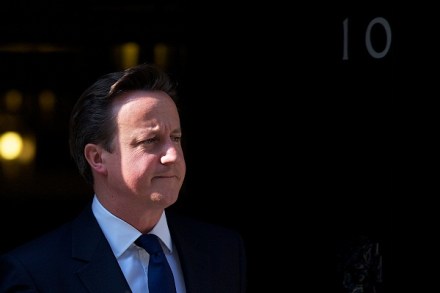
Cameron tries to show he’s still got it with tough crime announcement

From our UK edition

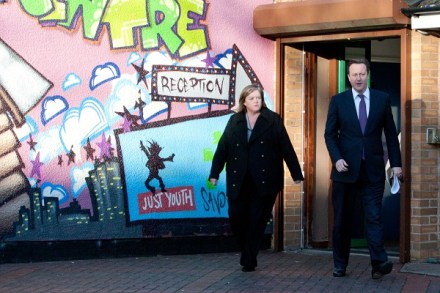
It's clear the government has had a bad week when the Prime Minister pops up on a Monday with a crowd-pleasing policy announcement. Recent re-launches have been shared by senior Lib Dems and Tories following the collapse of Lords reform, for example, to demonstrate that the Coalition is still working well. But today, the Lib Dems are nowhere to be seen: the Prime Minister's big crime announcement is a response to a terrible week for the Conservative party, rather than the coalition as a whole. Cameron is using law and order as a traditional Conservative area, arguing that 'retribution is not a dirty word' and that alongside a 'tough' approach to crime, all but the most high-risk prisoners will be offered rehabilitation by the end of 2015.

Killing as entertainment

From our UK edition

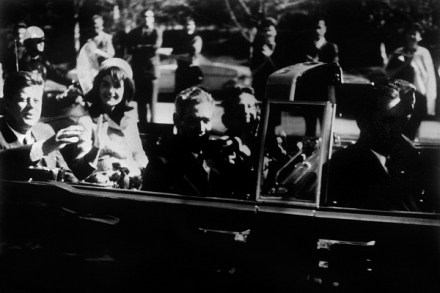
‘The history of our love affair with violence’ is how Michael Newton describes his new book, Age of Assassins. In fact, its scope is much narrower: assassination in Europe and the US from the murder of Lincoln in 1865 to the attempt on Reagan’s life in 1981. So, no Gandhi, no Allende, none of the killings carried out in the name of militant Islam. Even some of the assassinations within the author’s time frame are not considered – Olof Palme’s, for example, or the murders in Italy’s anni piombi in the 1970s and ‘80s. Newton’s central argument is that in the period covered assassination became less about political causes and more about the deed itself; and the framework of the book is essentially chronological.

The language of criminals

From our UK edition

The English language is, as English would have it, an odd duck.  Its nuances are capricious — to the non-native, maliciously so — but its lyricism widely praised. My preoccupation with language possibly stems from my first profession, that of a stage actress (throughout the course of this esteemed career, I made literally hundreds of dollars). Trained to mimic accents from public school Brit to Dixieland Southern belle, I was continually delighted by regionalisms. When I ceased auditioning and commenced scribbling, my fascination with ripe local slang never left me.

The delights of sin

From our UK edition

Epigram 7 from The letting of humours blood in the head-vaine ‘Speak gentlemen, what shall we do to day? Drink some brave health upon the Dutch carouse? Or shall we to the Globe and see a play? Or visit Shoreditch for a bawdy house? Let’s call for cards or dice, and have a game. To sit thus idle is both sin and shame.’ This speaks Sir Revel , furnished out with fashion, From dish-crowned hat unto the shoe's square toe, That haunts a whore-house but for recreation, Plays but at dice to cony catch or so, Drinks drunk in kindness, for good fellowship, Or to a play goes but some purse to nip. Like tabloid exposés of celebrity sexual shenanigans, satire can tread a fine line between condemnation and titillation. Good writing can exploit that confusion.

Troubled families policy deserves cross-party support

From our UK edition

The report published this week by Louise Casey, the Government’s 'Troubled Families' Tsar, has attracted a fair amount of criticism, but what it does illustrate is the chaotic lives these families lead – and the implausibility of thinking that their problems can be solved by the kind of flagship social policies traditionally favoured by either Conservatives or Labour. As Isabel put it, Conservative 'reform of the welfare system will pass many of the families by. In these stories there is no calculated decision to opt out of the labour market because of generous benefits, more an endless failure to cope with life and the way it has worked out'.

Why we should trust trial by jury

From our UK edition

The acquittal of PC Simon Harwood on Thursday for the manslaughter of Ian Tomlinson provoked a strong reaction in the press. Leading the charge, the Daily Mail's headline summed up the mood: 'Freed, the 'thug in police uniform': what jury weren't told about the PC cleared of G20 killing.' The criticism was aimed at not only Simon Harwood, but also the Metropolitan police for re-employing the officer with a string of complaints against him, and the court for not allowing evidence of his disciplinary record to go before the jury, the insinuation being that there must be something wrong with a trial process that keeps the jury in the dark about a defendant's background.

The state needs to be stronger

From our UK edition

Louise Casey, the government’s ‘troubled families’ tsar, is in loud voice in this morning’s Telegraph. The government, she says, must ‘get stuck in’ and intervene in these lives for the better by getting women to take ‘responsibility’ for themselves and their children. ‘It’s not toughness for toughness sake,’ she says. ‘It’s toughness so we sure their kids get to school so they don’t end up as criminals.’ Casey’s words are underpinned by the view that the state’s approach thus far has been wrong-headed. 'I also don’t think we should soft-touch those families. We are not running some cuddly social workers’ programme to wrap everybody in cotton wool.

Tories, oppose family values

From our UK edition

For almost a decade now, what social conservatives say and the evidence in front of our eyes has been diverging with remarkable speed. According to the received wisdom, the permissive revolution of the 1960s led to family breakdown, which in turn led to today's terrifying crime rates. The small snag with the argument is that crime rates are not terrifying. The decline in marriage and rise in divorce notwithstanding, crime rates have collapsed. Social conservatives can take some comfort from the fact that the fall coincides with the increase in the prison population since 1990. But a rise of about 30,000 in the number behind bars is small beer when set against, the vast and vastly welcome fall in crime. The murder rate has seen the most startling decline of all.

Dirty, ugly things

From our UK edition

Sometimes fiction can be more accurate than published facts. Ten years ago a film, Dirty Pretty Things, told about the plight of illegal immigrants into Britain and the least-explored scandals of all: the black market trade in human organs. It was an aspect of Britain’s secret country, the black market occupied by a million-plus souls that produces a tenth of our economic output. Most of these people work illegally, perhaps in criminal endeavour or perhaps honestly, but in fear of immigration police. It is, by definition, an unregulated environment in which all manner of evil can be incubated. It is becoming clear now that one of these evils is the return of slavery.

Better in Black

From our UK edition

It is almost twelve months ago, following the below-par A Death in Summer, that I wondered aloud on these pages whether Benjamin Black (aka Booker-winner, John Banville) had what it took to write a crime series. A resounding yes comes in the form of the fifth instalment — sixth novel overall, after the 2008 stand-alone The Lemur — of the Quirke series, Vengeance. Black has finally rediscovered the formula that made his debut, Christine Falls, so memorable.   To be sure, crime fiction purists will still bemoan the absence of standard clue-laying.

Helping troubled families

From our UK edition

Earlier today, the government, in the form of Eric Pickles, announced that it was launching new incentives to encourage local councils to improve the lives of 120,000 families, identified as ‘troubled families’ by the Social Exclusion Task Force in 2007. Those incentives are: A). £3,900 for each family whose children attain 85 per cent attendance at school. B). £4,000 for each adult in a troubled family who holds down a job for three months. The measures have been welcomed by the Local Government Association, which does not praise this government all that often. The cynic will say that the LGA is merely welcoming more money for its associates.

Sadly, protest music is alive and well

From our UK edition

There is plenty of nostalgia around in this Jubilee Weekend. Any look back on 60 years brings temptation to think that the past was better than the present. This is what Woody Allen calls ‘golden age’ fallacy, which is defined (in his Midnight in Paris) as an age-old and ‘erroneous notion that a previous time period is better than the one one’s living in.’ This disorder was on show during BBC 2’s Review Show last night, where guests were bemoaning the death of protest music.   The panel (dominated by Kirsty Wark and music critic Paul Morley) were discussing BBC 4’s 3 part documentary, Punk Britannia. The first part of this series is available on i-Player and it is worth watching as a piece of cultural – and political – history.

A date with death

From our UK edition

On 8 January 1937, an old man was taking his prize songbird for an early morning walk in the eastern section of Peking when he came across a woman’s body lying in a ditch. The face had been disfigured, the ribs hacked apart and the heart removed. Pathologists who examined the corpse thought it was one of the worst cases of mutilation they had ever seen — ‘and that was saying something’. She was identified as a 19-year-old British schoolgirl called Pamela Werner, the adopted daughter of a former British consul, Edward Werner. To begin with, the murder was thought to be the work of a random sex maniac. Pamela had been a quiet, rather plain girl and it seemed inconceivable that she might have known her killer.

Recent crime novels | 26 May 2012

From our UK edition

William Brodrick’s crime novels have the great (and unusual) merit of being unlike anyone else’s, not least because his series hero, Brother Anselm, is a Gray’s Inn barrister turned Suffolk monk. The plot of The Day of the Lie (Little, Brown, £12.99), Anselm’s fourth case,  is triggered by the discovery of files relating to Poland’s suppression of dissidents in Warsaw, mainly in the 1950s. Anselm’s oldest friend, now blind, was caught up in a linked later betrayal while working as a journalist in Poland. He wants Anselm to go there in his stead to examine the file that holds the name of the informant who betrayed both him and many others.

Let’s talk about this

From our UK edition

What a strange place Britain has become. You sometimes need some time away to realise quite how strange. Take yesterday’s main story: the latest paedophile rape-gang case from the north of England. The judge in the trial told the men, during sentencing, that they had selected their victims ‘because they were not part of your community or religion’. But that is the sort of fact which causes the most terrible contortions in modern Britain. The perpetrators were all Muslim men of Pakistani origin and the victims all underage, white girls. We know exactly how we should think, how loud would be our proclamations and our desire to analyse the ‘root-causes’ were this situation reversed. But this way round? Gulp.

The American way of justice

From our UK edition

Conrad Black sympathises with the NatWest Three — victims of British cowardice and a corrupt US legal system It was the misfortune of David Bermingham and his co-defendants to be very peripherally connected to the Enron debacle. Enron was the ultimate hot financial client for a merchant banker and designer of sophisticated financial vehicles, the author’s occupation at Greenwich National Westminster. Bermingham’s offence was to produce a spectacularly imaginative new structure for an existing financial company, which impressed the Enron financial officers, at a time when Greenwich National Westminster was being offered for sale and NatWest itself was a takeover candidate.

Miliband talks tough

From our UK edition

Remember when Ed Miliband couldn't be found anywhere? Now you can barely get away from him. The Labour leader has been conspicuous by his presence over the past week, whether on the airwaves or in graffiti form (see left, a photo taken on London's South Bank yesterday). And he's continued that hi-vis trend today, by launching Labour's local election campaign in Birmingham. Two things stand out from the speech he gave at that event. The first was his heavy emphasis on the pledges he announced last week: capping railway fares, unfreezing the personal allowance for pensioners, etc.

Riots report undermines the Tory diagnosis, but spreads itself too thin

From our UK edition

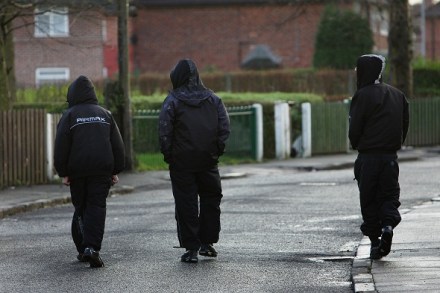
After last August’s riots the debate became quickly polarised. Were socio-economic factors like unemployment to blame, or was it all down to the individual choices of the rioters? David Cameron and other Conservative ministers knew which side of this debate they wanted to be on. They had been taken by surprise by the riots, initially failing to realise how serious things were, but when they got back from their holidays they set out a clear and confident line, brushing off most questions about links to the state of the economy or youth attitudes, and condemning the riots as ‘criminality pure and simple’. The soundbite was deliberately simplistic; Conservative ministers’ actual views were more complex.