Covid

Small, skewed pictures that cast a spell: the art of Mollie Douthit

From our UK edition

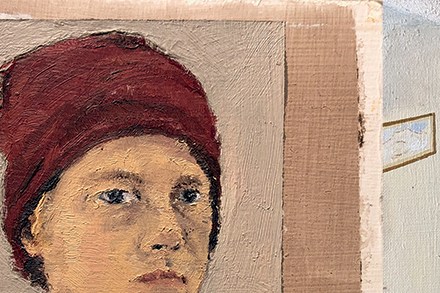
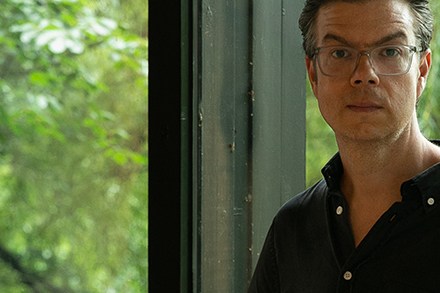
In this clever, moving mosaic of a book, Sara Baume tells us she originally wanted to be an art critic and that she wrote exhibition catalogue copy. It has served her well, as Opening Night is an evolved form of that genre – including 39 excellently reproduced images of paintings by the subject, and one extra – but it is also a form of memoir. By that I do not mean ‘life writing’ or ‘autofiction’, as it is a work of remembering and memorialising, even if that involves recording the gaps and lapses. The lacunae operate like an undercoat: the occluded thing that changes how you see. Just before the pandemic, Baume states in the opening sentence: ‘I met Mollie’s paintings before I met Mollie.

America is still an English country

Americans have been enjoined, as we approach our country’s 250th anniversary, to be a bit more grateful. Good advice. It is not just the freedom of speech and the purple mountains’ majesties we should be taking stock of. It is also our knack, in recent decades, for miseducating ourselves, failing to read the signs of the times, making wrong choices – and then profiting from the fallout. In the global financial crisis that ran for a decade after 2008, blunders in American financial engineering, from complex derivatives to mortgage-backed securities, bankrupted debtor countries and cost several others their sovereignty, most notoriously Greece.

england

A meditation on reality: Transcription, by Ben Lerner, reviewed

From our UK edition

Near the beginning of Ben Lerner’s new novel the unnamed narrator recalls visiting an exhibition of botanical models made by the father-and-son glass artists Leopold and Rudolf Blashka in Dresden in the 19th century. Like Zeuxis’s grapes, so lifelike that birds would come and peck at them, the models, ‘impossibly delicate things’, challenge the narrator’s sense of the real: I kept seeing the flowers as organic one instant and as artificial the next, a kind of duck/rabbit effect, not between things the object might represent but between nature and culture, the given and the constructed. Transcription, like Lerner’s previous three novels, is an autofiction about the tension between the given and the constructed. It is arranged in three acts.

Farewell to the Calloways: See You on the Other Side, by Jay McInerney, reviewed

From our UK edition

Many of Jay McInerney’s characters had their glory days in the 1980s and 1990s of his vivid early novels, with all of the excesses and freedoms that he captured, most famously in his 1984 debut Bright Lights, Big City. As familiar as New York’s landmarks and favourite haunts remain, the city of 2020 can seem a bewildering landscape for his creations, even before the darkened lights of the pandemic. The Calloways are the literary ‘It couple’ about whom McInerney first wrote in the elegiac Brightness Falls (1992). Now, in See You on the Other Side, friends and acquaintances get hit by #MeToo with the kind of randomness reserved for corked wine or a careless investment.

A revival of Alan Bennett’s early work is long overdue

From our UK edition

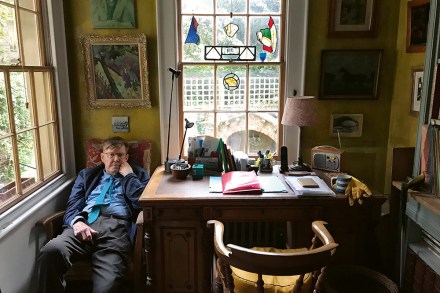
It is a curious literary form, the published diary. A surprising number of the classic diarists did write for eventual, usually posthumous, publication – Chips Channon under a 60-year embargo, A.C. Benson, Samuel Butler, in his wonderful notebooks, and surely the possibility was in the minds of Samuel Pepys and the Duc de Saint-Simon. More recently, great diaries have been published within the author’s lifetime. James Lees-Milne’s first instalment came out 30 years after the period it described. Alan Clark’s initial offering, covering 1983-92, appeared in 1993. Tony Benn’s hilariously tedious volumes emerged on a rolling programme which slowly caught up with the events they described.

The Epstein files and the new Satanic Panic

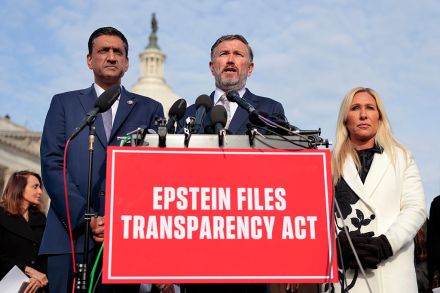
I’ve spent the last few years building an audience of skeptics and – let’s be honest – more than a few conspiracy theorists who turned out to be right about some pretty big things. We saw #MeToo devolve into a moral panic where accusation equaled guilt and due process was something only rape apologists cared about. We watched Covid turn half the country into snitches who, drunk on their own righteousness, ratted out neighbors for having a barbecue. We talked endlessly on podcasts about groupthink, social contagion and mobs. And on some of the biggest questions – the lab leak, institutional corruption, “gender-affirming care” and the machinery of public manipulation – the conspiracy theorists were vindicated.

‘Boris didn’t care!’: Dominic Cummings on lawfare, lockdowns & the broken British state | part one

From our UK edition

47 min listen

In this special two-part interview, Michael and Maddie are joined by Dominic Cummings. After starting his political career at the Department of Education, Dominic is best known as the campaign director of Vote Leave, the chief adviser in Downing Street during Boris Johnson’s premiership, and one of the most influential strategists of modern times. Whether you consider him a visionary reformer or (as David Cameron once said) a ‘career psychopath’, his ideas – on government, technology, the blob, education and the future of the right – continue to provoke debate. In part one, Dominic diagnoses Britain’s institutional decline and takes us inside Whitehall’s ‘heart of darkness’.

Dominic Cummings on lawfare, lockdowns and the broken British state – part one

From our UK edition

In this special two-part interview, Michael Gove and Madeline Grant are joined by Dominic Cummings. After starting his political career at the Department for Education, Dominic is best known as the campaign director of Vote Leave, the chief adviser in Downing Street during Boris Johnson’s premiership, and one of the most influential strategists of modern times. Whether you consider him a visionary reformer or (as David Cameron once said) a ‘career psychopath’, his ideas – on government, technology, the Blob, education and the future of the right – continue to provoke debate. In part one, Dominic diagnoses Britain’s institutional decline and takes us inside Whitehall’s ‘heart of darkness’.

Slipshod: a short story by Sarah Perry

It was months before the difficulty with Marnie and Addison was talked about, or even alluded to. The sight of their names in emails circulated around the department was enough to cause a pall to settle on everything, like ash from fires only just put out. Besides, the nature of the difficulty (that was the word we all used) was both so opaque and so distressing we’d have had trouble talking about it, even if we’d wanted to. It fell to me to piece things together. My brief from Helen was simply to satisfy the university that nobody in the department was to blame. It fell to me because I am, she tells me, part of the furniture: unremarkable, functional, predictable.

slipshod

Will the new Avatar be the last?

For someone who has directed two of the three highest-grossing films of all time – and if we include Titanic in the mix, three of the top five – James Cameron struck an unusually modest figure at this week’s premiere Avatar: Fire and Ash. When asked at the screening whether its inevitable box-office success would result in the planned fourth and fifth films being produced, the erstwhile King of the World responded “I’m not even thinking about four. Are you kidding me? I'm unemployed right now.” Admittedly, Cameron’s definition of “unemployed” is rather different to that of most people, whether they be A-list directors or the less fortunate.

Q&A: Lockdown ‘sins’ & where Conservatism went wrong

From our UK edition

41 min listen

To submit your urgent questions to Michael and Maddie, go to spectator.co.uk/quiteright. This week on Quite right! Q&A: was lockdown the right call – and what did Britain get catastrophically wrong? Michael and Maddie unravel the ‘sins’ of the Covid era, from criminalising everyday behaviour to the rise of snitch culture. Did Sweden show there was a better way? Then: is conservatism suffering from a crisis of confidence? Michael reflects on 14 years of Tory drift, why the party ‘talked right but governed left’, and how Blairism, wokery and cultural blindspots reshaped British politics.

Covid report: ‘a £200 million I told you so’

From our UK edition

15 min listen

Yesterday we had the publication of the second module of the Covid Inquiry on the decision-making at the heart of government. It confirmed a toxic and disorganised culture at the heart of No. 10 and the headline is that the government acted ‘too little, too late’, costing as many as 23,000 lives in England. That figure is already disputed, not least by our economics editor Michael Simmons who argues on the podcast that the inquiry is a ‘disgrace’ and demonstrates a lack of domain knowledge about the limitations of modelling. Where else does the inquiry fall short? What will be the political ramifications in Westminster? James Heale speaks to Michael Simmons and Isabel Hardman. Produced by Oscar Edmondson.

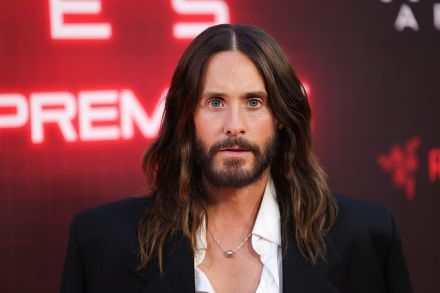
Why does Jared Leto still have a career?

This weekend, Tron: Ares releases across US cinemas, and is expected to make a decent, rather than record-setting, amount of money in its opening weekend. It is a curious film franchise in that neither of the two films that precede it are especially beloved, but both have iconic soundtracks composed, respectively, by electronic music pioneer Wendy Carlos and French electro duo Daft Punk. (The honors this time around fall to Trent Reznor and Atticus Ross, aka Nine Inch Nails.) Yet whatever the strengths and weaknesses of Tron: Ares – and the early reviews have not been kind – there is one aspect that can only make audiences groan in anticipation, and that is the casting of its star, Jared Leto.

The Freedom Convoy trial has disgraced Canada’s justice system

In a disgraceful conclusion to a disgraceful trial, Freedom Convoy organizers Tamara Lich and Chris Barber have been sentenced to 12 months of house arrest and 6 months of curfew (with credit for the 49 days Lich has already spent in jail) – plus 100 hours of community service. An ironic addendum. For in the packed courtroom on October 7, there was likely not one person who has served the community with greater generosity than the two defendants. Tamara Lich and Chris Barber, organizers of the most successful protest in Canadian history, kept their cool, kept the peace and brought national unity, patriotism and common sense back to Canada after the pandemic – this, despite the sustained efforts of the most aggressively controlling, divisive government the nation has ever had.

Is China riding for a fall?

From our UK edition

The West gets China wrong. Spectator readers know the country as a vampire state feasting on foreign intellectual property and spewing out phony economic data in its thirst for wealth and power. It certainly is these things – but it also isn’t. It is more complex, and telling only half the story is ultimately self-defeating. While there is plenty to appal us about modern China, there is also much that we can learn from it. In Breakneck, Dan Wang reveals both sides of the ledger. ‘Too many outsiders see only the enrichment or the repression,’ he complains. His ‘big idea’ is that China is an engineering state, building at breakneck speed, whereas the United States is a ‘lawyerly society’ that has forgotten how to get stuff done.

Boomer hate has gone too far

Charles Murray, whose work on race and IQ has made him something of a darling of the online right, found himself out of favor with his fan base when he posted on X that a young married couple – each making $15 an hour and working 48-hour weeks – can afford a baby and a place to live. The reaction was furious. “Charles Murray is a good man,” wrote Zarathustra, a popular dissident right-wing poster. “Sadly, however, he’s also a Boomer. Which by necessity, means his bumper sticker talking points on political economy are comically out of touch garbage, and read like a moldy Reagan Youth pamphlet from 1982.” Murray’s post broke X containment and made it to the subreddit r/BoomersBeingFools.

Culture clash: Sympathy Tower Tokyo, by Rie Qudan, reviewed

From our UK edition

Language, it has been said, is the only true democracy – changed by the people that use it. But as with any democracy, there is plenty of disagreement about what alterations are either possible or permissible. Japanese uses three distinct writing systems – kanji, hiragana and katakana – and the relationship between two of them, kanji and katakana, is a key theme of last year’s prizewinning speculative fiction Sympathy Tower Tokyo by Rie Qudan – a lyrical, witty, satirical but meditative and meticulous text, now published in Jesse Kirkwood’s vibrant and faithful English translation. We are in the sprawling metropolis of Tokyo in the lightly altered mid-2020s.

Mamdani, the fraud abroad

On Monday night, New York City golden boy Zohran Mamdani, the Democratic nominee for mayor, tweeted, after the terrifying gun attack on Park Avenue, “I’m heartbroken to learn of the horrific shooting in midtown and I am holding the victims, their families, and the [New York Police Department] officer in critical condition in my thoughts. Grateful for all of our first responders on the ground.” He also sent special condolences to the families of Didarul Islam, the Bangladeshi immigrant and NYPD officer who died in the attack. But there’s a reason Mamdani was holding NYC in his thoughts and not giving a press conference on the ground: He’s at his family’s luxury compound in Uganda, where he’s summering after getting married there a couple of weeks ago.

Elites keep making education about themselves

This month, Congress put school-choice funding on offer to the states as part of the Big Beautiful Bill. Progressives have bashed the provision for the harm they claim school choice will do to under-resourced school districts. But the program saps not a dollar from public schools, which shows the protest for what it is: elitist bluster. The same progressives who fumbled their schools’ Covid responses, instituted woke curriculum and pushed adolescent gender transitioning should not decree to parents which school is best for their children. Public schools have not earned Americans’ trust over these past few years; many private schools have. Under the new measure, families can receive a tax credit for donations to an approved scholarship-granting nonprofit organization.

Elementary school

The doctor will kill you now

It’s the stuff of nightmares. You wake up on a cold metal table, fully conscious but unable to move or communicate as masked figures prep you for some unknown procedure – it turns out to be your last. This isn’t the plot of a Criminal Minds episode, but quite possibly a far too common reality in an American medical system that seeks to harvest organs from donors who are very much alive. It’s the latest example of modern progressive institutions committing harm in the name of help. A recent New York Times investigation revealed the disturbing lengths procurement agencies go to retrieve organs. Historically, organ donation occurred only from patients declared brain-dead, an “irreversible state.

Organ transplant in Paris (Getty)