Conservative party

Cameron’s great secret: he’s not a very good politician

From our UK edition

This was a vital election. A Tory failure would have been an act of political treason. Five years ago, the UK was grovelling with the PIGS in the fiscal sty. Our public finances were in a deplorable state, the financial system was in crisis and growth had disappeared over the economic horizon. No one has paid enough tribute to Messrs Cameron and Osborne for the sang-froid they displayed in the face of such adversity, and for their success. Not only that: we have two long-term structural problems in this country, both of which Lady Thatcher sidestepped, both of which David Cameron tackled. The first is welfare. In its corrosion of morale, its sabotage of élan vital, our welfare system creates an underclass.

Tory MP teaches SNP MPs Westminster etiquette

From our UK edition

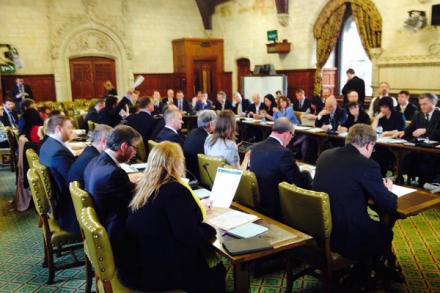
On Monday when 56 SNP MPs descended on Westminster, the youngest of the new intake Mhairi Black gushed that everyone had been so nice. Two days in, and cross-party relations have begun to cool. Carol Monaghan, the MP for Glasgow North West, claims that Simon Burns, the Tory MP for Chelmsford, scolded her as well as her fellow SNP politicians for their bad etiquette: https://twitter.com/Carol4GlaNW/status/598423992509321216 However, Burns has clarified the situation to Mr S: 'I was giving a talk about how to debate in chamber. If you agree you say 'hear, hear' and I mentioned that in recent years an unfortunate habit of clapping has occurred and that is deplorable.

Cameron, May and Javid are trying to prove the Tories are the natural party of government

From our UK edition

The Tories are already putting some clear blue water between the coalition and the present majority government. Firstly, the new Business Secretary Sajid Javid has promised new tougher strike laws — ensuring that a minimum turn out of 50 per cent turnout is required for all strikes, while 40 per cent of all members will need to back a strike affecting essential public services. The TUC's Frances O'Grady has already hit back, arguing the new rules will make 'legal strikes close to impossible'. Secondly, Theresa May and David Cameron are promising to tackle our ‘passively tolerant society’.

Student visa reforms will be a nightmare for university vice-chancellors

From our UK edition

As the dust settles on the outcome of the 2015 general election, one group of business executives who we can be sure are less than ecstatic at what the future may hold in store for them are the university vice-chancellors. During the last parliament, Theresa May was responsible for a raft of ministerial directives aimed at reducing the number of students coming to the UK from outside the European Economic Area. She introduced a quota system for these international students, and forced (through the withdrawal of visa sponsorship licences) the virtual closure of scores of non-taxpayer-funded educational institutions.

Jim Messina interview: how the pollsters got it wrong and why Labour lost

From our UK edition

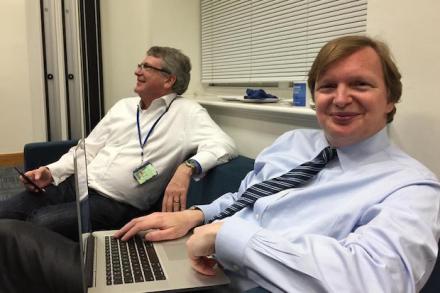
Jim Messina is the American elections guru who got the general election right. Hired by the Conservatives as a strategy adviser in 2013, the Tories hoped he would emulate Barack Obama's 2012 re-election strategy. And so he did. Whereas British pollsters consistently missed that the Tories were moving into pole position, Messina’s internal numbers showed for weeks they were on course to be the largest party. Speaking to The Spectator from Washington, D.C, he reveals that he was not at all surprised when the BBC exit poll showed the Tories were going to trounce Labour. ‘We predicted 312 seats that morning to Lynton [Crosby] and 316 was right in line with that, so it just kind of validated what we’d been seeing,’ he says.

Blue collar Conservatism is essential but difficult for the Tories

From our UK edition

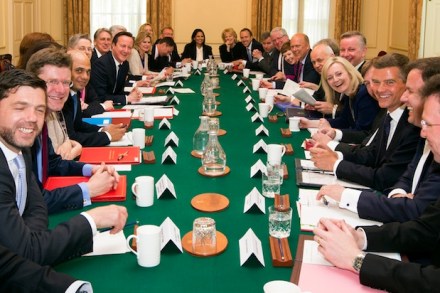
David Cameron is holding the first all-Tory Cabinet meeting since 1997 today, and he is expected to emphasise his mission for this Government to be characterised by 'blue-collar Conservatism' in which the Tories become the natural party of working people. It is, some hope, David Cameron's chance to show, finally, what he stands for in politics. Previously when the Tory leader focused on a defining brand and a moral mission, it seemed a bit wishy-washy and insincere, with a lot of hugging of dogs and green trees. Then in this election campaign Cameron ended up being brutally pragmatic, not so much giving voters a reason to vote Conservative, but a reason to stop the SNP holding sway over a Labour government.

No Cabinet job for Grant Shapps

From our UK edition

The party chairman in a general election winning campaign can normally expect a plum job as a reward, especially when that victory was against the odds. Tonight, though, Grant Shapps finds himself not in the Cabinet but a Minister of State at the Department of International Development. Shapps’ treatment is, at first, puzzling. After all, the Team 2015 network that he created appears to have done a decent job in neutralising the supposed advantage that Labour’s ground operation was meant to give it But those around the Tory leader, say that David Cameron simply became fed up with the odd allegations that kept popping up about Shapps. So, the fairness—or otherwise—of his treatment depends on whether these stories are true or not.

Winner of the Guardian’s election sweepstake finds victory isn’t sweet

From our UK edition

Mr S previously reported that there were plans to donate the Guardian's election sweepstake to a foodbank. The decision was made after the organisers assumed that none of their employees could have possibly correctly guessed that there would be a Conservative majority. Now, word reaches Steerpike that the matter didn't stop there. In fact, one employee at Guardian HQ was so bold as to reply saying that they had in fact come close to guessing the result, with an estimate of 324 Conservative seats and 227 Labour seats (the final result being 331 to the Tories and 232 to Labour). Not everyone at the publication was willing to accept this person's victory and instead it was suggested that they ought to 'read the room'.

Anti-austerity protester makes sign out of box for £600 television

From our UK edition

Seemingly missing the democratic process that returned a Tory government with a majority and an increased share of the vote, the hard left took to the streets of Westminster over the weekend to protest against austerity. However, has 'austerity' really hurt all of the protesters who took part? Look closely at the box one used to make their 'no cuts' sign: A 50 inch Sony LED TV that retails at over £600. The face of modern Britain's dispossessed. Meanwhile rumours abound that Ed Miliband has already found a new job following his resignation as Labour leader: https://twitter.com/neon_black1871/status/597120242523967488 However, this is at best a short-lived career change as Miliband has since been spied on his way to Ibiza.

Podcast special: Cameron’s new cabinet and runners and riders for Labour leader

From our UK edition

In this View from 22 podcast special, Fraser Nelson, James Forsyth and I discuss the beginnings of David Cameron's new Cabinet and how the ministers announced so far demonstrate the Prime Minister's reticence to shake the boat. Does Michael Gove's new role at Justice show he's repaired his relationship Cameron? Will Mark Harper manage to keep the Tory backbenchers in step with Downing Street? Plus, we look at the runners and riders in the Labour leadership contest and why Chuka Umunna and Andy Burnham are the early favourites.

Iain Duncan Smith to stay at Welfare

From our UK edition

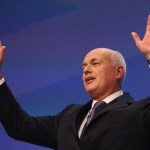
News has just broken that Iain Duncan Smith is to remain as Secretary for State for Work and Pensions. Now, normally a Cabinet Minister remaining in post would not be news but there had been repeated rumours that IDS would be shuffled out of this job. The fact that IDS is staying tells us, I think, two things. First, that even with £12 billion more of welfare cuts needed, Cameron wants the policy to be as much about saving lives as money. Second, the decision not to shuffle IDS shows a sensibly cautious approach to party management. Moving IDS, a former leader, from the job he loves doing would have caused upset. By keeping him in place, Cameron ensures the continued loyal presence round the Cabinet table of someone trusted on the Eurosceptic right of the party.

How David Cameron will manage his Tory coalition

From our UK edition

Up until Thursday night, everything that David Cameron and George Osborne had done in government had had to be agreed by the Liberal Democrats. Every policy had to go through the ‘Quad’, the coalition government’s decision making body made up of Cameron, Osborne, Clegg and Alexander. That doesn’t have to happen anymore. As one Downing Street figure says: ‘It is all completely different now, we can power forward with what we want to do. There’s no need for everything to be watered down. It’s invigorating’. Not having to manage a coalition, also frees up huge amounts of time for both Cameron and the Number 10 operation. It would be well advised to spend a good chunk of this time, say half, on managing the party.

Justice for Michael Gove

From our UK edition

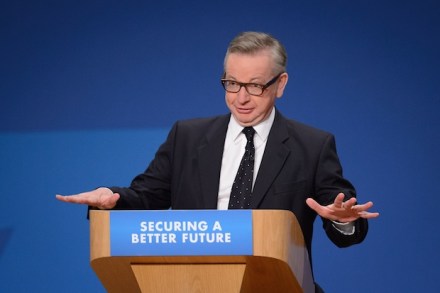
Michael Gove is the new Justice Secretary and Lord Chancellor, Downing Street has just announced. Chris Grayling will move to become Leader of the House. Number 10 is also confirming that, as David Cameron promised during the election campaign, Nicky Morgan will continue as Education Secretary. Becoming Justice Secretary marks a return to Gove running a big department after his service as chief whip in the run up to the general election. I suspect that there will be two things that Gove concentrates on. First, sorting out Britain’s relationship with the ECHR. Grayling had already committed the Tories to withdrawing from the Convention if parliament and courts here could not veto a judgement from the European Court of Human Rights applying in this country.

There was one pollster who predicted a Conservative victory: Jim Messina

From our UK edition

The shock election result has resulted in a lot of finger pointing. Why did the pollsters not see a Tory victory on the horizon? Was Labour deluded in thinking they had any chance of making it into government? Judging from conversations I've had with Conservatives, those inside the party weren't particularly certain about getting the most seats either, never mind a majority. The leadership campaigns were even prepped for a contest soon after May 7. But there was one man who did see a Tory victory coming: Jim Messina. The Obama guru and former White House deputy chief of staff was hired by the Tories for his data nuance and his substantial salary was clearly worth it.

The reshuffle has begun – but the real excitement will happen on Monday

From our UK edition

David Cameron has reappointed several of the most senior members of the government. George Osborne stays as Chancellor, Theresa May remains Home Secretary, Philip Hammond Foreign Secretary and Michael Fallon Defence Secretary. Indeed, the only change is Osborne taking over William Hague’s old First Secretary of State title. This is formal recognition that Osborne will, in effect, be the deputy Prime Minister of this Tory majority government. We are told to expect the rest of the reshuffle on Monday. There’ll be particular interest in who Cameron chooses to be his chief whip, a role that takes on particular importance with this small majority.

Cabinet reshuffle: George Osborne, Theresa May, Michael Fallon and Philip Hammond remain in their posts

From our UK edition

David Cameron has 'reshuffled' his Cabinet. George Osborne has been re-appointed as Chancellor, and will also be First Secretary of State, as were William Hague and Peter Mandelson. The title implies that he is the most senior minister.  https://twitter.com/David_Cameron/status/596701353289846786 Theresa May will remain as Home Secretary. https://twitter.com/David_Cameron/status/596704917374525440 Philip Hammond will also remain in his role as Foreign Secretary, and Michael Fallon will keep his job as Defence Secretary. https://twitter.com/David_Cameron/status/596707531520610304 https://twitter.

The final 2015 general election results

From our UK edition

All of the results of the 2015 general election are in and we have a result: the Conservatives have a major of 12 seats. Here is a breakdown of the results for each of the parties: [datawrapper chart="http://static.spectator.co.uk/PifSa/index.html"] And a few other figures you might find interesting: Turnout was 66.1 per cent, up from 65.1 per cent in 2010 19.4 per cent of MPs in the new parliament will be female, up from 15.

Listen: The Spectator’s verdict on the 2015 general election

From our UK edition

In our final podcast special of the 2015 general election, Fraser Nelson, James Forsyth, Isabel Hardman and I discuss the astonishing results and what we can expect from David Cameron’s new Conservative government. Are we finally going to see the unrestrained Cameron? Who is already limbering up to replace Ed Miliband as Labour leader? And what will the SNP and Liberal Democrats do next?