Conservative party

Mark Clarke and the safe seat myth

From our UK edition

How did those accused of bullying in the Conservative party’s youth wing get away with it? The central party, which appears to be slowly waking up to the fact that it can’t mark its own homework with an internal investigation into the events preceding Elliott Johnson’s death, may have been so desperate for help ferrying its limited number of young activists around the country that it jumped at the offer from Mark Clarke (who denies all the allegations put to him over the past few weeks). But those unhappy at the state of affairs seem to have been held back from complaining by something else: the threat to their careers. Account after account of the scandal includes references to the need to impress the powers that be enough to get a safe seat.
Can Lord Feldman survive as Tory chairman?

From our UK edition

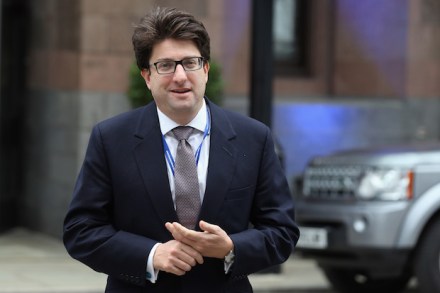
The murky story of Mark Clarke, Elliott Johnson and allegations of bullying in the ranks of Conservative Future is pointing towards another scalp: Lord Feldman. Following the resignation of Grant Shapps this weekend, MPs are now calling for the Conservative party's current chairman to resign — given that he was at the top of Conservative HQ when Clarke was kicked off the candidates list and later brought back in. He was also chairman when Johnson died too. Shapps has been described as the ‘fall guy’ for this situation — he had already left CCHQ after May's general election and has been serving as the international development minister. But he tweeted last night that it was his own decision and he should have possibly quit sooner: https://twitter.

Tory bullying scandal: why Grant Shapps had to go

From our UK edition

After weeks of terrible stories about the bullying rife in the Tory youth wing, former party chairman Grant Shapps has resigned as a minister, with a formal statement expected later today. David Cameron was believed to be furious that Number 10 had been implicated in the stories about Mark Clarke and the death of Elliott Johnson, with the publication of letters of praise from the Prime Minister to Clarke about his RoadTrip initiative. It is unlikely that Shapps, who was demoted as party chairman to the role of international development minister in the summer, will have resigned voluntarily. For some months his allies had believed he was on his way back to the Cabinet. So why did he have to go?

The EU renegotiation is now the biggest obstacle to Osborne making it to Number 10

From our UK edition

At the start of this week, everyone was wondering how George Osborne was going to get out of trouble on tax credits, avoid a deeply damaging row over police cuts, all while still keeping to his surplus target. But thanks to the Office for Budget Responsibility upgrading its forecasts, Osborne was able to scrap the tax credit changes, protect the police budget and maintain his plan for a £10 billion surplus by the end of the parliament. But now, an even bigger challenge awaits Osborne: the EU renegotiation. I argue in my Sun column today that it is now the biggest threat to his chances of becoming Prime Minister.

Why the tax credit cuts had to go

From our UK edition

In the peroration of his statement today, George Osborne declared that the Tories were ‘the mainstream representatives of the working people of Britain.’ This is how he wants to position the Tories and it is why the tax credit changes had to go: they were getting in the way of the Tory attempt to rebrand themselves as the workers’ party. By ditching the tax credit changes, the Tories can now return to this theme—and can try and gain maximum political benefit from the national living wage. Osborne believes that with Jeremy Corbyn / John McDonnell leading the Labour party, the Tories have a real opportunity to pick up support from low income voters who wouldn’t normally have thought of voting for the Tories.

Cameron to make his case for war to the Commons next week

From our UK edition

David Cameron will set out his case for air strikes against IS in Syria to the Commons late next week. Cameron is, as I say in my Sun column today, immensely frustrated by the current British position of only bombing Islamic State in Iraq and not Syria. But he knows that it would be politically back breaking for him to lose another Commons vote on a matter of war and peace, so is proceeding cautiously.   But last night’s UN resolution has strengthened Cameron’s hand. Even before that, 30 Labour MPs were certain to back Cameron on this issue and another 30 were highly likely to. With a UN resolution now in place, these numbers are only likely to increase.

Rab Butler was too indecisive (and badly dressed) to be Prime Minister

From our UK edition

‘The best prime minister we never had’ is not an epithet exclusive to Rab Butler. Widely applied to the late Denis Healey, it was also said of Hugh Gaitskell, Iain Macleod and Roy Jenkins. (More recent candidates would include Michael Heseltine and Kenneth Clarke.) All had arguably greater intellects than the prime ministers they ended up serving, all enjoyed significant popularity in the country and all were committed to the centre-ground of British politics. Yet while ‘The best PM we’ve never had’ is a club rather than a solitary designation, Rab Butler is pre-eminent among its members.

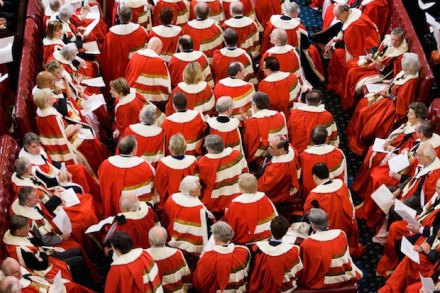
Lords votes to give 16 and 17 year-olds the vote in the EU referendum

From our UK edition

The House of Lords has tonight voted to give 16 and 17 year olds the vote in the EU referendum. This question will now go to the Commons, which can try and overturn it and send the bill back to the Lords—so-called ‘ping pong’. The government has already made clear tonight that it will try and overturn this amendment. But, intriguingly, some Tory MPs have told me that they think the Commons will actually back votes at 16 for the referendum when this comes back down to the Commons. If this does happen, this could delay the referendum as the Electoral Commission argue that extra time will be needed to register these new voters.

RoadTrip’s Mark Clarke kicked out of Conservative Party

From our UK edition

The Tories have announced that Mark Clarke, an activist who founded the RoadTrip campaigning organisation, has been booted out of the party for life. Clarke has found himself at the centre of bullying and intimidation allegations following the death of Elliott Johnson, a 21-year-old activist who is thought to have killed himself. Clarke, along with two other activists, was barred from this year’s party conference. Conservative HQ has put out the following statement, referencing new information that has ‘come to our knowledge this week’: 'In the light of information that has come to our knowledge this week, Mark Clarke’s membership of the Conservative Party has been cancelled for life.  This means he cannot be a candidate or represent the Party in any way.

Tracey Crouch interview: I wasn’t sure I wanted to be a minister

From our UK edition

Usually when the Prime Minister offers a backbencher their first ministerial post, they trip over their shoelaces in the rush to accept. Not so Tracey Crouch. Even though she had been waiting for five years to be promoted - having previously been considered too rebellious - and even though she had always wanted to be Sports Minister, she hesitated when the call finally came after the General Election to offer her just that. Instead of accepting at once, she told the Prime Minister she wasn’t sure. The reason she gave David Cameron was one many women shy away from when discussing their careers. ‘I said I wasn’t sure because I wanted to start a family and I said it so very honestly.

George Osborne and the death of Tory idealism

From our UK edition

The kindest way to treat your enemies is to hate them. Hate them and you don’t understand them or their appeal. Hate them and you cannot see their own doubts and divisions. The opponents of Conservatives see them as greed-driven monsters, concerned only with helping the rich and middle-class. They are so tawdry, so lacking in idealism, they make you hate your own country.

Tory MPs expect changes to school funding

From our UK edition

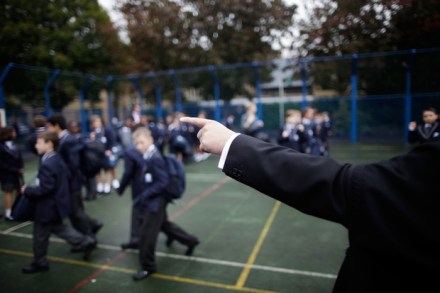
A running sore in the Tory party is the way in which school funding is allocated. Under the current arrangements, a school in a rural area receives less money per pupil than one in a town or city, and this causes a great deal of resentment. It means that schools in the best-funded areas get £6,297 per head, but those at the bottom of the list receive just £4,208 per pupil. Conservative MPs have held repeated meetings with ministers about this arrangement, but got nowhere before the election because the areas they were worried about were more likely to be safer territory for the Tories. They had a particularly grumpy meeting with Nicky Morgan before the election in which this was made clear to them, and which many left in a bit of a huff.

The ‘genius’ plan that stopped a Tory housing rebellion – and endangered a manifesto pledge

From our UK edition

The Housing and Planning Bill gets its second reading in the House of Commons this afternoon, and though Labour has been making angry noises about it, it won’t encounter as many problems as it might have done. This might ultimately be a bad thing for the Tories, though. The rebellion that won’t happen would have been on the right-to-buy for housing associations, which the Tories put in their manifesto, but which a number of their own MPs were deeply worried about. Housing associations were so worried about the impact of the government legislating to force them to sell off their homes that they made a voluntary offer to ministers to design their own scheme so that the government didn’t need to legislate.

The public oppose the tax credit cuts, according to a new poll

From our UK edition

Voters support reducing the size of the welfare state but not necessarily through cutting tax credits. According to a new poll from ComRes and the Daily Mail, just under half back ‘reducing the size of the welfare state’ but 58 per cent oppose cutting tax credits for working people, while a similar percentage also oppose making part-time workers on tax credits do more hours. But in better news for George Osborne: a huge 90 per cent back increasing the minimum wage to £9 an hour. According to the poll, one in five of those polled said that tax credit shouldn’t be cut and that the deficit should be reduced at a slower rate instead.

Will Jeremy Corbyn condemn Gerald Kaufman’s comments about ‘Jewish money’ influencing the Tories?

From our UK edition

Sir Gerald Kaufman is Jewish, which he seems to use as an excuse to make claims that would, ordinarily, be denounced as anti-Semitic. He has made this a trademark of his career but on Tuesday night, Sir Gerald - now Father of the House of Commons - outdid himself. In an extraordinary speech he allegedly discussed the influence of 'Jewish money' over the Conservative party. He also claimed that, according to an email he had received, 'half' of the Palestinian knife attacks in Israel over recent weeks have been 'fabricated' as an excuse to execute Palestinians, and that the small-circulation weekly newspaper The Jewish Chronicle has biased the Conservatives.

John McDonnell vs. George Osborne on tax credits: a surprisingly calm and serious affair

From our UK edition

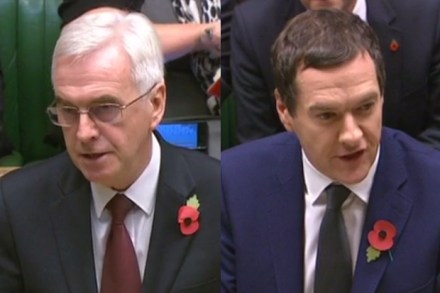
George Osborne and John McDonnell went head-to-head at Treasury Questions today and one topic predictably dominated: tax credits. There was a charged atmosphere in the Commons as the shadow chancellor explained ‘the Chancellor has a choice before him’ and outlined his proposal for reversing the planned cuts to tax credits. The plan differs somewhat from Osborne's: ‘He can push on with the tax giveaways to multinational corporations. He can press on with tax cuts to the wealthiest few in inheritance tax that he announced in his summer budgets.

Ruth Davidson takes a swipe at Diane Abbott

From our UK edition

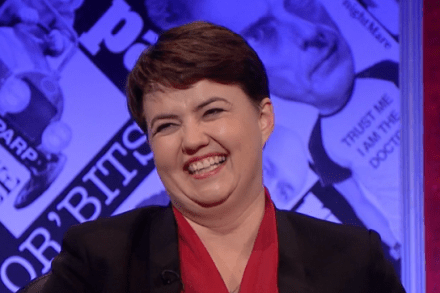
After Diane Abbott was appointed to Jeremy Corbyn's shadow cabinet in the role of shadow secretary for International Development, some naysayers suggested her promotion could be linked to a brief fling she enjoyed with the Labour leader over 40 years ago. While many Labour MPs failed to come to Abbott's defence, Ruth Davidson -- the leader of the Scottish Conservatives -- did at least intervene. She said that rather than any lingering feelings, it would be a 'lifetime of friendship and shared activism' that led to Abbott being given a front bench role. Alas, the power of the sisterhood appears to have diminished somewhat since then.

The human factor | 22 October 2015

From our UK edition

Just over 30 years ago, Margaret Thatcher’s government decided to look at local government finance. A young aide, John Redwood, outlined ‘some kind of poll tax which is paid by every elector’. Discussions continued, and bright young men (including the young Oliver Letwin) assured the Prime Minister that the figures would all stack up. Unpopular to start with, perhaps, but necessary. Later, Kenneth Baker had a niggle: ‘If I’m on Question Time and I’m asked “Why must the Duke and the dustman pay the same?” there’s no answer.’ Last week the energy secretary Amber Rudd was on Question Time.

Revealed: Zac Goldsmith’s new campaign genius

From our UK edition

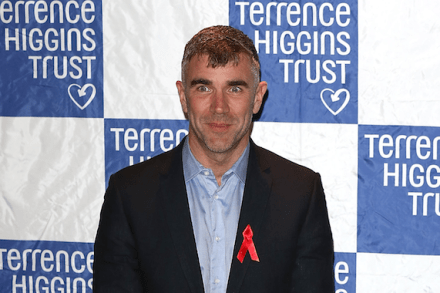
Given that Ivan Massow failed to be picked as one of the four final candidates in the race to be the Conservative candidate for London mayor despite a flashy campaign, it's safe to say that Massow still has some work to do when it comes to mastering how to succeed in politics. So Mr S was surprised to hear that the business mogul is now assisting Zac Goldsmith with his campaign. Speaking at Josh Spero's Second Hand Stories book launch party at Bonhams, Massow said he was working with the Conservative mayoral candidate when it came to the policy side of things: 'I’m working with Zac. I speak to him a lot but you know it’s hard to get him to return anything. London’s in for a treat! I deal with the people on the policy side.

Heidi Allen’s criticism of the Commons upsets fellow MPs

From our UK edition

There has been an interesting response in the Tory party to Heidi Allen’s speech in which she criticised the tax credit changes. Many MPs are themselves worried about the changes, and didn’t disagree with what she had to say. But what has really riled them is the way in which she appeared to dismiss the Chamber as largely pointless - and that she spoke against the cuts having supported them once and then went onto vote with the government again on the motion before the House last night (though to be fair, she explained that she wouldn't vote for the Opposition Day motion because she disagreed with its wording). One MP who knows a thing or two about rebelling says ‘I couldn’t care less about her dissing the government: I do that too.