Conservative party

A goatherd by necessity

From our UK edition

In his recent interview with Fraser, David Cameron said that he's keen on bringing in outside talent to the government – the so-called "Goat" strategy, which has been a feature of Brown's premiership.  In her ever-excellent column, Rachel Sylvester makes the point that this may be as much from necessity as by design: "According to Anthony Wells, of UKPollingReport, at least a third of the House of Commons are likely to be novices after the next general election — the highest proportion since 1945. A perceived house of whores, whose members would sell their souls for a bathplug, will soon be replaced by a virgin Parliament, untouched by the John Lewis list. The implications are huge.
Legg Commission: full Shadow Cabinet details

From our UK edition

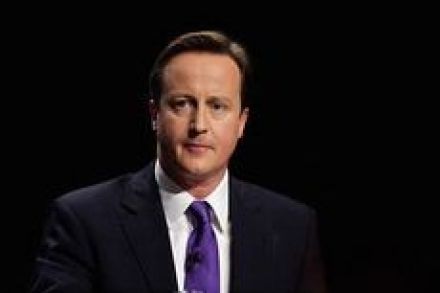
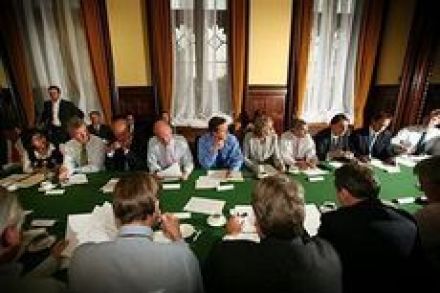
The damage to the Shadow Cabinet caused by Sir Thomas Legg has been published. All in all it’s not too bad for the Tories. Ken Clarke tops the list with £4,733 on gardening and cleaning expenses. In terms of comparing figures between the parties, an arresting and emotive issue to the public, the Tories are once again ahead, a point that reinforced by the fact that far from all of Labour's and the Lib Dem's frontliners have declared their exposure. However, there might be problems for the Tories in the future. David Cameron and George Osborne both need to produce more information about their mortgage claims. Overall though, the Shadow Cabinet has escaped embarrassment and the public’s ire. Whether Cameron will convince his backbenchers to follow suit remains to be seen.

The costs that come before savings

From our UK edition

It's a simple fact of politics that many measures which would save money in the medium-to-long term incur costs in the short term.  Normally, this point is brought up in relation to public service reform - e.g. Gove's Swedish Schools agenda.  But today's FT highlights a similar effect in relation to public sector redundancies. The important fact is that "civil servants aged under 50 can receive up to three years’ pay if made compulsorily redundant, and those who joined before 1987 more than six years’ pay".  This means that there are actually massive upfront cash costs to cutting jobs across the public sector, whatever the potential savings further down the line. To their credit, the government are currently trying to cap these redundancy payments.

The politics of growth

From our UK edition

One strange side-effect of the car crash that was the Liberal Democrat conference is that no one dares say the word “cuts” anymore. Since Nick Clegg promised “savage cuts” – alarming his base in the process – we’re back to the normal euphemism of “efficiencies”. This, like so much in life, will have Gordon Brown hopping mad. He didn’t want to say “cuts” in the first place, and the whole farrago will prove (in his head) that he should stop taking advice from people outside his coterie.   The next stage in the debate is to focus on growth. As James revealed in his political column for the current edition of the magazine, the Tory plan to do this is an aggressive cut in corporation tax.

Davis for Home Secretary?

From our UK edition

The Express’ William Hickey column reports that David Davis, not Chris Grayling, will serve as Home Secretary should the Tories win the election. Here’s what Hickey heard: ‘I’m now told there have been mounting whispers among MPs that Grayling could lose out to David Davis for the Home Secretary’s job should the Tories win the general election. Only this week Davis, who stood down from the shadow post last year in order to champion civil liberties at a by-election, signalled he was ready to return to frontbench politics if offered a “proper job”.

They’ll have to start thinking about expenses again

From our UK edition

So expenses are back - and in a fairly big way.  Not that they ever really went away, of course.  But you'd be forgiven for thinking that the parties had pretty much forgotten about them during conference season, so little was said about the issue.  But today it's back on the front pages and, you suspect, back to the top of MPs' priority lists.   According to the Sunday Telegraph, "more than half" of the Commons will be either told to repay dubious claims, or provide extra information about those claims, during the next part of Sir Thomas Legg's investigation into expenses this week.  Gordon Brown is said to be among the former group.

What would the Tories take back from Europe?

From our UK edition

Assuming that the Lisbon Treaty is ratified, that the Conservative Party wins the next election and that Angela Merkel and Nicola Sarkozy want Britain to remain in the European Union, what “sovereignty package” will EU leaders come up with for Prime Minister Cameron, so that the Tory leadership can placate its eurosceptic base? The deal cannot be cosmetic, but make it too tough and other EU leaders will not want to compromise.

That Wellington became Prime Minister is irrelevant to the Dannatt case

From our UK edition

General Dannatt denies that he’s been in cahoots with the Tories. He gave a lecture last night and said: “[David Cameron] put it to me that he was concerned that his defence team - at a time when defence was really important, and Afghanistan was really critical - lacked expert understanding. "And would I be prepared to advise his team, and, if the Conservatives win the election, would I be prepared to take a peerage and maybe join his ministerial team… it was a recent decision and indicates that there was no long-term plot." Only a bolus of ministers, who believed they could smear a General who was renowned for his frugality over expenses, could be preposterous enough to suggest that Dannatt was a Tory mole all along.

Should Cameron have told us how he will do it?

From our UK edition

The left’s criticism of Cameron’s speech is that it contained no new policies and that begs the question: how will Cameron set the people free? Steve Richards has an essential article on the subject in today’s Independent. Here are the key paragraphs: ‘Against quite a few paragraphs in Cameron's speech I wrote a single word: "How?" I used to do the same with Blair's early speeches only to discover in 1997 that he had no answers to the question in several key policy areas. Most fundamentally it is still not at all clear how Cameron plans to reduce what he calls Labour's debt crisis.

Conservative Party Conference Impressions

From our UK edition

I have to say that I found this year's Conservative Party conference a little lacklustre. I realise this was sort of the whole point -- the "no triumphalism" ordinance and the champagne ban were part of a conscious effort to keep the conference low key, But I do wonder whether the Tory high command overdid it. I came away from Manchester with the distinct impression that we were about to get a Tory government by default. To be fair I left before David Cameron's set-piece speech, but the real temperature of a party conference is always taken away from the conference platform: at the fringes, in the bars and in the snatched conversations in between. The Tories are beginning to get a policy agenda together, but it is still fragmented and lacking in a binding vision.

Gove’s ‘free schools’ will be able to profit

From our UK edition

In all the excitement, I forgot to flag up to Coffee Housers a fact that we dropped in the leader column of today’s magazine. Michael Gove’s new Swedish schools will, it seems, be allowed to make a profit. I said in the editorial that: “Crucially, it now looks likely that the new schools will be able to run for profit — as Anders Hultin, the architect of the Swedish system, argued in this magazine last week. This may come in the form of a ‘management fee’. But if this happens, then Britain’s obsession with the quality of schools could blossom into an education industry.” Hultin’s article was picked up by The Daily Telegraph. Profit, he says, means Britain would have an education industry.

Modernisation for a purpose

From our UK edition

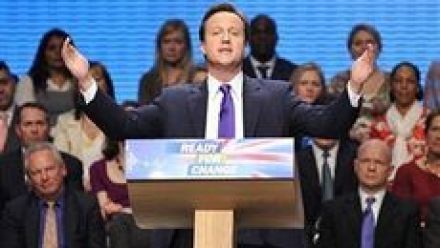
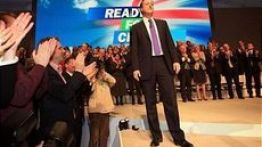
Just before David Cameron came on stage they played a video looking back at his four years in charge of the party. It concentrated on the modernising moments — the huskie hugging, the efforts to get more women into Parliament and the rest. When Cameron did these things, some critics mocked them, claimed that they showed he was all style and no substance. But today we saw what those moments have made possible. Cameron devoted his pre-election conference speech to a classic conservative message, that the big state is the problem. Crucially, this message is getting a hearing. It is not being dismissed as those ideological Tories banging on again. Modernisation has achieved one of its principal purposes.

The people will make it happen

From our UK edition

Cameron’s speech might have lacked flair, but it was a brilliant rhetorical exercise. He cast himself into the distant future and reflected on his premiership. He saw a society that had paid its way back from the brink of collapse by rationing excess and embracing austerity. He saw a society that was flourishing, where the poorest attended the best schools, where people were empowered to work hard and were rewarded for doing so. Returning to the sombre present he said: “It will be a steep climb. But the view from the summit will be worth it.” But this rhetorical tour de force was inspired by a substantial philosophical argument. Cameron’s vision saw the State diminished to subservience.

Cameron’s revolutionary speech

From our UK edition

This was one of the best speeches I have heard David Cameron give. It may not have been a masterpiece of oratory, he may have read from notes, left too make lulls lulls inspiring only a few standing ovations.  But it was packed with mission, seriousness, vision, principles – and, most of all, a real agenda.   Just as last year’s conference speech laid out a Conservative defence of the free market, this year’s laid out a vision of the conservative society. That is to say: one which hands back power to communities, which trusts people and places huge emphasis on social mobility.   First, he positioned the Conservatives squarely in the fight against poverty – on the explicit grounds that Labour has lost that fight.

A pledge which Cameron looks set to break

From our UK edition

In its preview of Cameron's speech, the Sun highlights the Tory leader saying that "...in a Conservative Britain, if you put in the effort to bring in a wage, you will be better off."  The implicit reference, here, is to Labour's combined tax and benefit system, which frequently acts to disincentivise extra work.  All too often, effort isn't met by reward - so what's the point? As the Centre for Social Justice's recent Dynamic Britain report showed, this effect impinges, above all, on the least well-off in society - and with tragic consequences.  It's all to do with effective marginal tax rates, which measure what proportion of a small rise in earnings would be lost to both tax and the withdrawal of benefits.

The Cameron transcript: Part I

From our UK edition

While were all waiting for the Cameron speech, I thought I’d post some of the out-takes of my interview with him last week (full text here). Many thanks for your suggestions for questions, which were disconcertingly good. When I was a trainee reporter, I went to a coroner’s court and noticed that the jury asked better questions than the lawyer. It’s often like that with CoffeeHouse comments: you guys had all the obvious and oblique angles covered. But I suspect that our little wiki-exercise forewarned Cameron a bit because he seemed to have ready answers. Every journalist leaves an interview thinking what was the top line in that? and if your subject is slick enough, there normally isn’t one.

The radical plans the Tories are keeping under wraps

From our UK edition

So what is George Osborne really up to? If Coffee Housers are feeling depressed at the paucity of ambition in his speech (his ‘cuts’ package  would shave just 1% off government spending) then take heart. In the magazine today, James Forsyth lists the far-more-radical changes that are being discussed by the Cameroons – but kept under wraps. The full piece is here, and the main points are…   1)   Corporation tax cuts. No mention was made of a growth agenda in the speech, but there are plans to cut Britain’s company tax rates quite aggressively with Ireland’s 12.5% as a lodestar.

Who has the time to watch a weekday conference speech?

From our UK edition

The activists here are already queuing up for David Cameron’s speech. But very few people outside of this conference centre are going to watch the whole speech: how many people have an hour free at 2.15pm on a weekday?   If we want conferences speeches to be watched by more than conference delegates, then they need to be on in the evenings or on the weekend. Just imagine how many more people would watch Cameron, or would have watched Brown last week, if the speech started at 8pm. US conventions take place mostly in prime time, with the networks being strong-armed into covering them for at least an hour a night. In 2008, more than 40 million people — about 20 percent of the US electorate — watched Obama and McCain’s acceptance speeches.