Conservative party

Has the Lib Dem bubble burst?

From our UK edition

Is this the end of the LibDem soufflé surge? Tomorrow's News of the World has an Ipsos-Mori poll – conducted the day after the second debate – putting things back to where they were pre-debates: Tories with a six point lead over Labour and the LibDems lagging seven points behind Labour, i.e. 36-30-23. This is broadly where Mori had them in March. The polls are in a state of flux, to be sure. But Ipsos did a full, 1,200 weighted sample, telephone poll. Even on this basis, Cameron would be 42 seats short of a majority. But this is the best news he's had since the first TV debate – and a sign that he might yet pull through with a majority. Yet other polls in tomorrow's Sundays suggest that there is still some rise in the LibDem soufflé.

When the going gets weird, the weird hire an Elvis impersonator

From our UK edition

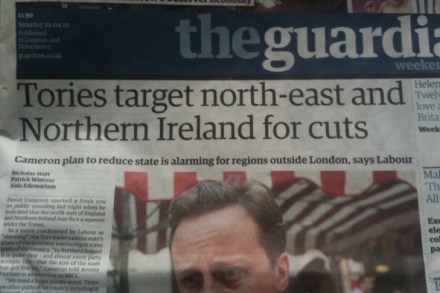
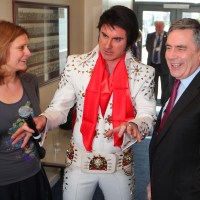
Really, what's happened to the Labour campaign?  You know things are taking a turn for the worse when you read that Gordon Brown is taking a more high profile role to save his party from a third-place finish.  But then you see that high profile role in action, and, well ... First there was an event which incorporated some deliciously ironic innuendo about the Tories' spending cuts.  The PM lamented the fact that Jeremy Paxman didn't press the Tory leader on claims that there is "too much" public spending in Northern Ireland and the North East, concluding that "there is no part of the United Kingdom that is safe from what the Conservative party would do.

The Tories must sell their most radical policy: the Gove schools plan

From our UK edition

The Spectator’s endorsement of David Cameron started with his ‘free schools’ policy – and we could have ended there. We said that this is, in itself, enough reason to vote Conservative. This week’s Economist has produced one of the best explanations of this policy, and its potential.  This is important because this election campaign shows that, while the public are indeed minded to oust Gordon Brown, they’re not terribly excited by the Tory offering. The Gove schools plan is something which, if properly expressed, cannot fail to capture the imagination. In my limited experience of persuading people why they should vote, I find the schools policy always works.

Tories growing used to a hung parliament in public and in private

From our UK edition

Planting seeds, that's what the Tories are doing – they're planting the seeds of a Lib-Con alliance.  Yes, it's a subtle process, and is couched in terms of denial and defiance.  But it's still going on.  I mean, look at Cameron's interview with Jeremy Paxman past night (video on Spectator Live), where he declined to rule out having Nick Clegg in his Cabinet – although, happily, he was more unequivocal on the subject of Vince Cable.  And then there's Ken Clarke's interview with the Daily Telegraph this morning, in which he says that the Conservative "starting point" for any coalition would be a refusal to compromise on their economic plans.

Why Not Vote Lib Dem?

From our UK edition

There is a terrible desperation about the Tory approach to the Lib Dem surge. There is a clear desire to find some sort of killer story about Nick Clegg or a killer strategy to reassert David Cameron's claim to be the candidate of change. What is odd is that Cameron seems to have forgotten what made him so attractive in 2005, which was that he was the candidate of the moderate, progressive centre ground.  The recession pushed the Conservative Party into the language of austerity - a message the British public is not yet ready to hear - and they have not recovered.  I have never understood why David Cameron and his allies stopped short of marching further onto the centre ground of British politics.

GDP grows by 0.2 percent in first quarter of 2010

From our UK edition

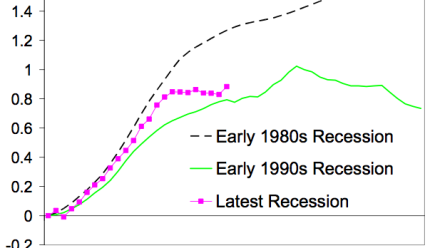
Now we know: the official preliminary estimate says that GDP grew by 0.2 percent in the first quarter of the year. So the double dip looks to have been averted (for now) – but not by much. The figure is at the low end of economists' estimates and lower than the growth experienced in the final quarter of 2009. Labour, of course, will spin this as further proof that we can't risk the recovery by voting for those dastardly Tories.  And the Tories will say that it shows just how damaging Gordon Brown has been for our economy.  But I wonder whether voters will choose between the two messages, or come to see a hung parliament as a decent compromise between them.  If it's the latter, then fasten your seatbelts, etc.

The morning after the debate before

From our UK edition

So, like last week: what's changed?  And, like last week, it's probably too early to judge.  The insta-polls may have Cameron and Clegg on level footing, but, really, we need to wait for voting intention polls before coming to any firm conclusions.  As we saw the day after the first debate, they can work in quite surprising ways. My instinct, though, is that things will remain relatively steady.  The Clegg surge of last week was, at root, a cry for change from the electorate – any change.  So it will probably take more than a solid Cameron victory in one TV debate to have voters flooding back to the Tories.  And it will probably take worse than a decent enough performance from Nick Clegg to shoot down the yellow bird of liberty.

Cameron starts to pull the Tory campaign out of the fire

From our UK edition

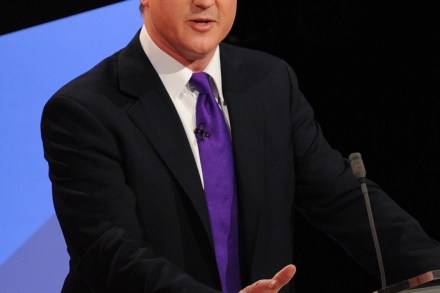
The headlines will be "score draw", but I’d say Cameron won – and comfortably. I write this as someone who could have happily have sunk a few pins into a voodoo doll of David Cameron earlier on this evening – for taking the Conservatives (and Britain) to this appalling point where he may yet lose the election. But he raised his game, substantially. At best, he spoke with passion and authenticity. This time, he looked like he was fighting for his political life, which (of course) he is. Things are looking up. Here’s my participant-by-participant verdict: Brown Brown was his normal automaton self. He does tend to mangle his words, and his attempts at simplification backfire.

Cameron is much improved – but the Lib Dem bubble hasn’t burst

From our UK edition

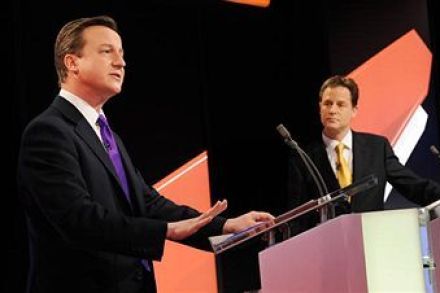
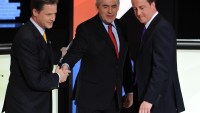
It seems that the general election of 2010 will turn on 90 minutes next Thursday. David Cameron was far better tonight than he was last week. This time he managed to bracket Brown and Clegg together and had the moment of the debate when he called Brown out on Labour’s leaflets claiming the Tories would scrap various things that pensioners currently get free. If there was a YouTube moment in the debate, it was that exchange when Brown said he didn’t authorise the leaflets making these claims. The Tory press team then delighted in pointing to a Labour party political broadcast where they had suggested the Tories would take away these things. Nick Clegg came under far more fire than he did in Manchester.

Cameron’s evening – as he and Brown fight back against the Clegg surge

From our UK edition

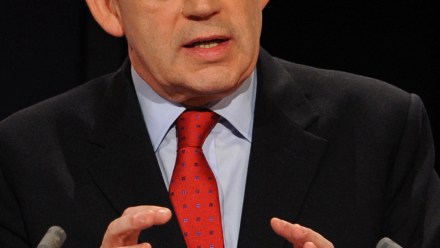
Well, one thing was clear: Brown and Cameron have both been at the textbooks, staying behind for extra classes, and learning the lessons of last week.  They came into this TV debate prepared.  Not just for the very fact of Nick Clegg, but with strategies and soundbites to slow his advance.  The result was a more passionate and confrontational show than I expected. Brown was the biggest surprise on the night.  Sure, you have to apply the usual caveats and parameters: he is Gordon Brown, and being disingenuous and deluded is what he does.  But, all that considered, he was uncharacteristically sprightly, I thought.

The little platoons are mobilising

From our UK edition

There’s a great example of people power on the letters page of today’s Guardian. Last week, a bunch of the educational establishment wrote to the paper decrying the Tory plans to bust open the state monopoly in education and let parents, teachers and voluntary groups set up new schools. Today, 650-odd parent groups have written back, explaining why they want to set up their own schools and give to the many what is now preserved for the few: the right to choose a good school for their child.   There isn’t anything equal about schooling in Britiain at the moment.

Is Europe a Con-Lib deal-breaker?

From our UK edition

Europe is likely to play a big role in tonight’s debate. It is probably the one issue that divides the Liberal Democrats and the Tories as much as electoral reform. Nick Clegg, a former MEP and adviser to then-EU Commissioner Leon Brittan, is a euro-enthusiast who would like Britain to join the Euro, even if it takes time. David Cameron is a euro-skeptic (though not, to the chagrin of many CoffeHouse readers, obsessed about the issue).   But neither wants a confrontation with the EU and other European governments over the next four years - and the Liberal Democrats have become quieter over time about their pro-EU tendencies.

Osborne comes out fighting

From our UK edition

George Osborne put in a fiery and impressive performance in the Chancellor’s debate today, firing off some memorable one-liners as well as unveiling a letter from the former head of the anti-avoidance group at the Treasury questioning the sums on which the Lib Dems’ tax plans depend. Indeed, since the Lib Dems surged, Osborne has found another level to his public performances. Today’s debate win followed a good spot by Osborne on the Politics Show on Sunday.   One striking thing about the debate was how it was Darling who signaled the assault on Cable when he started querying Vince’s numbers. It’ll be fascinating to see if Brown takes any similar swipe at Clegg tomorrow; his interview in the Indyhttp://www.independent.co.

A New Tory Policy: Back to the Eighties

From our UK edition

I cornered Ken Clarke after the press conference on employment and welfare today and asked him a direct question about my pet subject - Margaret Thatcher's Enterprise Allowance Scheme. I couldn't get in a question during the press conference itself, which was dominated by journalists from Channel 4 (three questions, come on chaps, fair's fair!) and some bloke called Forsyth from the Spectator. I asked Clarke about his post on the Linked In social networking site asking for people's experiences of the 1980s scheme for people wanting to come off the dole and set up their own small businesses. I have been lobbying for this for some time, as has the Federation of Small Businesses.

Taking the attack to Vince

From our UK edition

With Cable's and Clegg’s personal ratings being so high, the trick is to play the ball not the man. Ken Clarke and George Osborne achieved that at this morning’s press conference. Clarke said: “(Nick Clegg’s father was) a very nice, very wise guy, he was a very successful City guy, but he wasn’t a flashy guy... he was a Tory. It would have been better if Nick had stuck to the political principles of his father. (Nick Clegg) must regret going into the strange wastelands of Liberal Democrat politics.” He added that whilst he agreed with “70 percent” of Vince Cable’s analysis on the financial collapse, Cable’s solutions left him “bewildered”.

The Tories need to get economical

From our UK edition

Nick Clegg handed Gordon Brown a lifeline in one respect: the economy’s old hat compared to the Clegg frenzy. Not any more. The news that unemployment rose by 43,000 between December and February, together with yesterday’s dramatic inflation rise, has dumped the economy back onto the front pages. The Tories must keep it there; this election should be about the economy and nothing else. Obviously, these figures, which are worse than expected, lend weight to the argument that Brown’s policies impair recovery. Also, they demolish Brown’s claim that he ran up a deficit in the boom years to protect employment: unemployment is now higher than it was 16 years ago.