Conservative party

Cameron needs to show that life is better under the Conservatives

From our UK edition

The election of a new Labour leader means that proper politics has resumed. David Cameron now knows who he needs to beat to win the next election. As I argue in the magazine this week (subscribers), if the Tories are to secure a majority in 2015, they’ll need to do better among those in households with an income of thirty-odd thousand or so, what pollsters call the C1s. The last time the Tories won outright, they got 52 percent of the C1 vote—more than double Labour’s total. But in 1997, Labor and the Tories split this group evenly. The Tories have never fully recovered from this.  In 2010, the Tories garnered 39 percent with this group, a mere three percent swing since 2005.

A small step for Labour, not a giant leap

From our UK edition

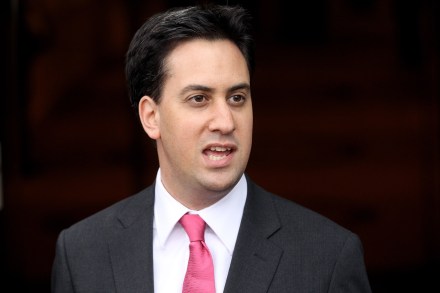
I had expected Ed Miliband to do pretty well in the polls. He's unknown, and voters haven't had a chance to dislike him yet. That's not an insult – familiarity breeds contempt in politics, and the public are normally quite quick to give a new guy the benefit of the doubt. Witness the Clegg bubble. But tomorrow's Guardian shows precious little sign of a conference bounce. The two parties were level before the conferences – a remarkable achievment for a leaderless party. The Tories took three years to do the same. It was one of many reasons that inspired our cover story last week, "Labour leaps forward". The illustration, by Morten Morland, was a horse without a rider. What might Labour achieve with a jockey?

An example of union hostility against people who want to do their jobs

From our UK edition

Amongst BBC political staff, there’s mounting concern about the plans for a strike during Tory conference. One of them said to me at Labour conference that they just didn’t know what to do, they had been put in an impossible position by the decision to call the strike on such politically important days. These journalists fear that striking during Tory conference would undermine the corporation’s reputation for impartiality. So, a whole host of them wrote to their union rep asking him to make representations on their behalf.

What to make of Warsi’s electoral fraud claim?

From our UK edition

Exactly as the headline says, really. Interviewed by Mehdi Hasan in this week's New Statesman, Sayeeda Warsi claims that the Tories "lost" at least three seats in the election because of electoral fraud. The article observes: 'This is the first time a senior minister has made such a blunt and specific allegation about the impact of electoral fraud on the general election result. Can she reveal the names of those seats? 'I think it would be wrong to start identifying them,' she says, but adds: 'It is predominantly within the Asian community. I have to look back and say we didn’t do well in those communities, but was there something over and above that we could have done? Well, actually not, if there is going to be voter fraud.

Plugging the leak

From our UK edition

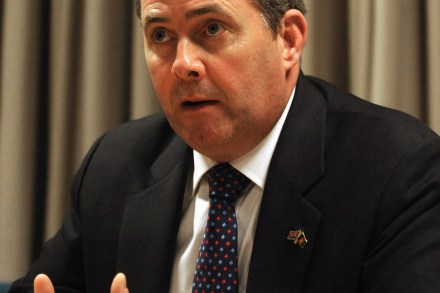
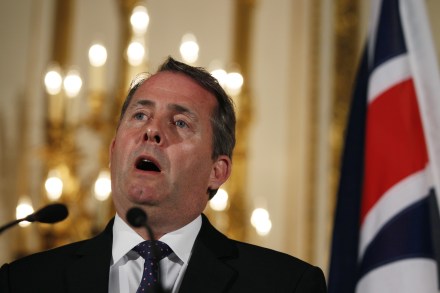
So did Liam Fox leak the letter? Only if he is suicidal. He's been around long enough (having been a frontbencher from the Major years onwards) to know how the game works. Briefing journalists is one thing, leaking a private letter is utterly counterproductive. It will make it harder for him to get the settlement he wants, and it will damage him by making him look as if he were responsible for it. I gather that the MoD is in a state of terror right now, with phone records and emails being trawled to find the guilty party. And whoever did this has such a crude understanding of media spin that they might well have been stupid enough to be caught. But in the history of Whitehall leak inquiries, the guilty party has never been discovered.

Liam Fox does a David Miliband

From our UK edition

At least the political fates have a sense of humour. No sooner had David Miliband's frustration screamed into view last night, than the Tories were hit by a story that was similar in several regards: the leaked Liam Fox letter, expressing his anger over spending cuts. Here are a handful of those similarities: 1) Leakage. David Miliband's words for Harriet Harman were meant to be for their ears only, but the TV cameras picked them up. Similarly, Fox's letter was meant to be between him and the PM – but now it's splashed across the front page of the Telegraph. The only difference is that the Fox letter has been put out by someone in Whitehall, a politically interested actor.

The IMF delivers a boost for George Osborne

From our UK edition

The proclamations of economists and economic bodies shouldn't be taken as the be-all-and-end-all of fiscal policy – for every one claiming that a decision is right, you can find another insisting that it is wrong. But the coalition will still be pleased by the influential International Monetary Fund's latest report, here. It begins: "The UK economy is on the mend. Economic recovery is underway, unemployment has stabilized, and financial sector health has improved. The government’s strong and credible multi-year fiscal deficit reduction plan is essential to ensure debt sustainability. The plan greatly reduces the risk of a costly loss of confidence in public finances and supports a balanced recovery.

Why Ed Miliband shouldn’t be underestimated

From our UK edition

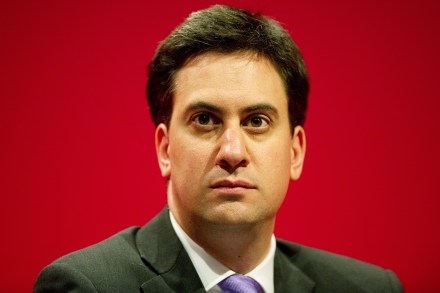
There is a feeling on the right that with the election of Ed Miliband it is back to the good old days. The thinking goes that Labour have elected a lefty as leader and it is time "to do ‘em over just like we did back in the day". But this is overly-simplistic. First of all, Ed Miliband is certainly to the left of Tony Blair but he’s nowhere near as far left, compared to the public, as Michael Foot or Tony Benn, or anyone like that. Second, the right in the ‘80s had three fronts on which to attack left-wing politicians: economics, culture and national defence. Now, it only really has one. The economic argument is, obviously, still live. But the cultural one is now gone.

Cameron neglects to mention his tax cut for the middle classes

From our UK edition

David Cameron’s interview in the Telegraph this morning is striking for three reasons. First, despite the interview appearing on the day of the Labour leadership declaration, there’s no attempt to bring the hammer down on the new Labour leader. All we get is some framing on the deficit. Next, as Paul Goodman notes, it is an attempt to reassure the Tory faithful after the Lib Dem conference Vince Cable is gently put back in his box with the line ‘Vince is Vince’. Cameron also stresses that he ‘will always safeguard our nuclear deterrent’; a line that is very different from the nakedly political discussions of Trident in Liverpool, where what seemed matter to most was making life difficult for Labour.

Three quarters of voters side with Cable

From our UK edition

Politics Home has published an important poll, showing the staggering level of support for Vince Cable’s conference speech. The government will be pleased that its political attack on the financial services industry’s continued excess at time of austerity is cutting through; on the other hand, this could be seen as support for Cable’s emotive rhetoric. Worse still, the poll suggests that traditional Tory voters are the only group for whom Nick Clegg is more impressive than Cable. The business secretary has to be kept in government – the coalition can't afford to have a charismatic wreaking havoc from the backbenches. Support for Vince Cable conference speech Who are the impressive Liberal Democrat politicians?

Boris v Ken, round 2

From our UK edition

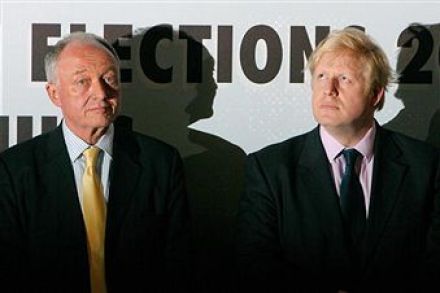
What we have long expected has now been confirmed: Ken Livingstone will be Labour’s candidate against Boris in 2012. From the moment he lost, Livingstone has been working out how to beat Boris in 2012. He is consumed by a desire to be London’s mayor when the Olympics open in 2012. Boris won the mayoralty in almost the best conditions possible for a Conservative candidate — the Tories in opposition, an unpopular Labour government and an economy in mess. He’ll be running for re-election in almost the worst — a Conservative led government making deep spending cuts.   But if any Conservative can win in these circumstances, it is Boris. The fact Ken is his opponent will also help Boris again turn out the outer Zones.

Another obstacle in the way of free schools

From our UK edition

A few weeks ago, I wrote a cover story about how teachers' unions are trying to strangle the Gove schools agenda at birth. But I fear it is facing an even greater, more immediate threat: basic bungling by government departments. The FT today says that the Department of Transport wants to make sure that local authorities keep the right to veto a new school. Armed with such a weapon, it is a sure way of crushing any competition. The DoT's argument is staggeringly banal: that a new school may play havoc with the traffic. If you're a local authority, wanting to use any means possible to stop a new school competing with the ones you run, it's all the excuse you need.

Low taxes work

From our UK edition

I ration my writing about Sweden. As CoffeeHousers know, I can extol its virtues with room-emptying conviction. But it's now a few days since its election, and as far as I can tell no English publication has told the extraordinary story of its conservative victory - and the economic turnaround driven by the largest tax cuts in Swedish history. It is now the fastest-growing economy in the West. I tell the story in the political column of this week's magazine (subscribers, click here), but I will summarise it for CoffeeHousers here. Normally, conservatives are elected in Sweden as a kind of light relief, to punctuate decades of leftist rule. They're usually thrown out after one term, and the social democrats get back to taxing the bejesus out of the country.

A salesman for the cuts

From our UK edition

One of the biggest problems facing the coaltion has been presentational: how to sell the cuts? In the absence of a coherent, vigourous message, the Balls school of economic thought has been allowed to grease onto the scene – to the extent that some polls have three-quarters of respondents rejecting the government's deficit reduction plan. But now, at last, signs that the coalition is getting into gear. It's a process which began last week, when Matthew Hancock – a new Tory MP and former adviser to George Osborne – highlighted falling interest rates in Parliament (column 606, here); a point he has been pushing around Westminster ever since. And today Hancock expands on it in an article for the Times (£).

The trouble with Cable’s posturing

From our UK edition

What are we to make of the fact that No.10 gave the thumbs-up to Vince Cable’s bizarre anti-capitalist rhetoric today? “Capitalism takes no prisoners and it kills competition where it can,” he fumed – and you can argue that, technically, he is paraphrasing Adam Smith. But he has been in politics long enough to know what signal his speech sent out (and the reaction it would trigger). Mood music counts for a lot in politics, and in business. And the mood music from this government sounds like a bunch of politicians happy to tax the bejesus out of the high-paid - regarding them as ATM machines to be raided, rather than wealth creators to be welcomed. It's time to ask what harm all this posturing is doing.

Vince’s land tax land grab

From our UK edition

There was one notable bit of kite flying in Vince Cable’s speech earlier, an indication that he wants the next Liberal Democrat manifesto to contain a commitment to a land tax. This would give the party a distinctive policy going into the next election. With the proceeds of a land tax, they could abolish stamp duty and still have a lot of fiscal wriggle room allowing it to propose increasing the income tax threshold or spending more on certain public services. There's already work going on in Lib Dem circles on how to model a land tax and to find how much revenue it would raise.

All so predictable from Cable

From our UK edition

If Vince Cable has achieved anything, it's to enliven a Lib Dem conference that had settled into cosy anonymity after Clegg's speech on Monday. He has now delivered the address that David blogged about earlier – and all of the firebrand passages trailed in this morning's papers were present and correct. "Capitalism," Cable warned, "kills competition where it can." And he followed that lead to kick the bankers where he could. In between passages extolling the virtues of "pro business, pro market" policy, he set about the "spiv and gamblers" who had triggered the financial crisis. To be honest, though, I find it hard to get too worked up about this. Sure, the bash-a-banker rhetoric is equal parts lazy and unhelpful.

Lib Dem activists less than gleeful about the coalition

From our UK edition

Last night, Liberal Democrats gathered for their traditional conference glee club. It is a light-hearted occasion with lots of communal singing and jokes. But some of the gags did seem to vocalise a certain unease about the coalition.   There was a very lusty rendition of a song that went like this, to the tune of The Twelve Days of Christmas: On the first day of coalition The Tories gave to me A referendum on AV On the second day of merger The Tories gave to me Absolutely zilch And a referendum on AV On the third day of coalition The Tories gave to me Sweet FA Absolutely zilch And a referendum on AV The song continues in this vein until we reach the twelfth day.

Whither the Lib Dems?

From our UK edition

A striking aspect of the Liberal Democrat conference is how discussion of cooperation with Labour takes place in public while talk of any future work with their current coalition partner happens in private. Tonight, Paddy Ashdown told an Observer fringe meeting that the Liberal Democrats’ long-term goal should still be to become the dominant party of the centre-left in Britain. I must admit that I struggle to see how this is possible. The steps that the coalition needs to take to deal with what Nick Clegg calls the ‘invisible crisis’ of the deficit will alienate the party from the centre left. But then again, as one liberal Liberal Democrat said to me last night, of the party’s MPs only half a dozen are authentic liberals.