Conservative party

Coulson’s replacement

From our UK edition

Downing Street have announced that the BBC’s Craig Oliver will be Andy Coulson’s replacement. Oliver, who has been editor of both the Six and Ten o’clock news, will bring a broadcasting perspective to Downing Street. Former BBC colleagues stress that he knows how to tell a story in pictures and, in contrast, to Coulson is unlikely to ever become the story. Oliver, who is in his 40s, was never obviously political. He won’t provide the kind of counterweight to Steve Hilton that Andy Coulson did. But he will run an efficient ship. Some people are saying that the appointment shows that newspapers are less powerful politically than they used to be. There is some truth to this.

PMQs live blog | 2 February 2011

From our UK edition

VERDICT: What a refreshing change that was. After several weeks of Punch 'n' Judy rivalry, the two party leaders finally put down their batons and stumbled upon a new way to do it. Much of the credit must go to Ed Miliband, for asking pacific questions about Egypt and Afghanistan in the first place. But credit, also, to Cameron, for answering them in a straightforward and statesmanlike manner. The rest of the House, for its part, was stunned into silence by this peculiar scene. Some of the blood rushed back into proceedings with the backbench questions, and as Cameron directed attacks at Ed Balls, but this must still go down as the most decourous PMQs in recent memory. Less spice, more meat – not a bad trade-off in this case.  1231: And that's it.

IFS say Labour’s policy would mean higher interest rates

From our UK edition

From the start of the financial crisis, the Conservatives have argued that when a country¹s finances are in a mess, the best way to manage demand is through monetary activism and fiscal responsibility. Going into this crisis, Britain¹s finances were indeed in a mess. We had the biggest structural deficit among major developed economies (according to the IMF, OECD, oh, and Alistair Darling). To claim there was no structural deficit is to oppose the truth. The principles of monetary activism and fiscal responsibility underpin the approach to the recovery too. By dealing with the fiscal mess, we can keep interest rates lower for longer, and avoid the sorts of financial meltdown seen in Ireland and elsewhere.

All across the political spectrum

From our UK edition

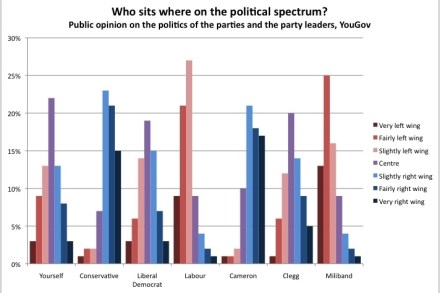
Yesterday's polls may seem like yesterday's news – but it's actually worth returning to YouGov's effort from, erm, yesterday. It contained some distinctive questions, and results, all set around the left-right spectrum. How left wing is the Labour party? How right wing is David Cameron? That sort of thing. Of course, as Anthony Wells has already pointed out, the old labels of "left" and "right" are of decreasing relevance nowadays. But they do still tell us something about popular perceptions of the parties and their leaders.

Osborne’s tax headache

From our UK edition

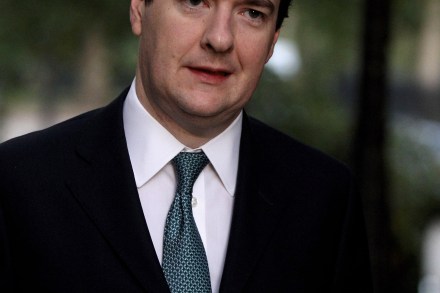
No doubt about it, George Osborne is being pulled in two directions ahead of the Budget. There are those, such as the Lib Dems, who would have him reduce taxes for the least well-off. There are those, such as Boris, who would have him reduce taxes for higher earners. As I suggested yesterday, this debate pivots around two particular measures: raising the personal allowance and cutting the 50p rate. Rachel Sylvester develops the story in a typically insightful column (£) for the Times today. It quotes an "ally of the Chancellor" to the effect that Osborne is minded more to raise the personal allowance than to cut 50p. "Not many Tories want to reverse the 50p top rate," says her source, "We are big fans of raising the threshold and would see that as the priority.

Wheeling and dealing over the AV bill

From our UK edition

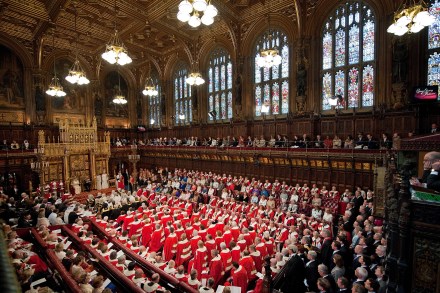
If the AV referendum is to take place on the 5th of May, the legislation paving the way for it needs to have passed by the 16th of February. But this bill is currently being held up in the Lords where Labour peers are objecting to the ‘Tory part’ of the bill which reduces the number of MPs and equalises constituency sizes. The coalition does not have a majority in the Lords, so all the talk of simply ramming the bill through was always slightly unrealistic. But the coalition’s concession that there can be public inquiries into the boundary review has created an expectation that Labour might now drop its opposition. The cross benches, the swing group in the Lords, have been impressed by this concession.

What are Osborne’s options?

From our UK edition

One of the most eyecatching political reports of the weekend was squirrelled away on page 16 (£) of the Sunday Times. It's worth clipping out for the scrapbook, even now. In it, Marie Woolf reveals some of the fiscal sweeteners that Osborne might sprinkle into the Budget. There are two particularly noteworthy passages: i) Raising the personal allowance. "The income tax threshold is already set to increase by £1,000 to £7,457 from April 1. However, Osborne is expected to raise it by about a further £500. Details of the additional concession are still being worked on, but it marks a victory for the Liberal Democrats, who have been arguing within government for tax cuts for the poor." ii) Holding off on 50p.

Has Maude shut the door in Boris’s face?

From our UK edition

Nigel Lawson and Francis Maude are both interviewed in the Telegraph today, and the results are very different in each case. For his part, Lawson is in bombastic form – waxing sceptical on everything from the coalition to the Big Society. Whereas Maude is predictably more reserved and accepting. It's the Maude interview, though, that contains the most politically significant revelation. Namely, this: "Boris Johnson, privately backed by several Cabinet ministers, is leading the charge for tougher union laws. But Maude, a key player in the Coalition’s dealings with the public sector, is reluctant. Tightening Thatcher’s labour laws is a 'last resort' he says.

Gove entrenches his reforms

From our UK edition

In another sign of how the pace of Gove’s reforms is quickening, the education secretary has told local authorities that all new schools should be free schools or academies. This is a big step towards changing the default nature of the system from state-funded and state-run to state-funded but independent.   Local authorities will not be able to open a bureaucrat-controlled school unless they can satisfy the Secretary of State that there is no free school or academy provider willing to step in.   Gove has always argued that once free schools and academies become a significant part of the system it’ll be no more politically possible to abolish them than it would be to take sold-off council houses back into public ownership.

Boris: George knows I’m right

From our UK edition

David Cameron and George Osborne must have hoped that their message from Davos today would be broadcast unimpeded. It is, after all, a blunt message, designed to smash through all the radio chatter: we must continue with deficit reduction, there is no alternative, etc. But, inconveniently for them, there are other voices saying what we must do – among them Boris Johnson. The Mayor of London's interview with the Telegraph is at once typical and quite intriguing. Typical, because he holds aloft the same standards as always. "I understand 50p tax politically," he says, "but there has got to be a sense of where we are going and where we want to be as a country.

The Big Society in 1997

From our UK edition

Titter ye might. The Big Society? In 1997? If the idea was of, erm, limited electoral worth in our last general election, then it was certainly of little use when Tony Blair hurtled into power all those years ago. Yet there is was, mostly speaking, in the "Civic Conservatism" espoused chiefly by David Willetts. Danny Finkelstein, writing for the pre-paywall incarnation of Comment Central, has already alluded to the intellectual debt that Steve Hilton et al owe to Willetts' thinking back in the 1990s. Fraser did likewise in an interview with Willetts from four-and-a-half years ago. I mention this now for two conjoined reasons.

This Ed’s no Goliath

From our UK edition

Ed Milliband took up his position at PMQs today flanked by Caroline Flint and Ed Balls. Between a rock and a hard face. His proximity to so many colleagues who wish him ill can hardly have helped his performance. He was like a stale doughnut. Layers of stodge surrounding a hole in the air.   His battle-plan wasn’t entirely useless. He wanted to tempt the prime minister into foolish speculation about the causes of last quarter’s poor growth figures. Cameron stood up and admitted that the numbers were pretty lousy whether the weather were blamed or not. And that whether-the-weather left Miliband completely stuffed.

Winning in 2015

From our UK edition

Danny Finkelstein’s column in The Times today (£) is well worth reading. Finkelstein sets out two worries, first that the Tories do not have enough of a strategy for winning re-election and second that the NHS reforms might compromise Cameron’s standing as a different kind of Tory. On the latter point, Finkelstein is echoing the views of an increasing number of Tory MPs and ministers. They worry that these poorly understood reforms have put the NHS back on the political table and that, as is so often the case when this happens, the Tories will suffer. Finkelstein’s first worry is that if the government sets out deficit reduction as its raison d’etre then, when that is achieved, as it should be by the next election, it loses its purpose.

PMQs live blog | 26 January 2011

From our UK edition

VERDICT: Ed Miliband had it all, going into today's PMQs: weak growth figures, the uncertain demise of control orders, rising youth unemployment, and more. And yet, somehow, he let most of it go to waste. Barely any of his attacks stuck – or, for that matter, stick in the mind – and Cameron rebuffed them with surprising ease. It helped that the Prime Minister seemed more comprehensively briefed than usual, with a decent compliment of statistics, and one or two sharp lines, at his disposal. (Although, measuring by the Labour cheers, I doubt he will thank Jacob Rees-Mogg for invoking Thatcher immediately after his exchange with the Labour leader.) In the end, a victory for Cameron – although that won't defuse the issues that Miliband should have detonated.

Everyone got the invitation, but the Tories had omitted the dress code

From our UK edition

ConHome has published its latest members’ survey. Its (admittedly unscientific) findings into respondents’ recollections of floating voters at the last election have reopened the debate about why the Conservatives didn’t win. In a combative piece, Janet Daley insists that the results ‘stand the modernising argument on its head’. These findings look more inconclusive to me. 85 percent of respondents were told that the party and its leadership were ignorant of ordinary concerns, supporting David Davis’ insinuations that the party is out of touch with the common man.

Does it matter what the government is called?

From our UK edition

Danny Finkelstein has written an interesting post objecting to Channel 4 referring to the ‘Conservative-led coalition’ last night. Finkelstein’s objection, and a valid one to my mind, is that ‘Conservative-led’ makes a judgment about the nature of the coalition. Of course, this whole spat has been set off by a clever letter from Ed Miliband’s communications director Tom Baldwin to broadcasters objecting to their use of the word ‘coalition’ to describe the government on the grounds that it implies that the government is a collaborative enterprise. I suspect that this whole row will rumble on for a while yet. It is tempting to dismiss the whole thing as absurd, as only of interest to a few journalists and spin doctors.

Outgoing head of the CBI slams the government on growth

From our UK edition

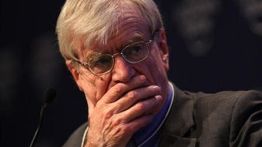
Richard Lambert has launched an uncompromising but constructive assault on the government’s growth strategy, or lack of it. He said: “The government is…talking about growth in an enthusiastic and thoughtful way… But it’s failed so far to articulate in big picture terms its vision of what the UK economy might become under its stewardship. “What I feel is that a number of their initiatives – I’m thinking of the immigration cap, I’m thinking about their move on the default retirement age, about the carbon reduction commitment - have actually made it harder for companies, or less likely for companies to employ people. And what we want, actually, is a sense of direction, a sense of ambition.

The government must continue to liberalise Europe’s market

From our UK edition

For a long time, the terms of Britain's Europe debate has been about the merits - or otherwise - of membership. This has occluded discussion about the need to promote a deregulated and economically liberal single market, for which the Conservatives have fought so successfully since Britain joined the then EEC in 1973.   Now Lord Brittan has shown the way. In a speech to Business for New Europe, he takes aim at the many illiberal practices that hamper economic development across Europe and hurt British business: “Portugal still has rules governing the minimum distance requirements between driving schools; and in Greece, directors of dancing schools need to live within a set distance of the school!

The coalition needs to address bonuses

From our UK edition

Much ado about bankers’ bonuses this afternoon. Tim Montgomerie reports that the proposed banking deal has run aground in Whitehall. The timing is inconvenient: Cameron and Clegg are due to fly to Davos to attend the World Economic Forum. The government hopes to allay public resentment by coercing banks into increasing their lending; which is also a crucial part of its nascent growth strategy. It adds to the impression that the government is failing to make progress in any other realm than cuts. For the time being, Tory spinners are content to distract attention by telling anyone that will listen about Ed Balls’ record on bank regulation and boundless enthusiasm for spending other people’s money.

DD’s classy intervention

From our UK edition

David Davis’ interview on Jon Pienaar’s show this evening has revived the debate about whether or not it matters how posh the Cameron top table is. Andy Coulson was the most senior person there who understood what it is actually like to work your way up the ladder and with him gone that experience is missing. But what matters far more than the personalities involved is the policy outcomes. As I said in the Mail on Sunday, the most important thing for Cameron to do is to deliver for these voters. To cut their taxes and give them public services that offer them value for money.