Conservative party

PMQs live blog | 9 March 2011

From our UK edition

VERDICT: A turgid sort of PMQs, where most of the quips were clumsy rather than cutting. Cameron probably won it by virtue of one of the few direct hits – his line about Ed Miliband knifing a foreign secretary, aka MiliD – and because Miliband failed, really, to prod and aggravate the coalition's wounds over Libya. The Labour leader's main attack – over the competence of the coalition – was clear enough, though, and could have some purchase depending on, erm, how competent the coalition is. As it is, Cameron's hint that he still has the occasional cigarette will probably capture the spotlight. 1231: And that's it. My quick verdict shortly.

Cameron’s threadbare praetorian guard

From our UK edition

One of the worst kept secrets of David Cameron’s leadership is that some in the inner circle don’t think much of the members of the shadow Cabinet who are now in Cabinet. What is far more dangerous is when the leader himself lets slip his low opinion of some of his colleagues, as Ben Brogan reports he has been doing lately. This is the kind of behaviour that is bound to cause resentment as this criticism always get back to the objects of it.   At the moment, Cameron can get away with this. He is still seen as the Tories’ primary electoral asset and there is no obvious, or even viable, alternative to him. But when Cameron gets into trouble, this will matter.

Pickles on the offensive against ‘propaganda sheets’

From our UK edition

Eric Pickles is no longer a genial giant. His speech to the Conservative Spring Forum was the rallying cry that many Conservatives in local government, some of whom will be scrapping for survival in May’s elections, have waited to hear.   ‘Ed Miliband,’ Pickles said, ‘is weaker than Neil Kinnock.’ The Labour leader could not take on his unions and militant councils, the Communities Secretaries said before turning an example: ‘Take Labour-run Camden. Ed Miliband’s local council. His councillors are cutting the Surma Community Centre, coincidentally visited by Samantha Cameron. Yet the council has spent twice as much on its town hall newspaper.

SpAd Wars

From our UK edition

Downing Street’s briefing that under-performing special advisors will soon be sacked has created a storm in the Westminster tea-cup. One SpAd pointed out to me the complete hypocrisy of a Number 10 that constantly stresses that briefing against colleagues is a sackable offence doing exactly that. Sacking under-performing SpAds will not be as easy as you’d think it should be. These advisors have, in most cases, been hand-picked by the Secretary of State who will be reluctant to give them up without a fight. SpAds in the rest of Whitehall also argue that the Downing Street operation itself is far from perfect.

Khan comes to Ken Clarke’s support (kinda)

From our UK edition

When it comes to the overall sway of British politics, Sadiq Khan's article for the Guardian is probably the most important of the day. We've heard Ed Miliband say before that, "when Ken Clarke says we need to look at short sentences in prison because of high re-offending rates, I'm not going to say he's soft on crime." But Khan's article, a summary of a speech he is giving later today, actually puts that sentiment into practice – and then some. His central argument is straight from the Hush Puppied One's playbook, particularly in its emphasis on the limitations of New Labour's policy: "Some claim crime fell because of the rise in the numbers imprisoned. But the relationship between crime rates and prison population is more complex than that.

Cameron hugs his party

From our UK edition

David Cameron’s speech to the Conservative Spring Forum was one of the most Conservative speeches he has given in a long time. It was an address that was meant to reassure the party during what looks set to to be this government’s most difficult year. The Tory leader opened with a list of policy pledges delivered and they were all distinctively Conservative policies: making work pay, the EU referendum lock, teaching British history in schools, freezing council tax, capping immigration and doubling the operational allowance. There was further crowd pleasing material in a substantial section of the speech which attacked AV.

Osborne’s political economy

From our UK edition

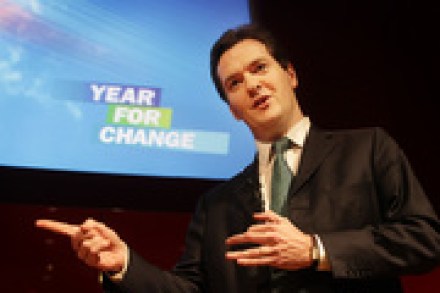
George Osborne’s speech to the Tory spring conference today showed the classic left-right way in which he wants to frame the political debate about the economy ahead of the Budget on the 23rd of March.  In a move straight out of the election-winning centre-right playbook of the 80s, he attacked Balls and Miliband as “Two left-wing politicians who don't understand anyone who wants to get up and get on, anyone who want a better life for their family, anyone who want to create wealth, and start a business, and create jobs, and leave something to their children.

The politics of planning

From our UK edition

The ruckus over sending a high-speed railway roaring through some of Southern England’s most prized back gardens might be dominating the headlines. But another, separate row over planning is brewing. Behind closed doors, ministers are straining to develop a coherent plan to build the new houses that Britain – especially the South East needs – in a way that is politically feasible. Whitehall is wrestling with how to reform a planning system that has led to more expensive housing and offices, developments that are often ugly and cramped, and soaring costs for everyone – the government included. Housing benefit costs more than the Home Office and Ministry of Justice combined. A shortage of supply has been a big factor driving house prices.

A night that will not be quickly forgotten

From our UK edition

Last night’s by-election result in Barnsley is embarrassing for both Clegg and Cameron. For Clegg, it is obviously humiliating to come sixth. Fourth would have been bad enough but sixth is an even worse result than the Lib Dems feared. The fact the Lib Dems also lost their deposit just adds insult to injury. The result will certainly make activists heading to Sheffield next week for their spring conference jumpy. I also suspect that we’ll see some enterprising newspaper doing a poll in Clegg’s Sheffield constituency before next weekend.  On the Conservative side, coming third behind UKIP is going to lend weight to those who argue that the party has conceded too much to its coalition partners.

A grim morning for the coalition – as Lib Dems finish sixth in Barnsley

From our UK edition

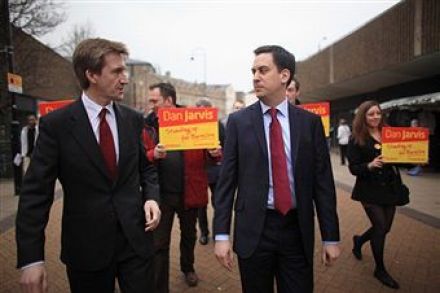
    You may notice that the Liberal Democrats don't feature in the first two graphs of the by-election result in Barnsley Central last night. Or, rather, they do – they're just subsumed under the 'Others' category, having finished in sixth place. Second in the general election, sixth last night. The 1,012 votes for the Lib Dems put them behind Labour, UKIP, the Tories, the BNP and an independent candidate called Tony Devoy. Their share of the vote has fallen by 13.1 points on last May's result. This was an unequivocal, almost ritualistic, beating. Blood everywhere. And the other half of the coalition hasn't escaped unbruised either. The Tories finished third in the general election, third now – so what's changed?

Hunt’s rising star

From our UK edition

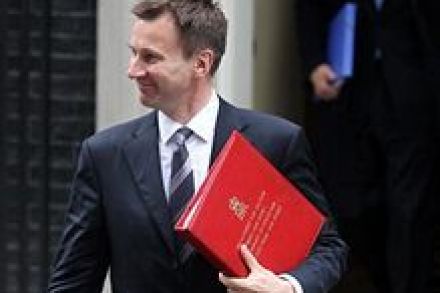
The decision on News Corp's take-over of BSkyB has thrust Jeremy Hunt into the spotlight. The culture secretary is many Tories' bet to be the next leader of the party. Hunt is ambitious even by political standards: during the Brown bounce he canvassed opinion as to whether he should stand in the Tory leadership contest that would follow an election defeat, and has a John Major like ability to make factions in the party feel like he is one of them. Add to this, a good television manner and one can see why people think he'll go far. One of the odd things about politics is that there is no heir apparent to Cameron in the Tory party. Hague used to be considered the obvious emergency replacement. But that is no longer true.

The Tories take the train to war

From our UK edition

Philip Hammond should be wary of the ladies of Cranford. The advent of the railways was met with considerable disquiet in rural England, depicted by Elizabeth Gaskell in both Cranford and North and South. High-speed rail has inspired another wave of determined conservatism in the shires. It’s a proper grassroots movement. For months now, Tory-controlled Buckinghamshire has warned the government that its councils and associations would oppose the development. Cabinet Ministers whose seats are local have supported their constituents, but the resentment is unchecked and it will damage the Conservatives to an extent.

Boris: give us a referendum on Europe

From our UK edition

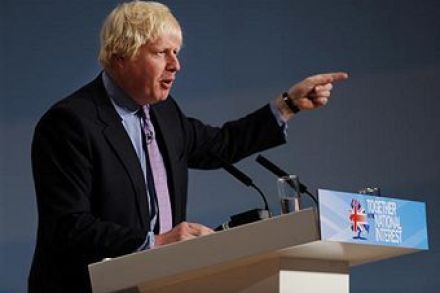
Boris kicks off his Telegraph column today by observing that Colonel Gaddafi and Gordon Brown "look vaguely similar". And yet the really provocative copy, at least so far as the government is concerned, is reserved for the final paragraph: "It is bonkers [by pushing for AV] to be pursuing the last manoeuvre of a cornered Gordon Brown. By all means let us have a referendum – the one we were promised, on the Lisbon EU Treaty. Have you noticed the EU policy on North Africa? Have you heard much from Baroness Ashton? Shouldn't we have a vote on all that?" It's hardly a secret that Boris wanted a referendum on Lisbon: he said as much in an interview before the 2009 Tory conference, and irritated the party leadership in the process.

Downing Street’s bureaucratic burden

From our UK edition

Do head over to ConservativeHome, where Tim Montgomerie has put together a comprehensive guide to the revamped Downing Street operation. I won't spoil its considerable insights here, except to highlight this: "An analysis of papers sent to Downing Street and the Cabinet Office has revealed that just 40% are directly related to the Coalition's programme. Roughly 30% come from the Whitehall bureaucracy and another 30% from the EU." James makes the point in his latest politics column that Tory ministers are becoming more and more Eurosceptic as they face the EU in government. That pile of European directives in the in-tray must just be getting too much.

Three reasons why David Cameron should get involved in the No to AV campaign

From our UK edition

Over at Comment Central, Danny Finkelstein has written a post saying that it might not be in the best interests of the No campaign for Cameron to campaign heavily against AV. His argument is that the No campaign’s best hope is to run as a spiky, anti-establishment effort. I think this is true but that the No camp has rather forfeited this chance by appointing Margaret Beckett as its president and having a former Labour MP front its launch. If the No campaign is going to be use so many politicians as spokesmen for it, it might as well have one of the most able ones involved. Second, and most importantly, Cameron’s presence on the trail would highlight Nick Clegg’s absence.

How far will Cameron go to break the state monopolies?

From our UK edition

Call it the Big Society, decentralisation, people power, whatever – but David Cameron's vision for society just became a good deal more concrete. In an article for the Telegraph this morning, the Prime Minister makes a quite momentous proposal: that there ought to be a new presumption towards diversity in public services, whereby the private, voluntary and charitable sectors are as privileged as the state is now. Or as he puts it: "We will create a new presumption – backed up by new rights for public service users and a new system of independent adjudication – that public services should be open to a range of providers competing to offer a better service.

Cameron’s back is against the wall – now he must fight

From our UK edition

Given that David Cameron will have a tougher fight than perhaps any postwar Prime Minister other than Thatcher, it’s a bit unfortunate that his team doesn’t like political combat. Losing to Rachel Johnson over forests last week exposed major weaknesses, and sent a message to the government’s enemies: that these guys have pretty poor political combat skills. Now word is out, the cuts protests in Liverpool today will be the first in a series of challenges. Cameron, too, is stung by the avoidable mistakes of the last few weeks – and is reshaping No.10 to account for them. Some changes are great, some less so, others downright worrying. Here's my overview: 1. The Big Society. Cameron has started from first principles.

Bad banking

From our UK edition

No wonder the banks like Britain's corporation tax regime. This morning’s newspapers all tell that Barclays paid just £113m in corporation tax in 2009, despite making profits of more than £11bn. In a rare instance of justified anger, Labour’s chosen men have launched an attack on the government’s failure to ‘take the robust action needed to make sure that the banks which caused the crash pay their fair share, and will stick in the stomachs of small businesses struggling to borrow and ordinary people feeling the pinch of the government's austerity measures.’ Whatever the absurdities of Labour’s position, this news will ‘stick in the stomachs’ of the little people, whose wealth is withering before their eyes.

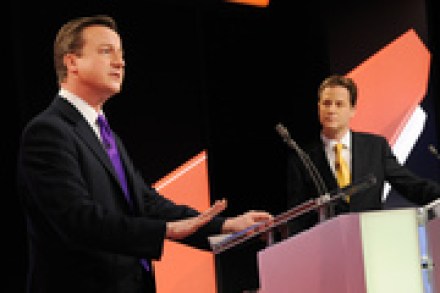
Cameron and Clegg, head to head

From our UK edition

Now here’s a shock: something to trump the relentless tedium of the Cricket World Cup. The AV referendum. Labour MP Jim Murphy held his constituency surgery in a large supermarket today and it was well attended, but no one asked about the referendum. Murphy ruefully tweeted: ‘the public are so out of touch with today’s politicians.’ But it is odd, or at least it should be, that the nation’s second ever plebiscite has inspired only indifference; then again, electoral reform is not a subject to quicken the pulse. Even the campaigners are resigned to expect scant enthusiasm for their cause. The campaign is days old and already its emphasis has shifted from principle to personality.

The government has been weak over forests

From our UK edition

A very dangerous precedent has been established today over the forest fiasco. Caroline Spelman earlier gave the most extraordinary interview on Radio 4's PM. "We got it wrong," she said in the Commons. "How so?" asked Eddie Mair. She wouldn’t say. As he kept asking her, it became increasing clear that she didn’t think they got it wrong. They conducted the U-Turn because they were losing the media war.   Really? Is that all it takes to defeat Cameron's government? A decent two-week campaign with a couple of celebs? The forest policy was a good one: why do we need state-run timber farms? Not that this argument was ever aired. They government just sat mute, and was beaten up by Rachel Johnson and her brilliantly mischievous campaign.