Conservative party

A matter of honour

From our UK edition

Condemnation’s coming from all sides for the £963,000 bonus awarded to RBS’s Stephen Hester, on top of his £1.2 million salary. The most prominent denunciation came from Lib Dem Foreign Office minister Jeremy Browne on last night's Question Time: ‘I think there’s a sort of question of honour. Even if there is a contractual opportunity for him to have a bonus, it doesn’t mean he has to accept it. He’s already being paid more than £1 million a year. His total package now, means he gets paid in about three days what a soldier risking his life in Afghanistan gets paid in a whole year. And I think he should reflect on that.

A Lib Dem demand that the Tories should get behind

From our UK edition

Remember those Lib Dem calls for a mansion tax at the weekend? I said at the time that, ‘the Lib Dems appear to be drawing more attention to which of their own policies they are fighting for within government, whether those policies make it to the statute books or not.’ Well, now they're at it again. Nick Clegg is giving a speech this morning in which he'll urge George Osborne to go ‘further and faster’ in raising the income tax threshold to £10,000 a year. It was the stand-out policy of the Lib Dem manifesto, so it's hardly controversial that Clegg should want to see it enacted ASAP. But it's still striking that he's making this appeal in public. A year ago, he'd have emphasised what the coalition was already doing to raise the threshhold.

Miliband delivers for once, but Cameron’s left unharmed

From our UK edition

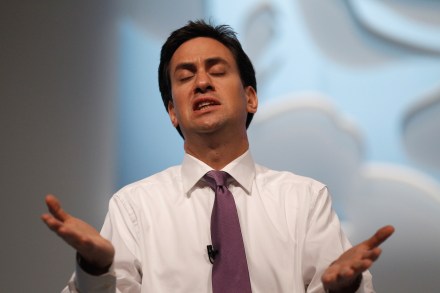
Incredible events in the chamber today. An absolute sensation at PMQS. For the first time since last summer, Ed Miliband got through the session without triggering talk of a leadership crisis. There was gloomy news aplenty to dwell on. Debts soaring; growth flat-lining; dole queues snaking back through blighted high streets and bankrupt business parks. The Labour leader chose to wallop Cameron with a well-prepared attack on the NHS. Quoting the prime minister’s vow, ‘to take our nurses and doctors with us’, he asked why the government had stopped listening. The prime minister’s reply was frivolous and desperate. He giggled and smirked like a teenager at the despatch box and tried to make light of his loathed policy.

Both leaders left smiling after PMQs

From our UK edition

Today was one of those PMQs when you sensed that both sides were fairly happy with how it had gone. Ed Miliband turned in one of his stronger performances, cleverly splitting his questions and so allowing himself to have a go at both the economy and the coalition’s troubled NHS reforms. Cameron, for his part, got through what was always going to be a difficult session for him after this morning’s negative growth numbers.   Strikingly, there were four planted Tory questions on the benefits cap. The Tories know that Labour’s vote against it compounds one of their biggest vulnerabilities, the sense they are the party for people on benefits and not those in work.

Bad news doesn’t have to be surprising

From our UK edition

I'm still of the mind that Westminster fusses too much about these quarterly growth figures, particularly when parts of the country have been in economic decline for decades. But there's no doubting that they have the capacity to shift the political mood, both here and around the country. There is something disheartening about the idea that the economy returned to shrinkage in the final quarter of last year (even if today's preliminary figure of -0.2 per cent might be revised upwards, or downwards, in due course). You can expect Ed Miliband to make much of it in this afternoon's PMQs. The politics of the situation are not stacked entirely against George Osborne, though. His major consolation today is that everyone expected this sort of minor contraction.

Osborne owes Darling an apology

From our UK edition

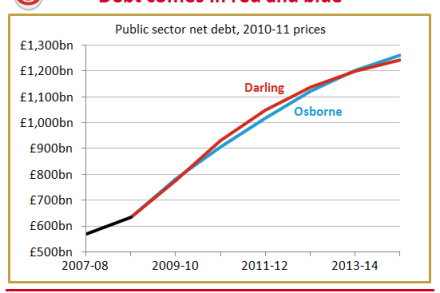
Britain's national debt rose to over £1 trillion last month, and will never return below this threshold. George Osborne is increasing net debt by 61.5 per cent in real terms over this parliament, more than the 59.9 per cent which Labour proposed when it fought the last election. Here's how the OBR's current projections for debt contrast with what Darling proposed in his last Budget: At the time, Osborne said Labour's debt plan was reckless and unsustainable. I think he owes Alistair Darling a generous apology. Then, Darling said he'd halve the deficit over four years. Too slow, said Osborne. Now, he's taking five years to do it – as the below graph shows: Osborne has kept to his spending plans, which cut departmental totals by 2.

A defeat that delights the Tories

From our UK edition

Rarely can a government have been so pleased to have been defeated. The Tories are, privately, delighted that the Lords have voted to water down the benefit cap, removing child benefit from it. The longer this attempt to cap benefit for non-working households at £26,000 stays in the news, the better it is for the government. It demonstrates to the electorate that they are trying to do something about the injustices of the something for nothing culture. The matter will now returns to the Commons where the coalition is confident it can be reversed. I understand that Nick Clegg remains solid on the issue, despite the fact that Ashdown and Shirley Williams led the Lib Dem rebellion in the Lords on this amendment.

Cable teaches Umunna a lesson about the past

From our UK edition

If you were in a particularly soggy mood, you'd almost feel sorry for Chuka Umunna. He'd managed to force Vince Cable into the House this afternoon, to announce the coalition's plans for curbing executive pay a day earlier than planned, and he must have been feeling pretty swell about it. This was, on paper, the initiative seized; a chance to prise open the Business Secretary's differences with his Tory colleagues. But, in practice, it was something completely different. In practice, Cable dispatched his opponent with ruthless ease. You might even have found yourself in the unthinkable position of cheering him on. A large part of it was Umunna's petty, needling set of questions.

Benefitting the Tories

From our UK edition

The longer the row over the benefit cap goes on, the better it will be for the Tories. The cap chimes with the public’s sense of fairness. Polls show massive public support for capping benefits at £26,000 a year for non-working households (the cap won’t apply to the disabled or war widows), and if Labour oppose it, they’ll be handing the Tories a stick with which to beat them. Chris Grayling has already declared that tonight’s vote in the Lords is ‘a test of Ed Miliband’s leadership’. Those who argue that the cap isn’t fair because it will force people to move out of their house are missing the point.

Labour’s confusion is the Tories’ advantage

From our UK edition

Today’s polls make grim reading for Labour. Even three months ago senior Labour or Tory people wouldn’t have thought that the Tories would be five points ahead at this point in the cycle. Part of Labour’s problem is that its positions require too much explanation. As one Number 10 source jokes, ‘Ed Miliband can do a Rubik's cube in less time than it takes him to explain his position on the cuts.’ A prime example of these overly complicated policy positions is Labour’s approach to the benefit cap. The leadership says that it is in favour of a cap in principle but against this one in practice.

Lansley’s headache becomes a migraine

From our UK edition

Now that the three party leaders have each pronounced on capitalism, domestic politics is returning to its familiar battlegrounds. And there are few more familiar battlegrounds, for this government, than the NHS. Earlier this week a couple of unions came out completely against Andrew Lansley's health reforms, despite his previous efforts to accommodate their concerns. And now we learn that the Commons health select committee, chaired by the former Tory Health Secretary Stephen Dorrell, is set to criticise those reforms as well. According to the Observer, a report that they're publishing this week will raise a common complaint: that it's tricky for the NHS to both reorganise and find efficiencies at the same time.

Cameron’s capitalism

From our UK edition

Ever since Ed Miliband’s ‘predatory capitalism’ speech at the Labour Party conference, the future of capitalism has been a subject that has much occupied our MPs. Clegg made his speech on Monday, and Cameron delivered his yesterday. I have had plenty to say about the coalition government’s inadequate economic policy, and its inability to stoke growth. But Cameron’s speech was impressive, and it’s worth going into in some detail. I look at it in my Telegraph column today. Much rot is spoken about capitalism. It is not an ideology, there is no rule book you can tweak: it is simply the name given to the system where people trade with each other the world over.

The Home Office still hasn’t cleared up its border issues

From our UK edition

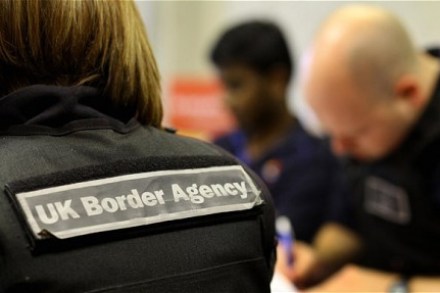
Remember Theresa May's border skirmish against Brodie Clark back in November? This morning the Home Affairs Select Committee published their report into the whole affair. Ideally it would have cleared up some of the confusions over who was responsible for waiving various security checks at our borders last summer, and whether they were right to do so — but it doesn't really manage it. This is not really the fault of the committee: some of the crucial questions they put to the Home Office remain unanswered, and key documents have not been released to them.

How Cameron sees the economy

From our UK edition

Today’s speech by David Cameron is one of those ones that give you a real insight into how he sees the world. Cameron said that he wanted to see an ‘insurgent economy, where we support the new, the innovative and the bold’. He talked about the need to ‘encourage the adventurous spirits who challenge the status quo and declared that he admires ‘more than almost anything the bravery of those who turn their back on the security of a regular wage to follow their dreams and start a company’. This reveals something important both about Cameron personally and how he sees the economy. The people that Cameron respects are not the CEOs of established companies but the entrepreneurs who are creating dynamic, new companies.

Boris’ poll lead evaporates

From our UK edition

It looks like the May's election for Mayor of London will be a close run thing. A new poll today from YouGov has Ken Livingstone two points ahead of Boris Johnson – a big turnaround from the eight point lead Boris had in June: Ken shouldn't be popping any champagne corks yet, of course. His lead is well within the poll's margin of error, and there's three and a half months to go before election day. But he's certainly looking more likely to topple Boris than he did seven months ago. So why the change? YouGov's Peter Kellner has a good article on the poll's details here, but two key points jump out from the numbers: 1. Labour voters are getting behind Ken.

Boris puts on a performance for the 1922 Committee

From our UK edition

Boris Johnson was very well behaved this evening when he appeared before the 1922 Committee of Tory MPs. He stayed off the topics of Europe and tax and instead confined his remarks to London, saying that he wanted the capital to be an example of ‘cost-cutting, one nation Conservatism’. Those MPs inside the room say the performance was classic Boris, as one put it ‘he left no erogenous zone unstroked’.   Afterwards, Mark Reckless, a north Kent MP, asked the Mayor a sceptical question about his plan for a new airport in Kent. In the questions, I understand that Boris also took the chance to express his support for Rebecca Harris’s daylight saving times bill.   Interestingly, the turn-out for Boris was decent but not massive.

The lesson from today’s PMQs? Unemployment makes Cameron uncomfortable

From our UK edition

What’s the point of Ed Miliband? Does the Opposition leader have any purpose in life other than to provide ritual entertainment for the Tory wrecking crew at PMQs? Having spent the New Year listening to lethal attacks from his dearest supporters, Mr Miliband has now seen his leadership shrivel to a pair of policy statements which rival each other in desperation and barminess. The first, outlined by Liam Byrne this morning, is a fantasy tax on banking, ‘to create 100,000 jobs’. The second is Labour’s new position on the government’s austerity programme. This would baffle the dippiest and trippiest resident of Alice in Wonderland. We hate the cuts. We back the cuts. We oppose the cuts. We endorse the cuts. We accept the cuts.

Cameron endures his monthly unemployment grilling

From our UK edition

Downing Street is painfully aware that one PMQs in four is going to be about unemployment. Today, with the monthly figures having come out this morning, Miliband led on the subject. The Cameron-Miliband exchanges were not particularly enlightening. Miliband said ‘it really is back to the 1980s’ and Cameron mocked Miliband for being ‘so incompetent, he can’t even do a U-turn properly’. In the backbench questions, Cameron wasn’t put under much pressure. The news of the session came when he said in response to a question from Andrew Rosindell that the National Security Council had devoted a whole session to the Falklands yesterday.