Conservative party

The Tories shouldn’t gloat about Galloway’s victory

From our UK edition

An unedifying week in politics keeps on getting worse. The Tories have this morning sent out a press release headlined ‘Warsi: If Labour can’t win in Bradford, how can they win a general election?’ The full quotation follows further on: ‘If Labour can’t win one of their safe seats in these tough economic times and in a tough week for the Government, how can they win anywhere? Not in half a century has an opposition come back from such an appalling result to win a majority at the next general election.   This tells you everything you need to know about Ed Miliband’s weak leadership.’ It's characteristic of much of the Tory reaction to George Galloway's victory in Bradford West.

George Galloway is an MP again

From our UK edition

‘This represents the Bradford Spring!’ said George Galloway after triumphing in the Bradford West by-election last night. So, let's get this straight: comparing his victory in one of the many fair elections held in this country each year to the dangerous and fragile struggle for democracy across the Arab world? Yep, that's right — and it leaves a nasty, bitter tang in the air. But we shouldn't be one bit surprised. Bluster, exaggeration and provocation are, after all, what Galloway does best. And now he will be able to do these things in Parliament for the first time since May 2010, when he was deposed from the Bethnal Green seat.

Cameron needs a proper party chairman

From our UK edition

Normally, when a Tory government is in trouble, the party chairman is sent out to put themselves between the bad story and the Prime Minister. But Baroness Warsi and Lord Feldman have been noticeable by their absence in the past few days. As Paul Goodman points out, it has been Michael Fallon — not either of the chairman — who has been touring the broadcast studios trying to hose down this story. This whole episode has been yet another reminder of why Cameron needs a proper party chairman. The party chairman needs to be solid under fire, a good media performer and, for reasons that Tim Shipman explains, an MP. Various names are being touted in Westminster.

The new generation of Tory rebels

From our UK edition

There's a new member of The Spectator family, and she's called Spectator Life. This is our new quarterly magazine focusing all the more civilised aspects of life — the arts, culture, travel, etc — and it comes bundled in, for free, with the main magazine. The first issue is available on newsstands this week, but, so you can try before you buy, here is one of its more political articles: an overview of the new generation of Tory rebels, by Toby Young. The Unwhippables, Toby Young, Spectator Life, Spring 2012 On the night of the great Tory rebellion over Europe, David Cameron had good reason to think that Zac Goldsmith wouldn’t join in.

Davis takes the opportunity to strike

From our UK edition

The fuel tanker strike is fast turning into a critical moment. The government, which has surprisingly few friends in the media, desperately needs something to move the story on from pasties and the politics of class. Cameron, also, has problems with his own side. On the World at One today David Davis, deliberately, hit Cameron where it hurts. He accused the Cabinet of looking like “they’re in a completely different world". One thing that the post-Budget opinion polls have shown is just how shallow support for the coalition is: there’s still no sense of who Cameron’s people are. But I suspect that if this strike is beaten, then the Tories will tick back up in the polls and it will be Ed Miliband who is facing questions about party donors.

Choice — easy to talk about, a slog to deliver

From our UK edition

The birth of the White Paper on public service reform was a tortuous business — but, now it's been out for several months, the government is keen to make the most of it. David Cameron is launching an ‘updated’ version today, with a few new proposals contained therein. He also has an article in the Telegraph outlining those ideas, including the one that seems to be getting the most attention: draft legislation to give people a ‘right to choose’ their public services. It feels like both an important and potentially inconsequential moment all at once. Enshrining choice in the laws of this land is a powerful symbol that people shouldn't have the state's idea of ‘good’ foisted upon them.

Riots report undermines the Tory diagnosis, but spreads itself too thin

From our UK edition

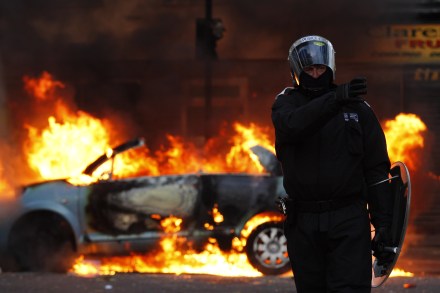
After last August’s riots the debate became quickly polarised. Were socio-economic factors like unemployment to blame, or was it all down to the individual choices of the rioters? David Cameron and other Conservative ministers knew which side of this debate they wanted to be on. They had been taken by surprise by the riots, initially failing to realise how serious things were, but when they got back from their holidays they set out a clear and confident line, brushing off most questions about links to the state of the economy or youth attitudes, and condemning the riots as ‘criminality pure and simple’. The soundbite was deliberately simplistic; Conservative ministers’ actual views were more complex.

Another five-point ‘pledge card’ from Labour

From our UK edition

There is no PMQs today, so Ed Miliband is filling the time as gainfully as he can with a speech bashing the Tories. Unsurprisingly, he's making rather a lot of last week's Budget — particularly the 50p tax cut and the frozen personal allowance for pensioners — as well as of Peter Cruddas's recent indiscretions. And so David Cameron will be described as ‘out of touch’ and all that. But there is something else with today's speech: a prop, in the form of a five-point ‘pledge card’. I don't think we've had one of these from Labour for a couple of years now, although they do tend to reserve them for general election campaigns. Miliband's will focus on helping, in his own words, ‘squeezed middle families in these tough times’.

Lansley has won, in a way

From our UK edition

At two thirty this afternoon, the Deputy Speaker announced to the House of Commons that the Queen had granted Royal Assent to the Health and Social Care Act. It seemed fitting that the House was debating assisted suicide at the time. The agonies of watching this cursed legislation twitch and stumble its way onto the statute book were enough to make anyone with half a concern for well-ordered public policy start Googling the names of Swiss exit clinics. Albeit there would have been the risk that Number 10 had already paid for Andrew Lansley's ticket to join you there. Suddenly, though, the politics of health are very different. Mr Lansley, for all the opprobrium he has borne, has his Parliamentary mandate. He has won.

The Tories’ perception problem

From our UK edition

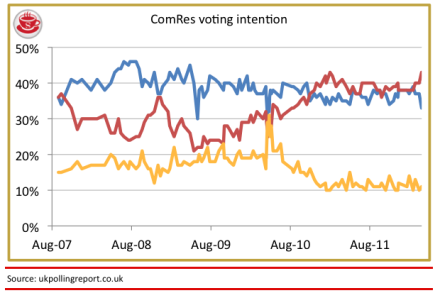
Introducing Ed Miliband, Labour's best hope since Tony Blair. Oh, I'm kidding, of course — but it's still striking that, this morning, Labour have their biggest lead in a ComRes poll for seven years. And the size of the lead? Ten points, but it could be even bigger. The Peter Cruddas revelations fell right in the middle of ComRes's polling. Apparently, those interviews conducted after Sunday had Labour with a 17-point lead. Of course, you can slap every caveat across this that you like: we're still ages away from the election; one poll does not make a trend; the 17-point figure is based on a subset of a subset of people; and so on. But this ComRes poll, and a few others out today, will still jangle nerves and fray tempers along Downing Street.

Replacing control orders: an unsatisfactory compromise 

From our UK edition

A small silver lining for David Cameron in the ‘cash for access scandal’: on a quieter day, today’s report on the coalition’s replacement of control orders with ‘Terrorism Prevention and Investigation Measures’ (TPIMs) might have got more attention. The report, published by the Independent Reviewer of counter-terrorism legislation, David Anderson QC, makes for difficult reading for ministers. Before looking at the detail of the report, it is worth remembering that control orders were always a second-best policy.

Transparency isn’t just for scandals…

From our UK edition

While the #cashforcameron scandal (as it is being called on Twitter) rumbles on, the calls for state funding of political parties are increasing. But as James said yesterday, and as I argued on Sky News afterwards, this is not the answer — and it seems that the majority of the public agree. Yesterday's YouGov poll had 59 per cent of its respondents opposing the idea of taxpayers funding political parties. But will transparency work instead? Blowing open the doors on all meetings and donors would certainly help the public see who is donating what and the effect (if any) that money is having on policy — but only if it is properly followed through.

How will the Lib Dems respond?

From our UK edition

The key thing to watch for during Francis Maude’s statement is the Lib Dem reaction. At the moment, the Tories can rebut Labour’s criticisms of them by pointing to both union funding and the Ecclestone affair. But if their coalition partners start turning up the volume on this story, then the Tories are in a far more difficult position. What will drive the Lib Dems is their desire to get a deal on party funding. The Lib Dems are very keen to reduce the advantages that the Torties and Labour have on this front and this scandal presents the perfect opportunity to press for a restrictive cap on donations and more state funding for political parties.

Cameron u-turns on donor secrecy — but what now?

From our UK edition

One distinct feature of the ‘cash for access’ row is that we've seen it all before. And not just the glutinous mix of politics and money, but also the debate over what should be done to fix it. Last November, Sir Christopher Kelly, chair of the Committee on Standards in Public Life, released a report into the funding of political parties that featured many of the options we're hearing today. It landed on 24 recommendations, of which one stood out: ‘the only safe way to remove big money from party funding is to put a cap on donations, set at £10,000’. But to prevent a subsequent shortfall in parties' funds, it also proposed that state funding be increased to the tune of an extra £23 million.

The problem for Cameron is his proximity to the problem

From our UK edition

The happiest news for David Cameron this morning is that the ‘cash for access’ story hasn't quite made it onto every front page. But that's it, really, so far as the glad tidings are concerned. All the rest is poison for No.10. The Prime Minister is now fighting off calls — including from his own MPs — to release the names of those donors who enjoyed dinner at his Downing Street flat. Labour are, of course, pressing for him to go further than an internal party inquiry, and launch an independent investigation instead. Today's furore is not going to simmer down after a few days, or even after a few weeks. In several respects, all this is trickier for Cameron than, say, the expenses scandal.

Transparency, not state funding

From our UK edition

Cutting the 50p rate was economically the right thing to do, but the politics of it are hugely complicated. The biggest danger is that it bolsters the sense that the Conservatives are the political wing of the privileged classes. For this reason, it is particularly unfortunate for the Conservatives that it is this Sunday that The Sunday Times has done an expose (£) on how potential donors were being lured with the offer of supper with Cameron and Osborne and the chance to influence policymaking. Labour are already trying to link the two, asking the Prime Minister to ‘provide details of all donors who have made representations, both written and orally, on changes to the 50p tax rate’.

Why access Cameron? The Lib Dems would be an easier target…

From our UK edition

Why would anyone pay £250,000 to change Tory policy when the Liberal Democrats would do it for £2.50 and a hug? The brilliant Sunday Times investigation today makes you wonder whether businessmen don't actually realise that out that, in this coalition, it doesn't matter what you persuade David Cameron of. Policy is decided by horsetrading with the Lib Dems, who wield disproportionate power (for good or for ill). For example, Osborne was personally inclined to bring the top rate of tax down to 40p, but the Lib Dems told him they'd only allow this in exchange for their mansion tax. Cameron refused to do the deal, so 45p it was. The rise in capital gains tax was a Lib Dem demand, and would only be changed by Lib Dem agreement.

The ‘next big scandal’ detonates under Cameron

From our UK edition

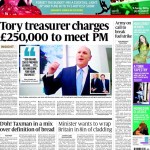
‘It will be awesome for your business.’ So said Peter Cruddas, co-treasurer of the Tory party, as he tried to peddle access to David Cameron for £250,000 a shot. Only he wasn't talking to businessmen this time; he was talking to a couple of investigative reporters from the Sunday Times (£), who were armed with dictaphones and video cameras. And, as the resulting footage shows, he blustered himself over the edge. A ‘premier league’ of donors was spoken of, whose ideas are ‘fed in’ to Downing Street's policy process. There was a claim that the biggest donors can be invited for dinner at Cameron's private flat in No.10, where they can ask him ‘practically any question [they] want’.