Conservatism

The bonfire of the New Right’s vanities

The American right has a problem: it can’t stop talking about itself. Commentators, academics and journalists of what used to be called a “conservative” persuasion all tend to think that their ideas are tremendously interesting. And, in the way a difficult child becomes argumentative when he or she isn’t getting attention, they fight. They fear irrelevance and so they fall out with each other and take sides in order to prove to themselves that they have something worth saying. Things become messy and nasty and everybody gets carried away – usually in the hope of grabbing their own slice of an all-too easily distracted online audience. (Why else am I writing this?
new right
william f. buckley jr

What would Buckley do?

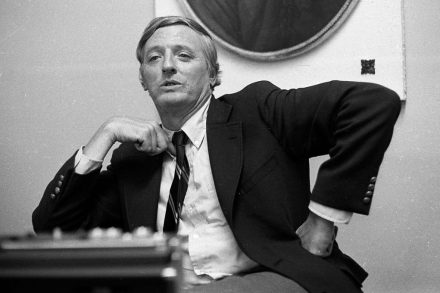
When Sam Tanenhaus’s monumental biography Buckley was published in June, I began a review by noting that William F. Buckley Jr.’s memory is as ill-served by some of his admirers as it is by his critics. The two have in fact largely converged on a single characterization of National Review’s founder: Buckley as the patron saint of purges, who excommunicated anti-Semites and conspiracists (as one side emphasizes) or antiwar dissenters and populists (as the other sees it) from the conservative movement.

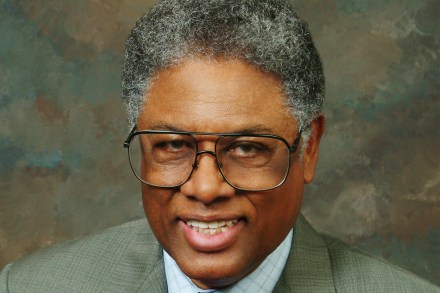
Why Thomas Sowell still matters

New York socialist Zohran Mamdani is hailed as the social media sensation of American politics. He knows how to talk directly to young people, we’re told. Yet an account called “Thomas Sowell Quotes” has almost twice as many followers on X as Mamdani. Sowell turned 95 this year. He is an unlikely influencer and yet hour-long interviews with him, published by Stanford’s Hoover Institution, have been watched millions of times. In his most popular video, Sowell argues for personal responsibility over dependence on the state and is meticulous in his use of empirical evidence. Black men who read newspapers and own library cards have had the same income as their white counterparts since 1969. Married black couples have the same poverty rate as white couples and have done for decades.

thomas sowell

How does the American right move on?

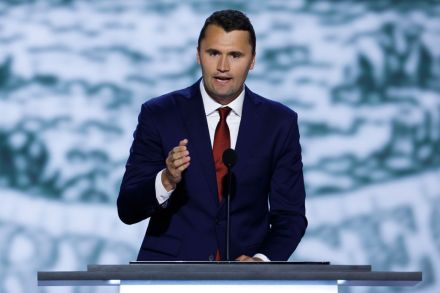
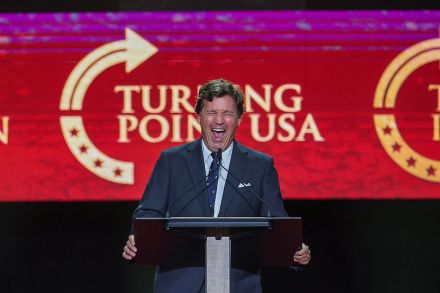
At the time, it was audacious. Guy Benson, now a commentator for Fox News and Townhall, recalls being approached by an Illinois teenager who wanted Chicago high schoolers to listen to conservative ideas. He offered the same advice to the gangly 6ft 5in youngster that anyone would suggest to a man with a mind on politics: keep hustling, go to a good school, get a degree and an internship at a think tank. But the precocious Charlie Kirk had different ideas. “He was smart enough to completely reject my advice,” says Benson. Neither of them could have known how that decision, and the Turning Point USA organization Kirk then founded, would go on to change the country.

Kirk

MAGA is America’s third party

Gearing up to launch his new "America Party," Elon Musk now speaks of a GOP-Democratic duopoly that has the country in its grip. But this system died ten years ago at the hands of Donald Trump: America's first third party president.  With a small band of misfit toys drawn from the world of Manhattan real estate Mr. Trump invaded an old and established party, replacing it with his own ideas and – in true cuckoo fashion – his own children. There is almost no intellectual continuity between the faction he now leads and the pre-2015 Republicans beyond a generic commitment to free markets and to law and order.

Third party

When will Trump’s ‘Big, Beautiful Bill’ pass the House?

President Donald Trump is seeing a handful of House Republicans deal what he hopes is a temporary setback to his "Big, Beautiful Bill." Despite Trump’s repeated requests that House Republicans pass the gigantic reconciliation bill — which includes the codification of several of Trump’s executive orders, along with larger-than-expected spending cuts targeting across the board expenditures and a $4 trillion debt limit increase — several Republicans in the House tanked a critical vote in the Budget Committee, forcing Republicans to consider what comes next. While the specifics are uncertain, Republicans lack a plan B if they fail to pass some version of the bill. “It has to pass,” Congressman Glenn Grothman, a Budget Committee member, said.

congress bill

Brett Cooper departs Daily Wire following days of speculation

“Hey guys, some of you have heard the rumors online, and the rumors are mostly true,” Brett Cooper began her YouTube video, posted Tuesday evening, very tactfully. “Today, December 10 will be my last day hosting the Comments Section, and working for the Daily Wire. It is not true that I am being forced out; it was my own choice to leave.” Cooper had frequently been dubbed the "female Ben Shapiro" during her tenure as one of the Daily Wire’s other podcast hosts. She was also set to star in the Wire’s production of Snow White and the Evil Queen, out next year for some reason. The video announcing her exit has garnered over 5 million views on X in the twelve hours since publication. https://www.youtube.com/watch?

brett cooper

Republicans need to bring it home for me and my three cats 

I am forty, I’m perpetually single, I have no kids, and I own three cats. No, this isn’t a reboot of Bridget Jones’s Diary; it’s my life. And I also happen to be a lifelong conservative who votes in every election.   I’m not so sensitive that I thought J.D. Vance’s now-widely circulated comments about “cat ladies” from 2021 were directed specifically at me — but the words hurt all the same. Like so many women in my shoes, I did not set out to be single and childless forever to make a hallow political gesture. I dreamed of a family, true love and the white picket fence. But thus far, that simply hasn’t been the course mapped out for me by the Author of all things.

cats

What does ‘Barstool conservative’ even mean?

Welcome to Thunderdome: have you placed a bet yet on if Chris Christie actually shows up to the debate with a pair of brass knuckles? It certainly would be entertaining to see the New York and New Jersey guys just ignore the rest of the field and tangle — it’d be enough to justify having the debate itself. But Trump might skip it, which makes the prospect of a DeSantis/Newsom debate the most interesting possibility on the horizon — and presents a make-or-break chance for the Florida governor. Meanwhile, Republicans struggle with how to aim their message in a time where culture war is the dominant narrative but perhaps not the most salient one.

dave portnoy

Is my favorite dress company the new Bud Light?

I’ve been pregnant for the better part of the last decade; fifty-four months to be precise. I recently started investing in refreshing my non-maternity or postpartum wardrobe. Everything I have from that stage of life is from when I was twenty-seven; and I’m definitely no longer able to pull off the same look from when I was in my twenties and childless. Now I’m a mom of six and inching uncomfortably close to forty.   In my research, I found the aesthetic I was shooting for, from a company called Son de Flor. Every time another conservative homeschool mom appeared in a dress I loved, it was one of theirs.   https://www.instagram.com/reel/CsJDbisgeC6/?igshid=Y2I2MzMwZWM3ZA== I was ready to pull the trigger on their summer sale...

David Ross Lawn poses in Son de Flor dresses (Instagram screenshot)

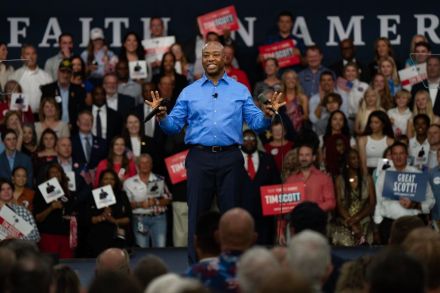
Tim Scott appeals to a GOP of the past

South Carolina senator Tim Scott represents the kind of candidate white Republicans like to vote for: a black conservative who directly undermines the left's claims about the United States' — and the GOP's — innate racism. He can punctuate a pro-American litany of personal stories and generational improvement with "Can't somebody say 'Amen'?" without any qualms. And unlike Herman Cain or Ben Carson, he can do so as a successful politician who, as he says, went from cotton to Congress in his grandfather's lifetime. Cain and Carson overperformed significantly, particularly in the early months of their efforts. Yet Scott is likely to have a ceiling to his own try for the presidency. He is in many ways a throwback to the George W.

tim scott

The New Right is going nowhere — and knows it

It is an irony of history that the bronze Statue of Freedom which stands tall atop the US Capitol dome was commissioned by the man who would seek to break the nation apart a few years later. Jefferson Davis, secretary of war when the statue was ordered, clashed with Yankee sculptor Thomas Crawford over his original design, which included a liberty cap, the symbol of an emancipated slave, above the statue’s crown. The statue is adorned with a sword, a shield and a wreath of victory. It’s symbolic in other ways as well: struck hundreds of times by lightning, it conducts and dissipates that violent energy into the earth. Freedom makes an excellent lightning rod. Today, critiques of the statue and what it represents arise from different sources.

Why Utah keeps frustrating hardline Republicans

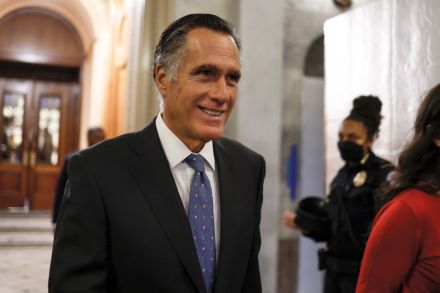
When Charles Barkley came to Salt Lake City for the NBA All-Star game, he found himself trapped in what he called a “boring-ass,” booze-free desert. (Impressively, Barkley did manage to at least sound drunk.) That's how it is in Utah, which sometimes gets depicted as the wet blanket of America. So it was that Marjorie Taylor Greene had cold water thrown on her by her Utah colleagues after she called for a national divorce on Twitter. “This rhetoric is destructive and wrong and — honestly — evil.” responded Utah governor Spencer Cox in a tweet. “We don’t need a divorce, we need marriage counseling.” "We're not going to divide the country,” said Utah senator Mitt Romney, “It's united we stand, divided we fall.

utah

How Pat Buchanan redefined the twenty-first century

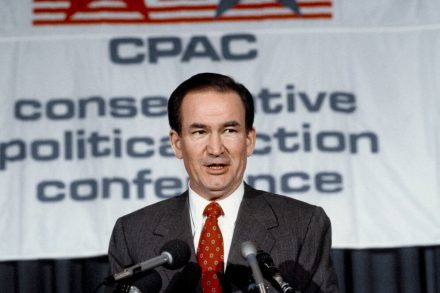
Pat Buchanan recently ended his syndicated column, essentially completing his retirement from public life. Yet it’s hard to think of any writer in his or her prime today whose ideas enjoy the currency that Buchanan’s now do. From trade and foreign policy to immigration and the “culture war” — a term that Buchanan introduced into popular politics — views that once set Buchanan apart from his fellow conservatives are now redefining the right. Buchanan was not the only conservative skeptic of free trade or foreign interventionism in the 1990s, but he was the only one that most newspaper-reading or cable news-watching voters knew about. At the zenith of American power and economic globalization, Buchanan defined the opposition to the spirit of the age.

pat buchanan

The church Benedict leaves behind

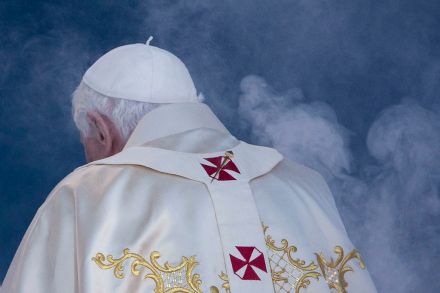
As 2022 slipped away, so did Benedict XVI, quietly and without enormous impact on world affairs. Popes generally die in action, their hands still gripping the helm of Saint Peter’s barque, giving up the job only with their last breath. But Benedict had long ago passed the wheel over to Francis and settled in a sheltered spot away from the wind and the waves. No major change will follow his death. The man in charge is, and has been, Pope Francis. With the death of Benedict, Catholics can simply expect more of the same. The great tragedy of Benedict XVI concluded years ago, on that fateful February day in 2013 when he announced his abdication. The shock of his loss was felt with heightened poignancy, since it was of his own choosing.

The liberal-conservative tug of war for the GOP

For the last thirty years, the Republican Party has been a battleground between two competing ideologies. One of these is fundamentally liberal, although it is packaged and sold under a variety of brand names: “compassionate conservatism,” neoconservatism, classical liberalism, and — most misleadingly — Reagan conservatism. The other ideology is a rejection of modern liberalism and the post-Cold War elite consensus in American politics. It is skeptical of free trade, large-scale immigration and US involvement in foreign conflicts. Pat Buchanan and Donald Trump are the primary representatives of this view, which is often called populist or nationalist. The two sides are not evenly matched.

liberal-conservative

Gay marriage has nothing to do with Drag Queen Story Hour

The main reason why I lined up in the pouring rain to vote for Bill Clinton in 1992 was that he’d campaigned as a gay-friendly candidate. It wasn’t just his promise to allow gays to serve openly in the military. It was that he talked about gays as if we were human beings and not demons — fully equal to our heterosexual brothers and sisters. Back then, for gay Americans, every new election cycle meant one thing for sure: we’d have to gird ourselves for a fresh round of gay-bashing by presidential hopefuls. Clinton seemed to promise a new era in politics, when our very existence would no longer be an issue. Well, Clinton won the election. And four years later he signed the Defense of Marriage Act, or DOMA. “Defense” as in defense from us.

gay

What conservatives lack

A famous passage in the preface to Lionel Trilling’s book The Liberal Imagination is widely quoted and just as widely misunderstood. Trilling, a Columbia University professor and literary critic, wrote that at the time — this was 1950 — that there was no articulate conservative or reactionary thought in America, only conservative or reactionary “impulses” expressed “in action or in irritable mental gestures which seek to resemble ideas.” Trilling’s point was not to criticize conservatism but to set up an argument for his work as a literary critic. Liberals, Trilling argued, needed to be challenged; they had grown complacent in the absence of a vigorous conservatism to spotlight liberalism’s deficiencies.

Giorgia Meloni should inspire American conservatives

Giorgia Meloni and her Brothers of Italy party were swept into power in elections this weekend, a development that the media complex in America greeted with all the subtlety of a bird smacking into a sliding door. The New York Times managed to call her a “fascist” 28 times in a single article. Meloni stands to become Italy’s first female prime minister — but I suppose it’s only good for women to break glass ceilings if they’re the correct kind of women.

Frank Buckley’s right direction

You think life is complicated enough now? Try factoring in the arguments and counter-arguments that adorn — or something like it — the drive to define conservative instinct and policy. I mean, once upon a time, a true conservative subscribed to National Review and wore an “AuH2O in 64” lapel pin to tout the presidential aptitudes of Senator Barry Goldwater. (Pssst: I did both.) Ah, well. Today, as everyone presumably knows, we have libertarian conservatives; we have common-good conservatives; we have constitutional conservatives; we have integralist conservatives — all generally identified with the Republican Party. Amid this mélange of the outspoken, as well as the agreeably entertaining, the law professor Francis H.

conservatism