Congress

The Democrats’ Trump Derangement Syndrome comes home to roost

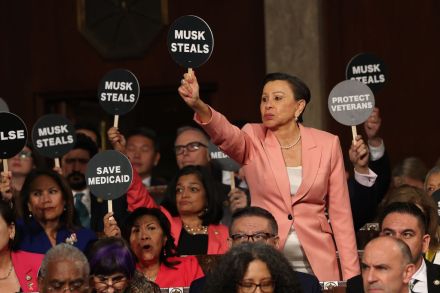
The strangest thing happened last night: the Democratic Party, which has built its success in recent years thanks almost entirely to framing themselves as the candidates espousing normalcy versus the chaos offered by Republicans, showed up to Donald Trump’s joint address to Congress and cried havoc. Part of this may be due to institutional decay. The sight of a weakened Nancy Pelosi murmuring to Steny Hoyer in advance of the speech served as a reminder of the strongarm tactics from the Democratic leadership class that used to restrain their far-left wing from losing its shit in public with all the restraint of a toddler denied their binky.

democrats trump

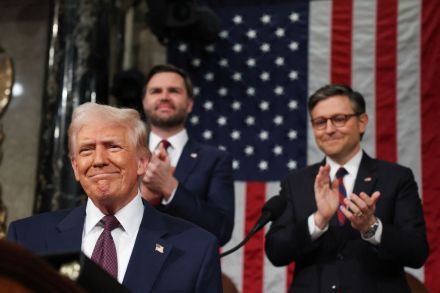
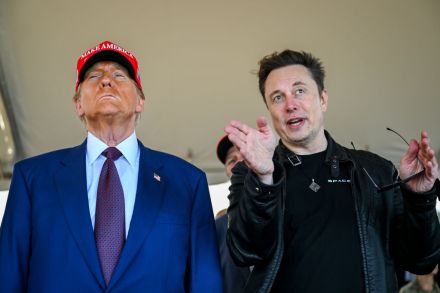
Trump bulldozes through joint address to Congress

We’ve been told that President Trump’s address to Congress tonight would dilate on the theme of the “Renewal of the American Dream.” And so it did. But for short hand, two ideas predominated. One was “Woke No More.” The other was “common sense.” Both were themes of Trump’s inaugural address. I have expatiated on the theme of Trump’s embrace of common sense in a talk I gave to the Connecticut outpost of Hillsdale College at the end of January. The irony is that what should be common to all has been so uncommon in an age marked by perversity and ideology. Together, the attack on wokeness and the reinstitution of common sense go a long way towards summarizing the extraordinary achievements of Donald Trump in his first forty-two days.

trump joint
state union

The State of the Union that isn’t

Welcome to Cockburn’s Diary, a new newsletter from The Spectator sent twice a week from the nation’s capital. Your intrepid correspondent will keep you informed about all the whispers circulating around town. Coming to your inboxes on Tuesdays and Fridays... President Donald Trump is addressing a joint session of Congress tonight — but don’t you dare call it a State of the Union; that term is reserved for speeches given in non-inauguration years. The president is expected to tout successes from the first forty-three days of his second term, while some Democrats are expected to skip it — or to protest by holding up props like egg cartons to spotlight the high cost of groceries.

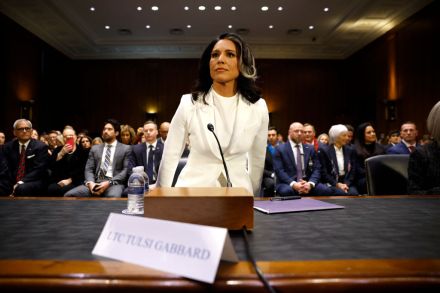
Tulsi confirmed: Gabbard survives Todd Young’s attack on the Constitution

Despite frequent claims that Tulsi Gabbard's nomination to be director of national intelligence was in danger, repeated ad nauseam in the Washington press, ultimately she didn't even need J.D. Vance to come back to break a tie. Only Mitch McConnell broke with the rest of his Republican colleagues to oppose her confirmation, which — as I've previously written — was never in doubt once she got out of the Intelligence Committee.  Yet it's worth noting one of the untoward prices paid along the way, given the egregious nature of its violation of the separation of powers.

tulsi

Hegseth in the hornet’s nest

Pete Hegseth was the first cabinet nominee to the breach, leading Donald Trump’s collection of outsiders, populists and hellraisers into the Capitol Hill combat they can all expect to navigate in the coming weeks. And in terms of a first confrontation with the opponent, Hegseth handled his mission manfully — taking the slings and arrows from the Democratic side of the aisle with relative ease. At one point, exasperated Connecticut senator Richard Blumenthal — you’ll remember him from not serving in Vietnam and falsely claiming that he did — said, “I don’t dispute your communication skills.” And how could he? Hegseth seemed more than ready to address the accusations from Senate Democrats head on, and the Republicans on the committee seemed unperturbed by their attacks.

hegseth

The winners and losers in the fight to keep the government open

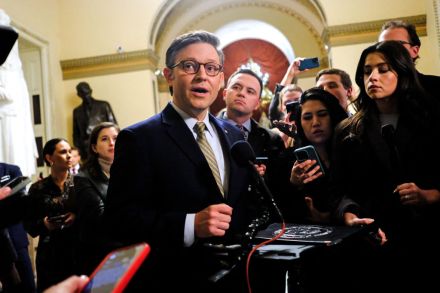
As the clock ticked down late Friday night, the US House and Senate finally passed a stopgap funding bill to keep the government operating for another two months. The passage came after two failed attempts by Republican House speaker Mike Johnson to push through earlier versions of the bill. Any additional delays would have led to a temporary shutdown of some non-essential government functions. Essential functions, like the military, would have continued to operate. What can we learn from this shambolic, last-minute process? First, the good news. The first two bills failed because they contained a trainload of pork, a steaming pile of non-essential provisions that rank-and-file Republicans refused to support.

government

Congress hits spending stalemate

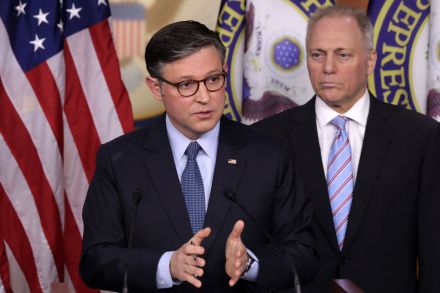
Congress is once again trying to avoid a holiday-eve government shutdown by ramming through a last-minute continuing resolution to fund the government through the new year. The process, per usual, is angering various factions within the House of Representatives as Democrats, budget-hawk Republicans and the establishment GOP are at odds over how much to spend and what to spend it on and whether or not to raise the debt ceiling.Johnson’s “Plan A,” which was a 1,500-page boondoggle negotiated primarily with Democrats, would have funded the government until March.

mike johnson congress spending

Trump is already tiring of Mike Johnson

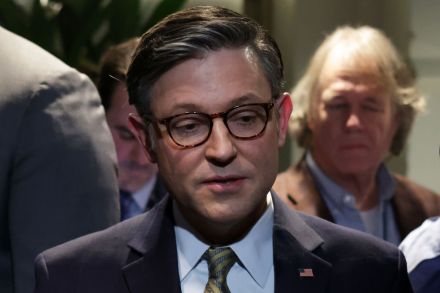
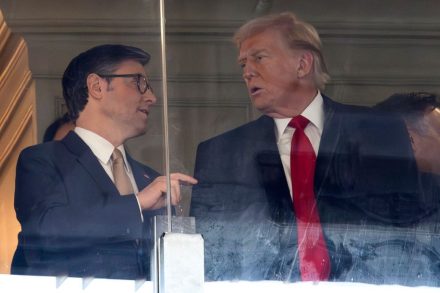
Mike Johnson's status as an accidental speaker, thrust into his role in part because it was so undesirable or impossible for other longer-tenured members to achieve, was always going to be tested once there was a Republican in the White House again. And since that Republican turns out to be Donald Trump, currently the acting president in everything but title, Johnson's decision-making was going to become all the more controversial, subject to the whims and leanings of Trump's political instincts.  It turns out we didn't even have to wait until the inauguration to find out what that looks like.

mike johnson
donald trump continuing resolution

The ever-Continuing Resolution

In the 1870s, Gustave Flaubert assembled Le Dictionnaire des idées reçues, a humorous collection of “received ideas” and clichés then current in French society. A new version needs to be produced for contemporary America. As in the original, the humor would often turn on the contradiction or subterfuge implicit in the word or phrase. “Affirmative action” would merit an entry, since it is supposed to be about battling discrimination when in fact it enshrines discrimination in law. So would the current favorite, “Continuing Resolution” (“CR” among the cognoscenti). The phrase carries the aroma legislative diligence.

What Trump’s appointments tell us

Donald Trump may have a four-year term, but he has far less time to make a real difference. In practice, he may have a year or perhaps eighteen months before the midterm election looms and Congress slows to a crawl. If Trump wants to be a transformational president — and he clearly does — then he will have to move fast. That’s exactly what he’s doing. He’s beginning with a series of rapid-fire appointments, most of which require approval from the new, Republican-majority Senate. (His White House aides, such as national security advisor, do not require Senate approval.) What message is Trump sending with his appointments so far? First, he demands loyalty — to him and to the agenda he articulated clearly on the campaign trail.

appointments

Thune rises to the top

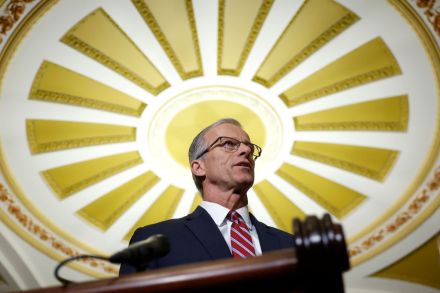
It took John Thune just two ballots to get the job of the new majority leader of the Senate, replacing Mitch McConnell after eighteen years of rule. Attempts to challenge him by John Cornyn and Rick Scott fell short, with the final tally of the secret ballot (where just about everyone knows how everyone else is voting) led to a 29-24 vote victory.  The South Dakotan is a longtime member of the Republican establishment, originally recruited by the George W. Bush team to challenge the supposedly unbeatable Tom Daschle, the Democratic minority leader at the time, in what became the most expensive campaign of 2004.

thune

What comes after Trump’s decisive victory?

The candidate who said Americans should be “unburdened by what has been” is now a has-been. The irony will be lost on her.  Also lost was the traditional graciousness — and normative necessity — of conceding defeat clearly and publicly as soon as the loss is certain. When Donald Trump failed to take that step in 2020, after exhausting his court challenges, he violated that norm and deepened our national divisions. He deepened that chasm on January 6 and later by continuing to challenge the rightful winner. Those challenges threaten the peaceful transfer of power and undermine the public consensus that the winner holds office legitimately.  Kamala Harris learned from Trump’s mistake and repeated it.

donald trump victory

A consequential, divisive, troubling election about big issues

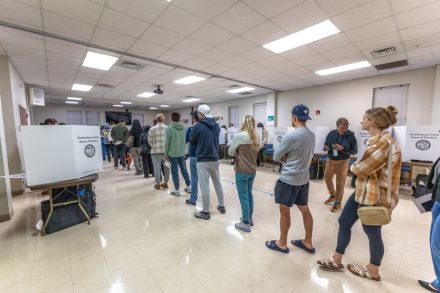
Republicans and Democrats, who disagree so virulently on so much, at least agree on two things. Both say it is the most consequential election in US history. (They might want to check on 1860.) And both believe the other side’s triumph would be catastrophic. It would have dangerous consequences for decades, they say, and might be impossible to correct. They are half right, perhaps more, and what they are right about is scary. This election is the most consequential since Franklin D. Roosevelt defeated Herbert Hoover amid the Great Depression. That election was consequential because it and the following one, in 1936, locked in the Democratic Party coalition that effectively governed the country for the next seventy-five years.

e pluribus unum election

The life and times of Sheldon Whitehouse, the last patrician liberal

It is not often that an American politician publishes a book of genuine interest. It is even less often, breaking through the veil of ghostwriters and marketers and political risk consultants, that such a book provides real insight into its author. Hillbilly Elegy is an obvious example: an unusually vulnerable self-portrait whose sales shot through the roof after J.D. Vance was tapped to be Donald Trump’s running mate this summer. Josh Hawley may never be vice president, but his ambitions and his politics are already apparent in the biography of Teddy Roosevelt he published a full sixteen years ago.

Whitehouse

What if the Electoral College vote is tied? 

America has a peculiar — indeed, unique — way of deciding national elections. Instead of a cumulative national vote, the president and vice president are determined by fifty separate state elections. The top ticket in each state (except Nebraska and Maine) receives all that state’s electoral votes, no matter how slim the margin of victory. Each state’s electoral votes are equal to its number of House members plus its senators. The winner needs 270 electoral votes.  What if, in this razor-thin election, both Donald Trump and Kamala Harris fall one vote short? Fortunately, that’s only a remote possibility, but it’s not impossible. It all depends on how some six or seven closely divided “swing states” split between the two candidates.

democrats electoral college

No, Republicans don’t win by losing

Welcome to Thunderdome. Without fail, in every cycle, some media commentator will pen a ludicrous piece about why Republicans should want to lose. They follow a similar, all-too-familiar script: if the Democrat wins the presidency, they will be restrained by the power of the Congress and the Courts from advancing a truly radical agenda; historically, their victory will lead to a sizable midterm backlash setting up for a better election the next time around; and the sooner the GOP rids itself of the baggage at the top of the ticket, the sooner it can elevate younger rising stars who haven't been thoroughly villainized yet by the national media. This argument is bunk — and the author is usually not stupid enough to actually believe it themselves.

Search for answers on Trump assassination attempt ramps up

In a rare moment of unity, both Democrats and Republicans are coming together to uncover the security failures which led to the assassination attempt on former president Donald Trump. On Monday, while Secret Service director Kimberly Cheatle appeared in front of another House committee, a group of congressmen from the House Homeland Security Committee visited the site in Butler, Pennsylvania, to get a firsthand hold of what really happened that day. The trip was led by Chairman Mark Green on Monday as part of the bipartisan effort to investigate how the gunman, Thomas Crooks, gained access to the roof from which he shot Trump. The visit only yielded more questions — why were warnings about the suspicious sightings ignored? Why were the perimeters not secured?

fbi assassination

Bob Menendez found guilty of bribery and extortion

New Jersey senator Bob Menendez was found guilty of all sixteen charges today, including bribery, extortion, acting as a foreign agent, obstruction of justice and several counts of conspiracy. Three businessmen paid bribes to the Democratic senator and his wife in exchange for taking actions to benefit them and the governments of Qatar and Egypt, or so the prosecutors argued. Those bribes included $100,000 in gold bars, a Mercedes-Benz and more than $480,000 in cash. Two of the New Jersey businessmen tried alongside Menendez were also convicted on all counts. Menendez did not plead guilty or testify in his own defense. His team argued that he was acting on behalf of his constituents and that the prosecution couldn’t prove that the gold bars and money were bribes.

bob menendez

The Democratic lawmakers who are recognizing Biden’s decline

When it comes to President Joe Biden’s decline, some Democrats are in denial, or are at least pretending to be. A few representatives, however, have acknowledged the problem with Biden’s age, with some are even calling for him to step down after the disastrous debate. The Democratic Party is currently a mess, and the general reaction from some senior White House staff has reportedly been, “What the hell is happening?” CNN host Jake Tapper tweeted that Democratic governors held a call yesterday afternoon, organized by Governor Tim Walz of Minnesota, with no staff and no one from the Biden, though it is unclear what, if any, decisions were made. Here’s a breakdown of the Democratic lawmakers who have publicly suggested Biden is unfit to run.

joe biden decline

Donald Trump: no more Mr. Nice Guy

Earlier this month, President Donald Trump gave a wide-ranging interview to TIME magazine. The article finally dropped on Tuesday and contains lots of interesting little nuggets about what Trump’s plans are for a second term, were he to defeat President Joe Biden this fall, and how his mindset has changed from his first go as president. Reporter Eric Cortellessa notes the Mar-a-Lago chief’s attitude shift in his opener: “Donald Trump thinks he’s identified a crucial mistake of his first term: he was too nice.”This sentiment will be music to the ears of populist hardliners who felt the former president conceded too much, too often in his first term.

donald trump