Composer

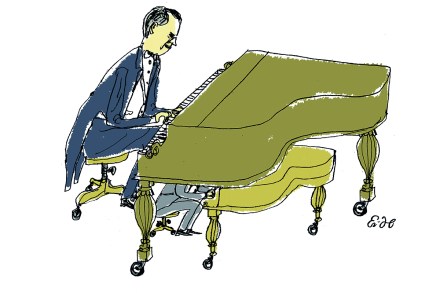
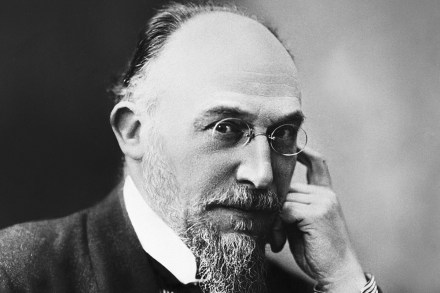
Erik Satie was an inadvertent innovator

The music critic Ian Penman has structured his new book about the great French composer and rascally agent provocateur Erik Satie in three parts, in the manner of classic Satie compositions such as Trois Gymnopédies, Gnossiennes and Trois morceaux en forme de poire. A hundred years after his death, aged 59, in 1925, Satie remains one of the great enigmas of 20th-century composition. A frequent visitor of Parisian cabarets, immersed in the city’s chanson tradition, his work could also be bafflingly conceptual. He was connected to the world of classical composition through his friendships with Claude Debussy and Maurice Ravel, but remained determinately his own person. His music is regularly held up as a precursor to John Cage and to ambient electronica alike.
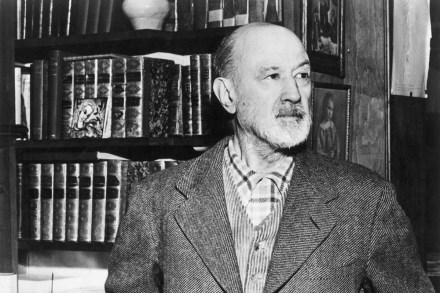
Charles Ives was a composer before his time

In February 1951, Leonard Bernstein led the New York Philharmonic through the première of a symphony by an American composer unknown at Carnegie Hall. The composer in question was Charles Ives, by then too frail to attend in person. He listened from home when the concert was broadcast a few weeks later. An experimenter by instinct, Ives’s work had already proved an inspiration to a younger generation of radical American composers including John Cage, Lou Harrison and Morton Feldman. But that Ives listened from afar to the première, at long last, of his Second Symphony – completed in 1902 – was symbolic of the distance he maintained from America’s classical mainstream.

Ives

Is Hans Zimmer a genius or a charlatan?

If you have visited a cinema in the past two decades, you will know the work of the film composer Hans Zimmer. Since he emerged in 1988 with his score for the Oscar-winning film Rain Man (he recently won his second with Dune, among twelve total nominations), Zimmer has created the music for more than a hundred films, television series and other multimedia projects. His eclecticism both startles and amuses. He is surely the only person alive to have collaborated with the reclusive director Terrence Malick (on The Thin Red Line) and to have composed music for a soccer-based video game, FIFA 19. He has scored romantic comedies, sweeping epics, cartoon animations and thrilling action films.

zimmer

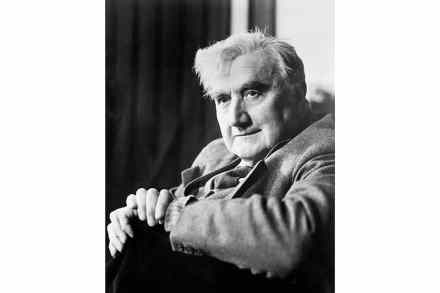
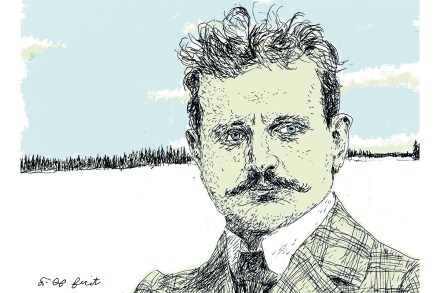
Sibelius speaks

When it comes to music in the classical era, central Europe — or, to put it is where most of the action has taken place. Haydn, Mozart, Beethoven, Schubert and Brahms are, in a sense, the Big Five, commanding the limelight, with the likes of Mendelssohn and Mahler bringing up the rear. But if geography has somehow played a key role in the development of modern classical music, then another region has been gradually nudging its way into view. Names from northern Europe such as Kalevi Aho, Leif Segerstam, Per Nørgård and Vagn Holmboe must figure prominently in any tally of leading composers who have expanded the boundaries of musical expression.Take Holmboe’s brilliantly imaginative Concerto No. 11 for trumpet and orchestra.

Sibelius