Communism

The rebirth of history

From our UK edition

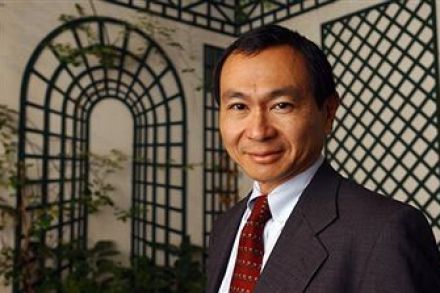
We have Francis Fukuyama writing a cover piece for us this week, revisiting his 'End of History' thesis. When he first published it, in 1989, he anticipated what was to become a consensus shared by many, including myself: that autocracy was on the way out. Communism had failed, and was being supplanted by the free society (aka the free market). Capitalism was creating wealth and liberty, and from Minsk to Gdansk people wanted it. Eastern Europe was managing a transition brilliantly. Fukuyama¹s thesis seemed to sum up an incredible spirit of optimism. Perhaps this optimism turned to hubris. After 9/11 Tony Blair and George Bush wanted to accelerate history, and bring democracy to countries which just needed to get rid of their dictatorships.
Labour and the KGB

From our UK edition

How close were Labour and the Soviets during the cold war? At the time, many newspapers were on the hunt for links - but allegations were hard to prove. Today, the Spectator tells the story from the horse's mouth - Anatoly Chernyaev, the Kremlin's link man with Labour in the 70s and 80s. Unbeknown to his visitors - Michael Foot (who welcomed Brezhnev as 'comrade') and even Charles Clarke (who comes out of this quite well) Chernyaev was keeping a diary. It shows how various Labour visitors begged for help - after all, Labour and the Soviets had a common enemy: the Conservatives. They said so in terms. Edward Short, as Harold Wilson's deputy, said: "if you, the Communist party of the Soviet Union, want a Labour government in Britain then help us". It goes on like this.

1989 And All That

From our UK edition

  I don't think there's much doubt that 1989 was the best year of my life. Not so much for me personally, but for the world. True, there aren't many contenders for that bauble, but even if there were 1989 would be tough to beat. In fact, 1989 was probably the last and best year of the brutal short twentieth century. Matt Welch explains why: The consensus Year of Revolution for most of our lifetimes has been 1968, with its political assassinations, its Parisian protests, and a youth-culture rebellion that the baby boomers will never tire of telling us about.

Red Star Over Russia

From our UK edition

Winston Churchill’s cousin, the sculptor Clare Sheridan, gazes up at her bust of Trotsky, made during a trip to Moscow in 1920. Her subjects were leading Bolsheviks including Felix Dzerzhinsky, the founder of the KGB, Lenin and Trotsky. While she worked, she asked Lenin, via a translator, if Churchill was the most hated man in Russia. ‘He is our greatest enemy because all the forces of capitalism are behind him,’ he replied. Sheridan’s mother wrote to her on her return: ‘I forgive you, darling, as I would even if you had committed a murder,’ but Churchill never spoke to his cousin again. Sheridan left England for New York, where her busts were exhibited.