Comic books

Spider-Man: Across the Spider-Verse dodges all the MCU virtue-signaling

The complaints about the Marvel Cinematic Universe are by now widely known. Their films follow predictable formulas and story beats. Characters become increasingly indistinguishable quip machines. The stakes are never high. The streaming content is overwhelmingly forgettable. Other than the death of Tony Stark onscreen and the sad passing of Chadwick Boseman offscreen, emotional moments are few and far between, as it's hard to care about characters when everything can be reset with a bit of multiverse mumbo jumbo. And then there's the problem of, well, as the Critical Drinker refers to it, THE MESSAGE. Expect a lot of that in the already twice-postponed production of The Marvels, girlbossing into theaters this winter.
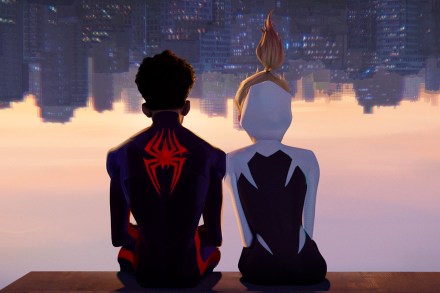
Spider-Man: Across the Spider-Verse

What is the point of the DC superhero films?

Say what you like about the Marvel Cinematic Universe (or the MCU, for short) — and I do, frequently — but you can’t deny that it has a grim efficiency. The MCU impressively herds tens of millions of unsuspecting moviegoers into theaters to watch the latest incomprehensible special effects behemoth, with a wildly overqualified and suitably embarrassed cast. As I write this, the latest installment to threaten audiences is Ant-Man and the Wasp: Quantumania. Now I don’t know what Quantumania is, and I will be perfectly happy to never find out. But as the previous film, Ant-Man and the Wasp (the titles lack a certain finesse), made more than $600 million at the box office, I accept I might be in the minority.

The decline of the woke Marvel superhero movie

One of the few upsides to the pandemic’s peak last year was that no Marvel films were released in theaters. We’ve suffered for it this year, with the arrival in close succession of Black Widow and Shang-Chi and the Legend of the Ten Rings and, now, Eternals. But it was glorious to have a period of nearly two years without the deadening, soul-destroying presence of Kevin Feige’s Riefenstahlian masterplan deafening audiences in our multiplexes, and, increasingly, at home on our televisions. But the brief respite is over. Over the next eighteen months, no fewer than seven Marvel films will fight, bite, and kick their way onto our screens, in Phase Four of the Marvel Cinematic Universe.

How the Beano shaped art

From our UK edition

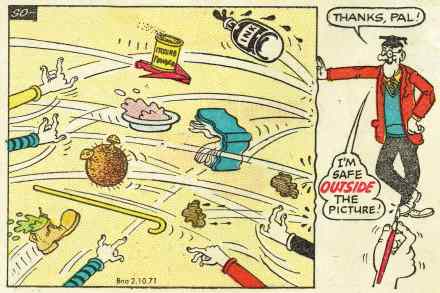
Superman and the Beano are both 83 years old. The American superhero first pulled on his tights for Action Comics No. 1 in June 1938. The following month, roughly 443,000 copies were sold of the Beano’s first issue, featuring Pansy Potter (the Strongman’s Daughter), Big Fat Joe, Wee Peem (He’s a Proper Scream) and, my personal role model, Lord Snooty. Not until Grand Theft Auto launched in 1997 has anything so culturally significant come out of Dundee. But there is a key difference between Superman and the Beano. While American heroes in general and Superman in particular uphold rules, the Beano’s success — its 4,000th edition in 2019 made it the world’s longest-running weekly comic — is predicated on characters who break them.

Man of Sssssssteel

So — Superman has come out. He’s gay. I know, stop the presses, another figure of the comic book universe is being stripped of his straight, white, maleness and tossed into the volcano of intersectionality. It’s about as edgy and groundbreaking as a consumer-product survey. I was less surprised to learn Superman was getting pinkwashed than I was to find out Superman isn’t Superman anymore. There’s a new Superman, apparently, and it’s Clark Kent and Lois Lane’s son, Jonathan Kent. According to DC Comics sometime this month he’s going to kiss a dude and, poof, be gay, or bisexual, or whatever. It’s a bird! It’s a plane! It’s a pillow-biter! What it isn’t is believable. I mean, have you met any of us gay men?

superman

Honest, faithful and fantastically enjoyable: BBC1’s The Pursuit of Love reviewed

From our UK edition

I had been expecting the BBC to make a dreadful hash of The Pursuit of Love, especially when I read that they’d spiced it up with hints of lesbianism and punk rock. But actually, I think what writer/director Emily Mortimer has done here is play a very clever trick — the equivalent of releasing a cloud of aluminium chaff from your fighter aircraft to distract the enemy’s missiles. So while everyone is cooing about how refreshing it is that lesbianism has finally got a look-in (see also: every other drama and comedy series on TV from Killing Eve to Call My Agent), Mortimer can get on with the deeply subversive business of slipping under the BBC radar an honest, old-fashioned, faithful and fantastically enjoyable Nancy Mitford adaptation.

Audiences don’t want woke: comic-book writer Mark Millar interviewed

From our UK edition

Mark Millar has a raging hangover but he couldn’t be more chirpy or enthusiastic. ‘People say they get worse as you get older but I get reverse hangovers where I feel amazing. I wake up at four or five and I’m ready to go!’ I’ve caught him on a Sunday morning, on his way to Mass, after an exhausting three weeks in which he has been doing up to 45 interviews a day to promote Jupiter’s Legacy, his blockbuster superhero series for Netflix. He ought to be nervous: this is his first big project off the blocks since (in 2017) the studio bought up his publishing company Millarworld for a reported $50-100 million. Instead, as ever, he’s fizzing with energy, enthusiasm and optimism. The reason, he explains, is that he was born with a kind of superpower.

Too edgy and clever to be wasted on kids: Netflix’s Locke & Key reviewed

From our UK edition

One of my perpetual gnawing terrors is that I’ll recommend a series that looks initially promising but turns out to be total rubbish, meaning I’ll for ever have thousands of viewers’ wasted lives and disappointment on my conscience. But my even greater fear is that I’ll peremptorily condemn something after one or two episodes which subsequently reveals itself to be a near-masterpiece. This almost happened with Locke & Key (Netflix). ‘You realise I’m watching this on sufferance. The second you’ve seen enough to review, we’re moving on to something else,’ declared the Fawn. And I could sort of see her point.

nerds captain marvel

How nerds smothered American culture

Is it still possible to talk about movies without mentioning superheroes? For the first three months of last year, Black Panther accounted for nearly a quarter of all domestic box office receipts. Eight of the top 20 highest grossing films of all time feature men and women who wear capes and fight crime. The consequence of ticket sales being increasingly concentrated among superhero movies is an increasing concentration of superhero movies. Today this feedback loop has dredged up another one: Captain Marvel. The modern superhero was born in the 1930s. Many of them – like Superman and Captain America – were anti-fascists who smacked Hitler around while fighting for ‘Truth, Justice and the American Way.

Stan Lee made comic books great again

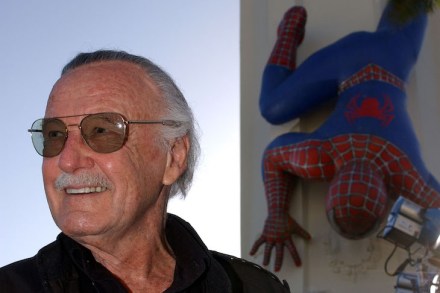
If there was one character who was omnipresent in the Marvel comic books universe, it was Stan Lee. Lee, who died on Monday, defined an exuberant, confident American era that seems to have vanished along with him. A member of the World War Two greatest generation, he played a decisive role in making comic books great again, starting in the 1960s, when he sought to reinvent the moribund genre with characters who bickered with each other when they weren’t worrying about their love lives. [caption id="attachment_10404225" align="alignleft" width="269"] The Amazing Spider-Man #18[/caption] Gone was the sterility of DC’s Superman, a paragon of perfection, to be replaced with ironic detachment and human foibles. Sometimes heroes were scared.

stan lee