Comedy

No one should be punished for retweeting my jokes

Coming out isn’t easy. It especially isn’t easy when you have to sit your wife and five children down and reveal that you are, in fact, an incel. I’m not sure which orphanage to send the children to, but I’m sure they’ll understand that that the screeching Bezos-funded blue checks on Twitter know what they’re talking about. Here’s what happened: I tweeted what turned out to be an old joke on Wednesday June 1. “Every girl is bi,” it said. “You just have to figure out if it’s polar or sexual.” I thought it was the perfect little bit of wordplay to end the first day of Pride Month. And the internet agreed. I’ve had a couple of banger tweets go far in the past. When you have a small account like mine, it’s nice when one passes 1,000 likes.

weigel

Ricky Gervais is guilty of blasphemy

From our UK edition

I have long thought that if Life of Brian came out today, it wouldn’t be Christians kicking up a fuss about it — it would be trans activists. When Monty Python’s classic tale of a man mistaken for a Messiah came to cinemas in 1979, people of faith weren’t happy. They saw it as taking the mick out of Christ and they aired their displeasure noisily. Nuns in New York picketed cinemas. In Ireland the film was banned for eight years. In 2022 I reckon it would be a very different story. It wouldn’t be Monty Python’s ribbing of the gospels that would outrage the chattering classes — it would be their mockery of trans people. Life of Brian was way ahead of time. It was Terf before Terf was even a thing.

Ricky Gervais, Netflix and clickbait controversy

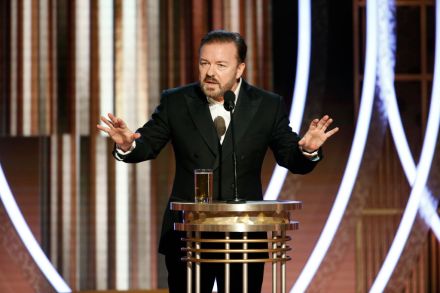
Ricky Gervais has caused a stir. This is not, perhaps, the least expected thing you could hear about the sixty-year-old British comedian, but his new Netflix show, SuperNature, has attracted an unusual amount of opprobrium for what people have perceived as anti-trans jokes. In the show, Gervais makes a distinction between “the old-fashioned women, the ones with wombs” and “the new women... with beards and cocks.” He calls upon the latter to “lose the cock,” and the audience laughs along with him hysterically.

ricky gervais

Boldly and brilliantly unoriginal: Kermode and Mayo’s Take reviewed

From our UK edition

Last April Fools’ Day, Mark Kermode and Simon Mayo wound up their award-winning film review show on BBC Radio 5 Live after 21 years on air. A little more than a month later they are back with Kermode and Mayo’s Take, a podcast so similar in flavour and format that you could call it an up-yours to their critics. While Mayo stressed that it was their decision to go their own way – ‘we have decided, and to be clear: that’s no one else has decided’ – he was slightly more candid about his experience in an interview with the Radio Times a few weeks ago. People of my generation have grown up with Kermode and Mayo, and were as surprised as any by their departure. But we needn’t fret.

Can right-wing comedy be funny?

Matt Sienkiewicz and Nick Marx try to do a couple things in their new book, That’s Not Funny: How the Right Makes Comedy Work for Them. For starters, they hope to show their liberal readers — and the book is clearly written for those on the left — that there is such a thing as “right-wing comedy.” It is not an “obvious oxymoron,” as many on the left assume. Conservatives’ “post-9/11 blunders” made them easy targets for the left-leaning (and increasingly left-wing) Saturday Night Live, Stephen Colbert, and David Letterman. While comedy and “left-wing oppositionality” seemed a “blissful marriage,” there is no reason to assume the “eternal, exclusive nature of that union.

When ‘words are violence’ turns to actual violence

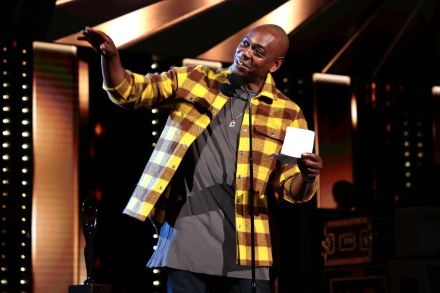
In the wake of comedian Dave Chappelle’s Netflix special The Closer, activists both online and off warned that Chappelle’s jokes about the trans community would lead to real-world harm, even murder. Instead the trans community has struck first by attacking Chappelle onstage. In his special, Chappelle tells the story of a trans person and friend who defended his stand-up material. Chappelle offered his friend career help by having her open for him on stage. Yet after being bullied by the trans mob for supporting Chappelle, his friend committed suicide. Earlier this week, Chappelle himself was physically attacked at the Hollywood Bowl in Los Angeles, during a comedy set that saw many famous faces, including Elon Musk and Chris Rock, in the audience.

Dave Chappelle and the high stakes of modern stand-up

From our UK edition

‘Was that Will Smith?’  This was Chris Rock’s characteristically quick and hilarious reaction when his friend, comedian Dave Chappelle, was tackled by an audience member on Tuesday night at the Hollywood Bowl. Comedy venues need to be a sacred space, free from the threat of violence We don’t yet know the motive, we don’t yet know the man’s name, but this is the second high-profile attack on a comedian in two months. Luckily for Dave, he has great security, including Django himself, Jamie Foxx, who helped subdue the attacker, who some reported as being armed with a gun and a knife.  Video footage of the man being loaded into an ambulance has already started circulating on social media.

The chief characteristic so far has been nervousness: Chivalry reviewed

From our UK edition

Chivalry – written by and starring Sarah Solemani and Steve Coogan – is a comedy drama about post-#MeToo Hollywood life. It’s perhaps not surprising, then, that the show’s chief characteristic so far has been nervousness. Somewhere inside it, you feel, lurks an impulse to really let rip. But if so, Thursday’s first two episodes successfully resisted it. Now and again, we did get some jokes that might just frighten the admittedly neurotic horses of the new Moral Majority. The overall effect, though, was of a game of How Far Can You Go? in which the contestants’ answer was a firm ‘not very’. Still, even this level of unorthodoxy seemed unlikely when the programme began.

Mismatched from the start: One Day I Shall Astonish the World, by Nina Stibbe, reviewed

From our UK edition

First the bad news: Nina Stibbe’s new novel does not feature Lizzie Vogel, the engaging narrator of the trilogy that made her name as a comic novelist after she’d first published some extremely funny letters written during her stint as a nanny in a north London household in the 1980s. Man at the Helm (2015) is the novel Dickens lacked the generosity to write, in which tribute is paid to the creative value of a chaotic childhood presided over by what the conventional world calls an unfit parent. The two which followed covered just a year of Lizzie’s teens and early twenties. The fact that our beady-eyed chronicler remains on the threshold of adult life ensures an atmosphere of optimism, despite the dark strain of jeopardy running through each of the books.

‘Slow Horses’ is thriller television at its best

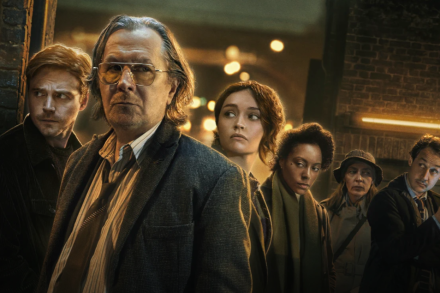
It may come as a surprise to anyone who has read Mick Herron’s peerless Slough House novels, but Slow Horses, Apple TV’s high-profile adaptation of the first book in the series, is not funny. Instead, it takes Herron’s uproariously comic premise — that a group of misfit British spies, cast out of MI5 for misdemeanors exaggerated and accurate alike, have been reduced to grubbing about in a grim office on the periphery of the City of London — and plays it almost entirely straight. Gone are the laugh-out-loud one-liners and endearingly witty pieces of throwaway badinage. Instead, we have a big-budget spy thriller, polished and scripted to within an inch of its life. It’s a bit like seeing the Fresh Prince of Bel-Air reinvented as a gritty urban drama.

horses

Volodymyr Zelensky’s sitcom is now as sad as it is funny

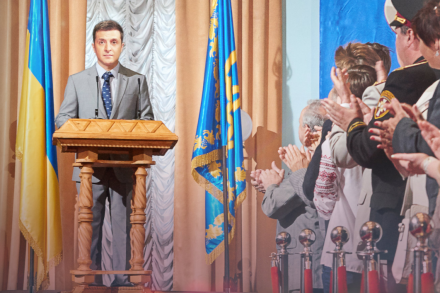
There are few world leaders braver than Volodymyr Zelensky. Ukraine's president spends his time holed up in his capital, defending his homeland from an onslaught of invading Russian troops. He's addressed every major parliament in the West to plead for weapons and aid. Joe Biden calls him weekly; Emmanuel Macron has started to dress like him. Given his present international standing, it's incredible to think that just six and a half years ago, Zelensky was settling down to watch himself play the president of Ukraine in the premiere of Servant of the People, the sitcom which set the stage for his political career.

Fun, good-natured and schmaltzy: Phantom of the Open reviewed

From our UK edition

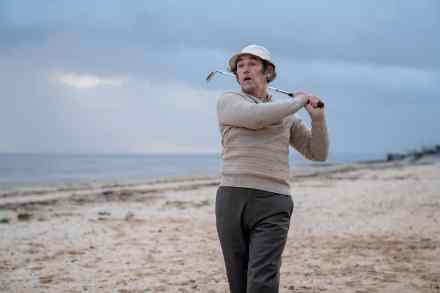
Phantom of the Open is a comedy-drama telling a true story that would have to be true as no one would believe it. The subject is Maurice Flitcroft, a crane operator who took up golf at 46 after seeing it on the telly and entered the British Open in 1976, achieving the highest score ever. (‘Does that mean he’s won?’, asked his wife.) Dubbed ‘the world’s worst golfer’, he then hoaxed his way into further Opens, much to the incandescent rage of the snobbish authorities, and you’ll be rooting for him, of course. This is a British underdog film like The Duke – but with some Eddie the Eagle mixed in – and it’s fun and enjoyable and good-natured even if it does play it safe and waltz off into Hallmark schmaltz at the end.

Perfection: The Duke reviewed

From our UK edition

The Duke is an old-fashioned British comedy caper that is plainly lovely and a joy. Based on a true story, it’s an account of the 1961 theft of a Goya painting from the National Gallery, stars Jim Broadbent and Helen Mirren, and is directed by Roger Michell (of Notting Hill fame). Many films have all their ducks in a row yet are somehow disappointing, but this is perfect, capturing the spirit and joie de vivre of the old Ealing comedies. I could probably watch it all day every day for the rest of my life. Broadbent plays Kempton Bunton, a 57-year-old, working-class Newcastle taxi driver — although he has trouble holding down any kind of job — who has aspirations to be a playwright. We first meet him putting his latest play in the post to the BBC.

All a bit Blackadder: Hamlet, at the Sam Wanamaker Playhouse, reviewed

From our UK edition

Never Not Once has a cold and forbidding title but it starts as an amusing tale set in an LA apartment. We meet Allison, a happily married lesbian, whose grown-up daughter, Eleanor, arrives with a hunky new boyfriend to show off. This set-up has the makings of a flatshare sitcom. You combine a straight younger couple with an older pair of lesbians and you throw in the mother/daughter relationship for extra instability. It could be a laugh. But a new wrinkle appears. Eleanor learns that she was conceived during a one-night stand and she decides to track down her absentee father. But he’s extremely reluctant to discuss what happened that evening. Too much booze, he shrugs, and the major details escape him. Flora disagrees with this version. Eleanor’s father raped her, she claims.

Sick jokes: why medics need gallows humour

From our UK edition

Most jobs have their own joke books. If you’re outside the job, you don’t get the joke — and if you do get the joke, you’re on the inside; which is what the jokes are for. (It’s the same with all comedy: some, if not most, of the appeal of Stewart Lee is in being the sort of person who finds Stewart Lee funny.) But some jobs have joke books which, from the outside, are not just unfunny but actually offensive. Usually the most stressful jobs, those that involve the rawest emotions, have a gallows humour that is thought to relieve that stress. If you didn’t laugh, you’d cry. Or have to go to therapy. It’s been a mixed week for this sort of gallows humour.

May put you off Chaplin for ever: The Real Charlie Chaplin reviewed

From our UK edition

Charlie Chaplin is one of the most famous movie stars ever and is certainly the most famous movie star with a little toothbrush moustache. He was around when I was growing up as his films were often on television, particularly, if I recall rightly, on Saturday mornings. My sisters and I resented that as we wanted to watch The Partridge Family (or The Brady Bunch) on the other side but my father loved him, and I do remember being struck by his childlike innocence, as well as all the falling over. (Chaplin’s, not my father’s.) I now regret watching this documentary. Not because it’s bad (it isn’t) but because I know things about him that I wish I didn’t. It may even have put me off Chaplin for ever.

P.J. O’Rourke, a conservative of enjoyment

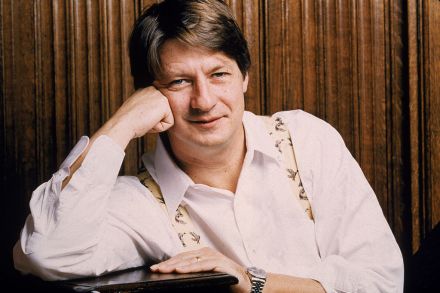
The politics of the moment are pompous, bilious, unforgiving, over-stuffed, hypocritical beyond the normal standards for political hypocrisy: in other words, designed — as if by divine ordinance — for the gifts of P.J. O’Rourke. I must add, I’m afraid, the late P.J. Rourke. He died the day after Valentine’s Day due to complications from cancer, at age seventy-four. RIP. The world hadn’t heard a great deal about him in a while, likely because he was ailing. This was rotten timing. The current Washington DC sideshow reflects and confirms what Patrick Jake O’Rourke had been saying about politics for some long while. Such as: “I believe in original sin, and politics may be its name.

p.j. o’rourke

The medical equivalent of The Responder: BBC1’s This is Going to Hurt reviewed

From our UK edition

According to the makers, This is Going to Hurt is intended as ‘a love letter to the national health service’. If so, however, it’s certainly not a soppy one. Few non-British people who watch it will, I suspect, find themselves wishing they had an NHS of their own — where the mission statement could easily read: ‘We Aim to Muddle Through Somehow, Despite Everything.’ Adapted by Adam Kay from his own phenomenally successful memoir of life as a junior doctor, the programme opened with Adam (Ben Whishaw) realising he’d slept in. On the plus side, his journey to work wouldn’t take long, given that he’d woken up in his car outside the hospital, having been too tired to drive home the night before.

In defence of bad jokes

From our UK edition

I was once at a terrific Shabbat dinner where late in the evening one of the other guests suddenly said: ‘OK, who’s got the best Holocaust joke?’ Even people who know something about Jewish humour might be surprised by this. I said that one Holocaust-related joke I knew was the story from the 1970s of the Monty Python crew being invited to Germany to film a television series there. The Germans had called the Pythons to say that of course they had no humour of their own in Germany and would like to import some. The Pythons agreed, arrived in Munich and were promptly taken to Dachau. In retrospect, this must have been some kind of signal from their hosts that they were accepting of their history and wanted there to be no awkwardness.