Columbia Students for Justice in Palestine

How to deal with the student mob

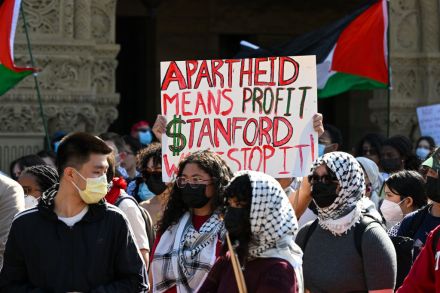
Last week’s violent anti-Semitic protest at Stanford is yet another sign of a pernicious climate on many campuses. The immediate targets are Jews and Israel. The larger targets are many of the values we prize in the West. At Stanford, students broke into the university president’s office using hammers and crowbars. They proceeded to barricade themselves inside, destroy the furnishings, and scrawl noxious graffiti there and on the building outside. Some estimates say they caused $700,000 in damages. Twelve students were arrested by local police. The Santa Clara District attorney announced that the break-in had been carefully organized in advance, caused enormous damage and warranted criminal charges. But, he said, it did not warrant severe punishment.
student

An explanation of the campus protests

A friend wrote me to ask, “Why is this mess happening on campus?" Here is my response.  Let me offer some thoughts, as a long-time professor, in hopes they spur your own.  Let's begin with something apolitical: young people love expressions of group solidarity. Some protests are like football games, held conveniently in the spring when spirits soar. Let's all join in, especially if it is costless virtue-signaling. And in the absence of any serious punishment, that's what it is.  These demonstrations happen a lot more often when the weather is nice. It's a lot easier to pitch tents on the quadrangle in April or October than in January and February. It’s a lot easier to sit on the Golden Gate Bridge, too.  But why the hatred of Israel and so often of Jews?

campus protest

On the ground at the People’s University for Palestine (formerly Columbia)

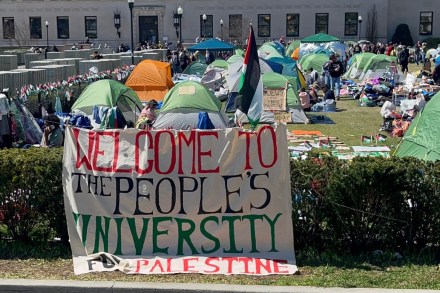
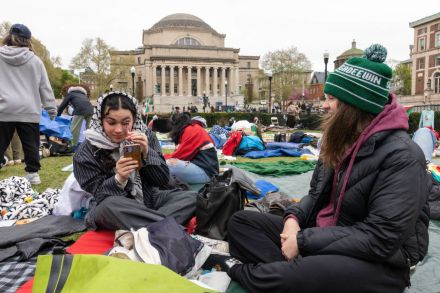
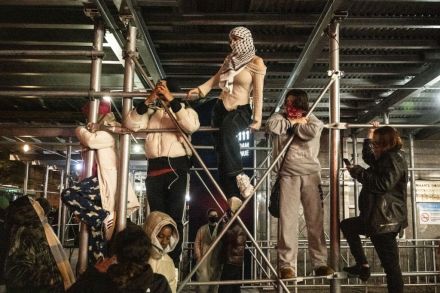
New York I’m on Columbia’s campus today. Sorry, I mean, “The People’s University for Palestine.” I graduated from the university in May 2020. My alumni ID allows me access. A couple of days ago, student protesters started occupying the South Lawn, in front of Butler Library. The police force was called in. Some arrests were made. The police were able to clear the eastern half of the lawn, but the western half remains occupied. Students have pitched tents. Hand-painted signs hang from clotheslines that stretch around the lawn. “Welcome to the People’s University for Palestine.” “Free All Palestinian Prisoners. Ceasefire Now.” “While You Read Gaza Bleeds.” “Admitted Students Enroll in Revolution.” Palestine flags and keffiyehs are everywhere.

columbia

At Columbia… that’s all, folx!

Undoubtedly the best moment in the testimony of Minouche Shafik, the President Columbia University, before the House Committee on Education and the Workforce last week was elicited by Representative Jim Banks. Why, he wanted to know, was the word “folks” spelled “folx” throughout an official guidebook for the School of Social Work? Shafik coyly suggested that perhaps the authors did not know how to spell, which might well be the case. But you cannot watch her squirming response without feeling the hot, sticky, and slightly nauseating air of disingenuousness wash over the proceeding.  “Folx,” as Shafik must be aware, is just the latest instance of weaponized orthography disseminated by the academic left. Think “Latinx” and you are on the right track.

columbia university

Our strangled language on Israel and Gaza

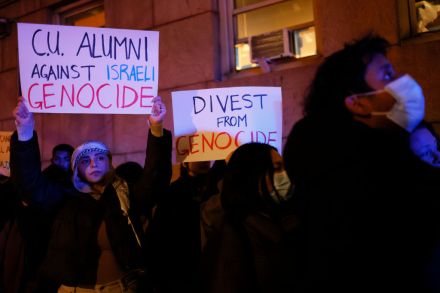
As a left-wing sympathizer to the Palestinian cause, I cringed when I heard reports that college students around the country, including at Columbia University, my alma mater, had expressed support for Hamas’s murder of Israeli civilians on October 7. My first thought was that “woke” students had lost their minds — confusing the perfectly legitimate defense of Palestinian rights with the usual laundry list of “resistance” clichés that pay little attention to history, morality or the subtleties of the English language.