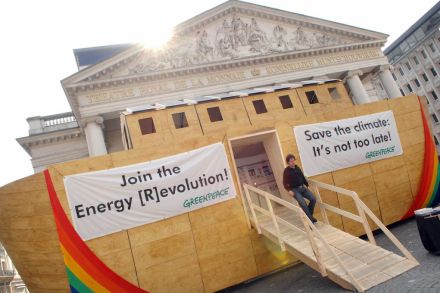
Climate crisis

The UN’s ‘climate crisis’ tax

In between votes to legitimize the world’s worst regimes and condemn the world’s only Jewish state, the United Nations has found the time to introduce itself as a global governmental structure with the power to levy taxes on every inhabitant of Earth.   No, really.  The UN’s International Maritime Organization (IMO) is of the opinion that it can impose duties on the carbon emissions of ships to the tune of between $100 and $380 per metric ton. All of the revenue generated would be paid out to the UN’s “Net Zero Fund,” which would be used to “reward low-emission ships,” or pick winners and losers.
UN

COP28 is nothing but hot air

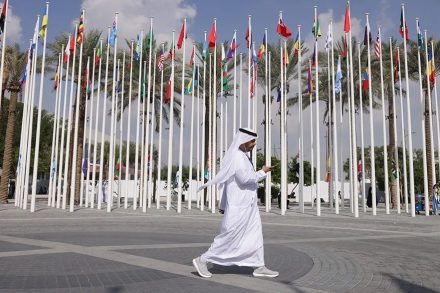
What position should the distant observer take on the COP28 conference in Dubai? That the sight of 70,000 delegates flying into a desert oil state from around the world to discuss human impacts on climate change is beyond satire and that its proceedings are never likely to rise above Greta Thunberg’s encapsulation of all such jamborees as “blah blah blah?” Or that the climate problem is now so obvious and urgent that all efforts towards global action, however small, should be uncynically applauded? I leave that choice on the table.

COP28

Stop enabling the crisis junkies

Did you make good use of the neatly palindromic 2/22/22? To refresh your memory, it was a day that turned out be the narrow window between the moment when the evolving “science” suddenly allowed Democratic governors to start lifting their states’ mask mandates, and Vladimir Putin launching his special mission to “protect the people” in eastern Ukraine. I hope you enjoyed it, because given the way the mainstream media portray the news these days, it may be a while before we’re all allowed our next respite from the seemingly permanent existential crisis that runs as a through-line to our human condition.

crisis

There is no climate crisis

“No climate crisis” is, of course, not the spin the Intergovernmental Panel on Climate Change (IPCC) is putting on its new 3,676-page report released last month. “The choices we make in the next decade will determine our future,” the IPCC says. “Any further delay in concerted global action will miss a brief and rapidly closing window to secure a liveable future.” It could hardly be plainer. The report is political advocacy barely masquerading as science. The IPCC Working Group II report is not meant to be about policy; that’s the job of Working Group III, which has yet to produce its contribution to the sixth assessment report. “The focus of our new report is on solutions,” the IPCC says of the Working Group II report.