Civil Rights

Mamdani’s strategically claimed blackness

When Zohran Mamdani applied to Columbia University in 2009, he checked both the “Asian” and “Black or African American” boxes on his admissions form. He wasn’t lying – technically. Born in Uganda to Indian parents, Mamdani said he was trying to express his complex heritage. But in a recent interview with The New York Times, he admitted something telling: he doesn’t consider himself black.That admission, buried beneath the usual progressive buzzwords about “nuance” and “complexity,” should be a wake-up call for anyone still defending race-based admissions in elite education. Mamdani didn’t cheat the system. He played by its rules. And that’s exactly the problem.

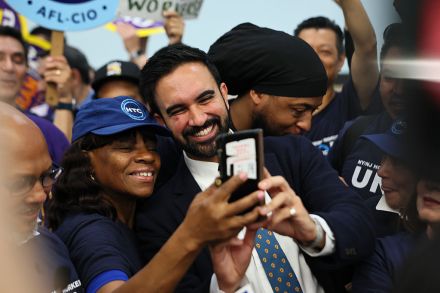
Zohran Mamdani

Progressive Justice Ketanji Brown Jackson hammers nail into DEI coffin

The Supreme Court’s recent decision in Ames v. Ohio Department of Youth Services didn’t dominate the headlines – but it should have. In a unanimous ruling, the Court quietly dismantled a legal fiction that has distorted civil rights law for decades. And in a twist no one saw coming, the opinion was authored by Justice Ketanji Brown Jackson, the progressive icon of the bench. At the heart of Ames was a question few Americans knew they needed to ask: can equality before the law coexist with unequal legal standards? “In 2019, Ames – a straight, white woman – interviewed and was passed over for a newly created management role, which was instead awarded to a lesbian.

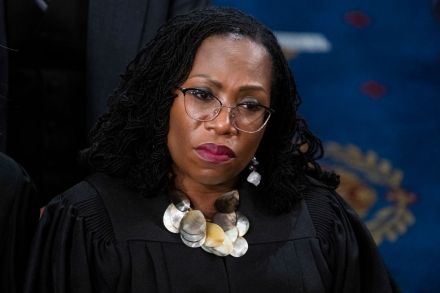
Ketanji Jackson

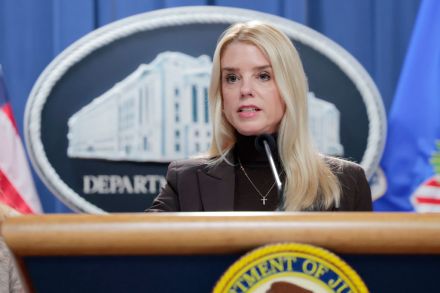
The DoJ is wise to deploy the False Claims Act against colleges

Like Papal encyclicals, many statutes are known by the opening words of their Latin formulation. One that I just learned about is known as a “Qui tam” action. By itself, it is an enigmatic expression, since it just means “Who so” or “Who as.”   If you look it up, though, you will discover that “Qui tam” is shorthand for “Qui tam pro domino rege quam pro se ipso in hac parte sequitur,” which makes much more sense: “Who prosecutes in this matter both for the King and for himself.” That tam, as is often the case, is balanced with quam, “as x, so y.” Spinoza contains a famous example toward the end of the Ethics: “Sed omnia praeclara tam difficilia quam rara sunt”: “For all things excellent are as difficult as they are rare.

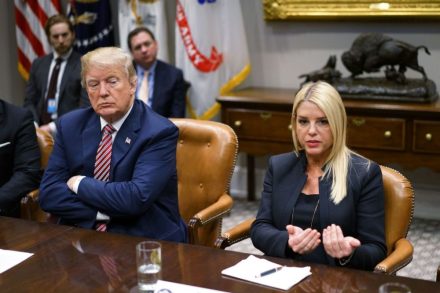
Pam Bondi

The harm that DEI has done to public safety cannot be overstated

Firefighters do not run into a blaze like you see on TV. We crawl with purpose like rats in a maze, which is what a well-involved structure fire feels like, the smoke so thick our high-powered flashlights can’t cut through it. We are trained to locate windows and leave furniture in place as reference points while we conduct search and rescue then scurry to the nearest walls. It makes it all the more vital to have another firefighter with you. The fire was consuming a construction site on Yale’s campus. “The security guard’s inside.” The water company hadn’t arrived yet. No matter, we were going in. I ordered the firefighter to grab the forcible entry saw. He didn’t know where it was. Precious seconds gone.

Drew Gilpin Faust, a rebel with a cause

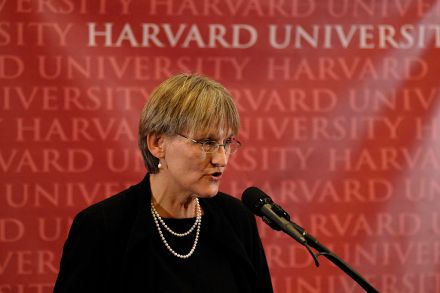
In 1957, when Drew Gilpin Faust was nine years old and growing up in the Shenandoah Valley, she learned from the car radio that in Virginia, black children were forbidden by law from going to school with white children. Disturbed by this egregious instance of Jim Crow segregation, she sent a letter to the president. “Please Mr. Eisenhower,” she wrote, “please try and have schools and other things accept colored people.” Young Drew’s sense of what was and wasn’t fair lay at the heart of her childhood rebelliousness, as well as her battle, as a young woman coming of age in the 1960s, against unjust social hierarchies.

faust

Who was the real Martin Luther King, Jr.?

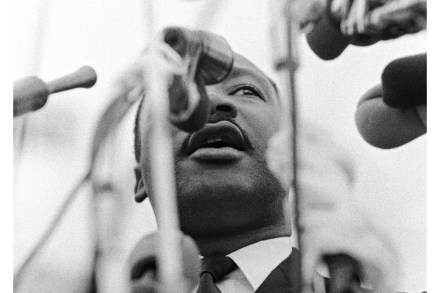
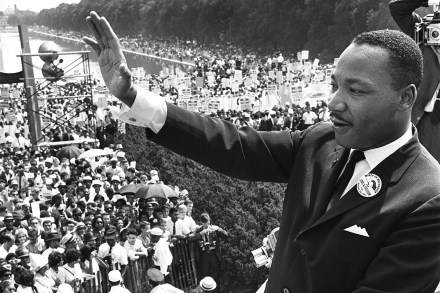
Jonathan Eig’s new King: A Life (KAL) is the first comprehensive biography of the black civil rights hero to appear in more than thirty years, and it will succeed my own Bearing the Cross (BTC), published in 1986, as the standard account. One normally does not review a book one’s blurbed — I’ve called it “a great leap forward in our biographical understanding” — nor where one’s actively aided the author’s research and read his manuscript multiple times. But comparisons between KAL and BTC will be legion, so highlighting the three most significant ways in which the two biographies differ will be a service both to the thousands of readers whom Eig’s volume should attract and to students of King’s life more generally.

king
coffee

The white guilt in your coffee

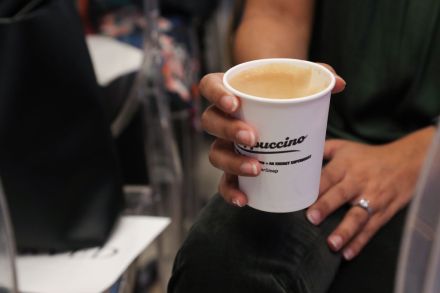
How do you take your coffee? With cream? Sugar? A splash of white shame? “The unbearable whiteness of coffee” is the click- and race-baiting headline of a Fast Company article that’s making the internet rounds (my innocent online purchase of Chemex coffee filters must have prompted this suggested guilt trip). I really didn’t want my most sacred morning ritual — and bright spot of many afternoons, for that matter — to be added to the list of things I shouldn’t enjoy because it’s racist. So I poured myself a large mug of fortifying Joe — potentially my last — and gripping it tightly, read the dreaded article and did some digging.

What our progressive overclass has wrought

Progressives at the zenith of privilege and power have steered US civil rights, education, and welfare policies almost exclusively for fifty years. What does the nation have to show for it? Recent answers include federalized transgender protections, academic collapse, and the expansion of a dependent, often disreputable underclass for whom permanent government-based custodial care is the only feasible option. Food Stamps, Medicaid, Section Eight, and other public income support evidently sap incentive and enterprise, but what’s the alternative now for the structurally unemployable? Anti-white indoctrination is rife in tax-funded schools. Price inflation and declining social mobility haunt the millennial generation’s future.

aoc florida

Joe Biden daydreams about civil rights

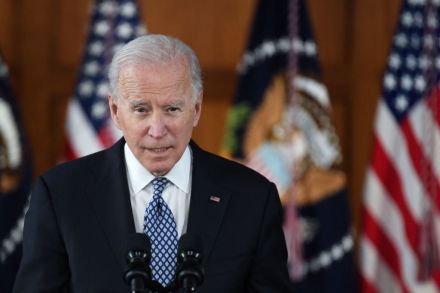
What a civil rights legend is Joseph R. Biden. You can almost picture it if you daydream hard enough: the discordant chants of "we shall overcome, man! I mean, c'mon!"; the sermons that sound just a bit too identical to the previous speaker; the Millions Against Malarkey March of '67. Naturally no one spends more time daydreaming about this than Biden himself. So it was that last week, the president falsely asserted again that he'd once been arrested as a young man during a civil rights march. It was a claim he’d made previously and been forced to retract, and it was such an obvious fib that even the Washington Post took a break from fact-checking Tucker Carlson’s facial expressions to award the president four Pinocchios.

What can’t civil rights law do?

The Biden administration fired a stern warning to five states on  Monday afternoon, warning them that forcing all students to wear masks every day might violate the students’ civil rights. Just kidding! That’s what would happen in a country with health policies that weren’t stupid. In America, we have Anthony Fauci. Too bad. No, the Biden administration’s letter to state officials in Iowa, Oklahoma, South Carolina, Tennessee and Utah is health policy as a bureaucratic Matruschka doll: the administration seeks to ban states from banning school districts from banning unmasked faces. Now, masking schoolchildren may or may not be good health policy (it’s not, but indulge Cockburn in the hypothetical for a moment). But isn’t it just that, a health policy?

civil rights mask covid pandemic

I will not be silent

After the horrible death of George Floyd in Minneapolis, I started to grow increasingly uncomfortable by what I saw. I saw the legitimate grievances of African Americans who for too long have failed to see their lives improve. I saw virtue-signaling whites lecture the rest of us to do something. My heart grew heavy. I was told again and again that I had 'white privilege’; that America suffered from 'institutional racism’; that the original sin of slavery made the country I love so deeply flawed. I reached my boiling point as I drove my kids to meet up with friends where I shared my discomfort with the narrative being told about America. In the car, we talked about what's been happening.

silent

Did American outlets refuse to publish the MLK sex transcripts?

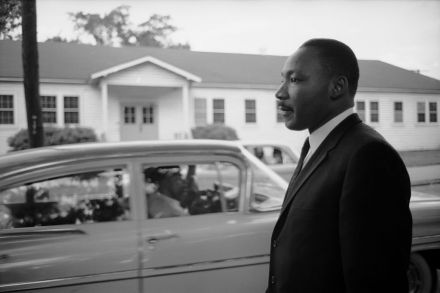
It’s #MeToo time for Martin Luther King — despite, historian David J. Garrow alleges, the efforts of senior staff at the New York Times, the Washington Post, the Atlantic, the LA Times and the Guardian. In this week’s Green Room podcast, Garrow, a Pulitzer Prize-winning historian, alleges that these outlets chose not to publish his discovery of transcripts from the FBI’s taped surveillance of Martin Luther King. Instead, Garrow’s research was published this week in Britain’s Standpoint magazine. https://audioboom.

mlk #metoo