Cinema history

Masculinity in crisis – portrayed by Michael Douglas

From our UK edition

There isn’t another actor alive whom I’d rather watch than Michael Douglas. Just as Pauline Kael once said that the thought of Cary Grant makes us smile, so the thought of Michael Douglas makes me grin, smirk, nod, wink, cackle, cheer – and walk a little taller, too. Even his anti-heroes are heroic in their truth to self. From the sly, ophidian sneer of his washed-up money man in A Perfect Murder to the salty, satanic leer of his trigger-happy cop in Basic Instinct, Douglas has embraced self-destruction, stared down absurdity and made plain what Nietzsche meant when he said that man is either a ‘laughing stock or a painful embarrassment’. But no matter how much Douglas means to me, he means a whole lot more to Jessa Crispin.
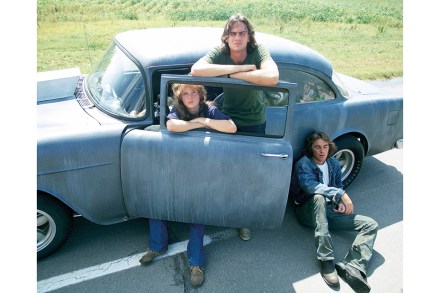
The glamour of grime: revisionist westerns of the 1970s

From our UK edition

In 1967, the unexpected worldwide success of Bonnie and Clyde blindsided the Hollywood film industry, which then spent the next half decade attempting to adapt to the changing tastes of the new youth audience it had apparently captured. No matter that the picture took a pair of vicious, sociopathic thrill-killers who in real life were about as appealing as the Manson family and reinvented them as glamorous Robin Hood figures, there was obviously money to be made, and the studios wanted a slice of it.

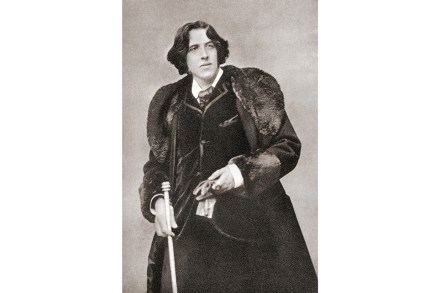
The curious influence of Oscar Wilde on Hollywood

From our UK edition

The Importance of Being Earnest was NBC’s first coast-to-coast broadcast of a play in 1929. It was ideal for radio, partly because Oscar Wilde’s crisp dialogue obviated any need of facial expressions or gestures. Epigrammatic speech, as Noël Coward found, was a signifier of modernity in the 1920s. Beyond that, as Kate Hext shows, the America of Calvin Coolidge and Herbert Hoover had a sinewy and hardy sympathy for the Anglo-French fin-de-siècle literary mode of the 1890s known as Decadence.

Did George Formby and Gracie Fields really help Britain out of the Depression?

From our UK edition

Cinema history is a strange thing. A couple of months ago the Guardian began a series in which film critics write about ‘the classic film I’ve never seen’, some admitting to have unaccountably avoided exposure to genuine masterpieces such as Metropolis (1927) or À Bout de Souffle (1960). Others have revealed they have yet to sample undemanding box-office hits such as Top Gun (1986) or Titanic (1997). If the latter are classics, then so is On the Buses, the biggest selling British film of 1971. The showing of motion pictures to paying customers began in the 1890s, and crowds flocked to see brief footage of someone treading on a hosepipe.