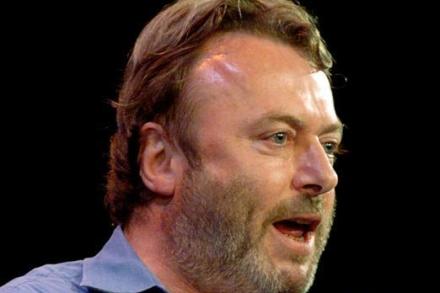
Christopher hitchens

Failing the Rushdie Test: Shirley Williams Edition

From our UK edition

I was in Washington at the time so did not see the Question Time episode Nick Cohen mentions in his latest post. Those tempted to grant Shirley Williams some kind of "National Treasure" status should be reminded of her appalling views on the alleged "insensitivity" of awarding a kinghthood to Salman Rushdie: Her bad luck, I suppose, that one of Rushdie's greatest friends was also on the programme. And what a shame that he never will be again. As Christopher often said, the Rushdie case was a telling moment and a test that many people failed. I guess I should also mention that you should buy Nick Cohen's new book? Well you should.

With Hitch in Lebanon

From our UK edition

One afternoon a couple of years ago Christopher Hitchens, Michael Totten and I had gone for a walk along Hamra street in West Beirut when Hitch spotted a signpost put up by a local fascist group called the Syrian Social Nationalist Party. The SSNP is a Hezbollah ally that does a lot of the Assad regime’s dirty work in Lebanon. Totten was in the middle of telling us about the SSNP’s reputation for for brutality and its skill at making bombs when Hitch took out his pen and started to deface the sign.

12 January 1985: ‘Aren’t you scared?’

From our UK edition

A sad foray into the Spectator archives today, as we mark the death of Christopher Hitchens. He was, of course, linked with many publications: The New Statesman, The Nation, Vanity Fair — and with The Spectator too. We we all pleased to discover that he wrote so warmly of us in his recent memoirs: ‘...Alexander Chancellor, editor of The Spectator, gave me a call. His correspondent in Washington, and otherwise lovely man, was also having trouble taking the thing seriously and was filing copy that was “frankly a bit ‘flip’”. Would I mind surging down to the capital and seeing if I could hold the fort for a while? I didn't hesitate.

Hitch never pulled his punches

From our UK edition

One night in pre-gentrified Notting Hill, circa 1979 or 1980, Christopher Hitchens was walking home from dinner at our house when he saw a man beating up a woman. Never one to back away from battle, physical or verbal, Christopher took a swing at the woman's attacker. He was pleased to have spared her further savagery from the brute, until the woman told him to mind his own business and offered succour to her boyfriend. I think Christopher ended up with a black eye, but I forget which of the pair administered it. The neighbourhood lost a vital element when he moved to New York (and later Washington) not long afterwards. He'd have hated the new Notting Hill anyway, and London wasn't big enough to contain his wit, his ambition and his interest in the great globe.

Remembering Christopher Hitchens

From our UK edition

Just one of Christopher Hitchens’ talents would have been enough for most people. In him those talents — like his passions — all melded into each other: as speaker, writer and thinker. Yet he was more than the sum even of these considerable parts, for he possessed another talent that was even rarer — a talent for making us, his readers, want to be better people. He used his abilities not to close down questions and ideas, but to open them up. In the process he made you, the reader, aware that you needed to do more, engage more, think more and know more. Writers often feel a need to impress their readers. Christopher made his readers want to impress the writer. I remember the exact moment I first heard his name. It was the summer of 2000.

From the archives: The Great Communicator stumbles

From our UK edition

It's been 25 years since the Iran-Contra affair – the scandal about the US government selling arms to Iran and using the proceeds to fund the Nicaraguan rebels. It saw Ronald Reagan's approval rating drop from 67 per cent to 46 per cent, and fourteen memebers of his staff were indicted. In a piece that appeared in The Spectator exactly a quarter of a century ago, Christopher Hitchens explains how the Reagan administration was unable to contain the story. The end of the line, Christopher Hitchens, 29 November 1986 If you wish to understand the fire that has broken out in the Washington zoo, and penetrate beyond the mere lowing and baying of the trapped and wounded beasts, you must master three key concepts in the capital’s vernacular.

From the archives: Christopher Hitchens on the Challenger shuttle disaster

From our UK edition

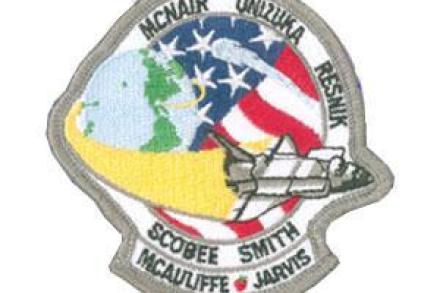
It is 25 years, to the day, since the Challenger shuttle tragically disintegrated over Cape Canaveral. Here is the deeply poignant piece that Christopher Hitchens wrote for The Spectator at the time: The Shuttle Disaster, Christopher Hitchens, The Spectator 1 Feb 1986 Cape Canaveral was the scene of so many non-lethal disasters in the early Sixties that it gratefully accepted a change of name to Cape Kennedy – even though the very change itself involved a memorial to a trauma. Few now remember the process by which the launching pad of the space programme reverted quietly to its earlier and (until Tuesday morning) more placid title. But nobody who saw the flame fill the screen and then dissolve into anarchic debris will ever forget Canaveral.