Chinese Community Party

Is time up on TikTok?

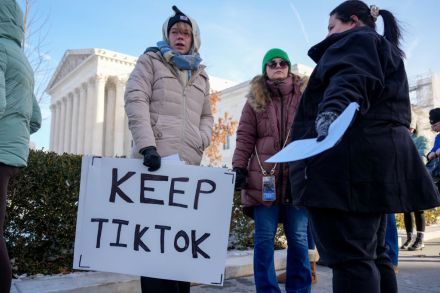
TikTok is hoping that 2025 can be its year — but what comes next for the social media company is truly anyone’s guess. Will someone buy it? Will it divest from its Chinese Communist Party ownership? Will it exist in America next week (the app is fully banned in China as is)? Stay tuned.The social-media app is seeking yet another revival at the eleventh hour. Despite a bipartisan bill signed by President Joe Biden that restricts the ability for foreign adversaries to run social-media companies in the United States, TikTok is activating its army of supporters once more (the app is presumably hoping that its child soldiers will not threaten to kill themselves or lawmakers this time)... and it just might work.

China will miss Henry Kissinger

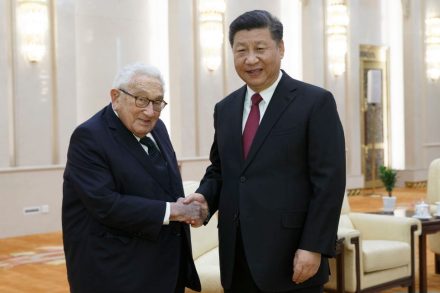
A hero to some and a villain to others, the late Henry Kissinger impacted American foreign policy thinking in the last six decades more than anyone else. Of the former secretary of state and Nobel Peace Prize winner's contributions, one of the most significant was the strengthening of Sino-American relations. His détente policy was once celebrated by Nixonites when the Soviets were seen as the US’s main competitor. More recently, though, as anti-China sentiment has risen in America, Kissinger’s desire to soften relationships with the Asian giant has gained him some detractors on the right — and he already had more than enough on the left. Arguably his death will be mourned more in China than America.

Kissinger

China’s useful idiots in Virginia

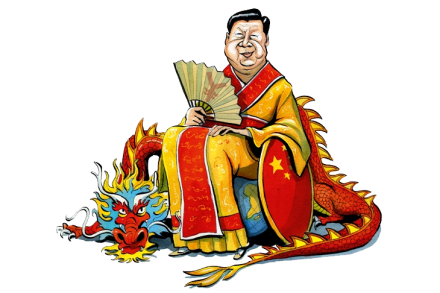
A disturbing trend is emerging among Virginia Democrats in Richmond, as the entire state House and Senate chambers are up for reelection in just a few months: by word and deed, they are increasingly serving as useful idiots for the Chinese Communist Party. In recent weeks, Virginia Democrats have warned that so-called “China-bashing” could lead to mass internment of Chinese Americans, and argued against requiring taxpayer-funded universities to disclose grants from the CCP. It wasn’t supposed to be this way. Democrats were excited to focus on abortion this year in the hopes of further stymying Republican governor Glenn Youngkin’s legislative agenda, much of which the Democratic-controlled State Senate has stopped. Youngkin, however, had other things in mind.

xi china virginia

Germany’s Faustian entanglement with China

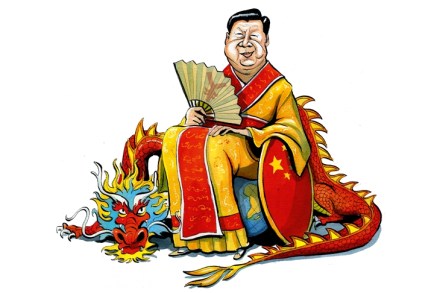
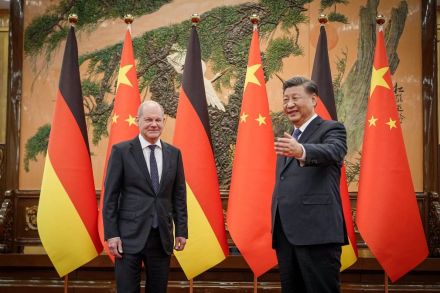
Back in November, German Chancellor Olaf Scholz met with Chinese Communist Party (CCP) chairman Xi Jinping. His visit to China was the first by a G7 leader in three years. Facing heated domestic and international pushback, Scholz framed his visit as an effort to “further develop” economic cooperation between Berlin and Beijing. In this context, such “further development” means further cementing Germany’s Faustian bargain with China, one in which European-based players, like Airbus and Volkswagen, claim immediate revenue — but at their long-term expense and at great strategic cost.

Why journalists shouldn’t be on TikTok

Americans: watch your backs. Last week, Forbes released a bombshell report that ByteDance, the parent company of TikTok, the popular video recording and meme app, was planning to monitor and track the physical location of Americans. It’s not the first time there have been national security and human rights questions swirling around ByteDance, the China-based technology company that owns all of TikTok’s offshore data and could easily be leveraged by the Chinese government. Forbes would not specifically say which Americans ByteDance was targeting, but it would not be too farfetched to assume they would be influential figures in media and politics — the same folks China tracked during Hong Kong’s volatile freedom and democracy protests.

tiktok

Is Amazon’s newest competitor a Trojan horse for China?

Chinese e-commerce is synonymous with one company: Alibaba. With a market cap of $400 billion, the multinational tech giant is responsible for 80 percent of online sales in China. Yet while Alibaba is ridiculously popular in China, it’s not popular in the US. It’s notorious, yes, but it’s not popular. That’s why there’s another e-commerce giant trying to penetrate the American market. As TechCrunch’s Rita Liao recently noted, Pinduoduo, a sort of Alibaba 2.0, “has quickly gained momentum for its first international endeavor in the U.S.” Headquartered in Shanghai, the financial capital of China, Pinduoduo recently launched Temu, an American online shopping site. The site, we’re told, seeks to challenge Amazon, the king of online shopping.