Charles darwin

The theater of the Galápagos Islands

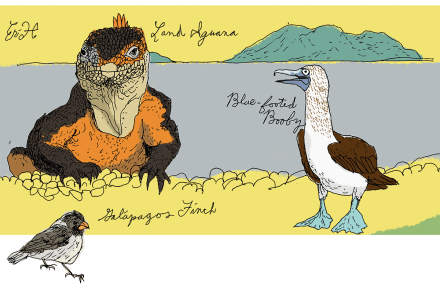
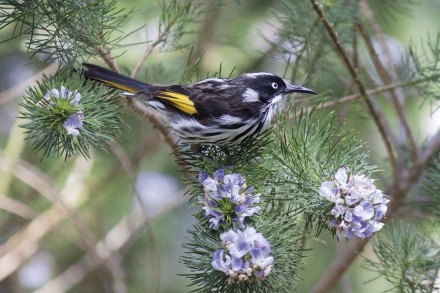
It was stiflingly hot in the middle of the Pacific Ocean. I was exploring the eastern Galápagos Islands, living cheek-by-jowl on a former casino ship with a cast of characters plucked straight from a murder mystery novel: a former British supermodel, an Ecuadorian presidential candidate, the ex-drummer of a band who once supported the Who and an influencer couple who looked like they had stumbled off the set of Triangle of Sadness. The stars of the show – and boy did they know it –were the sea lions While the trip had all the ingredients to cook up an irresistible whodunit, I was not just there to inspect the wildlife on board but to observe the wildlife off it.

The Galápagos evolution even Darwin didn’t foresee

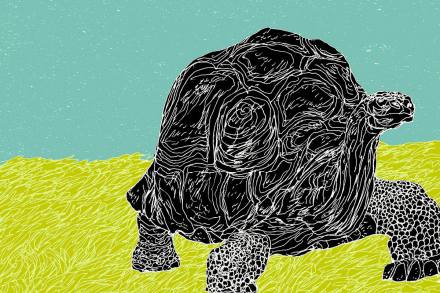
Lonesome George, a Pinta Island giant tortoise, spent the latter half of his hundred years munching on cacti and roaming around the Charles Darwin Research Station on the Galápagos island of Santa Cruz. He borrowed his name from the 1950s American comedian and actor George Gobel and one of the three B-52 Stratofortresses that completed the first non-stop jet circumnavigation of the world in 1957. But the name was ultimately more fitting for the tortoise who was the last of a million-year-old species. In 1959, fishermen introduced three goats to Lonesome George’s home of Pinta Island, one of the smallest islands of the Galápagos archipelago. Just ten years later, they had multiplied to around 40,000.

Galápagos

What Charles Darwin got wrong

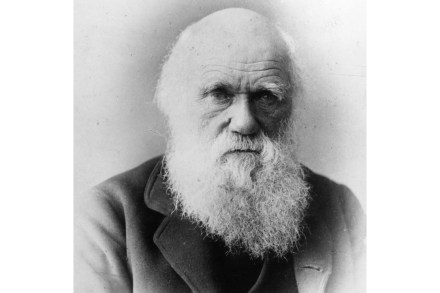
Have you noticed that whenever the conversation turns to the subject of Charles Darwin, an extraordinary amount of dogmatism is often on view?  What’s curious is that the dogmatism is patent on both sides of the debate, on the side of the Darwinists just as much as the side of Darwin’s critics.  I have often noted with amusement how sensitive to criticism the Darwinian faithful are. Any hint of a shadow of dissent and they rush for the garlic, the wooden stake and a signed copy of On the Origin of Species. I think I understand the psychology of the response. They are terrified lest acknowledging the strength of this or that criticism start them down the road toward creationism and teaching the Book of Genesis in Biology 101. Where does the truth lie?

charles darwin

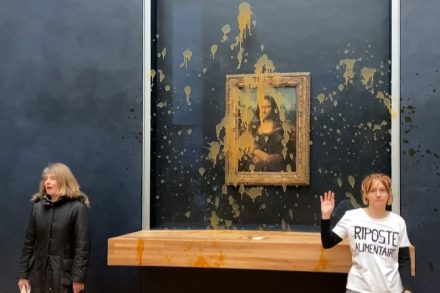
Environmentalism: from concern about clean air to throwing soup at the Mona Lisa

Garrett Hardin was a professor of biology and environmental studies at UC Santa Barbara. His “commons” was a metaphor drawn from the traditional English practice of shared grazing and agricultural land to which all members of a community had access. Commons were inherently prone to abuse, Hardin argued, because every user of the commons will exploit it to maximize personal benefit without regard to the other users, leading ultimately to the collapse of the commons as a useful resource. Hardin extended the metaphor of the commons to include all natural resources, including the air, water, other species, even the entire Earth. The tragedy of Hardin’s expansive commons was the inexorable march to environmental doom, driven by the folly of human freedom.

tragedy commons

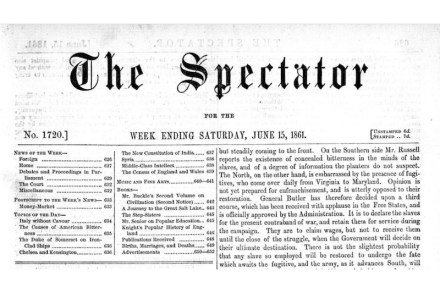
The Spectator, war and slavery: a note on our history

In her article about the point of protest, Tali Fraser mentions the support of Manchester in the 1860s for the North against the slave-owning South in the US civil war. At the time, this was an unpopular cause amongst the British elite. Of all the publications still around today, only one backed Abraham Lincoln then: The Spectator. The magazine almost went bust as a result. I remarked a few days ago that what sets us apart from other long-running magazines is that our values have not changed much since we were founded in 1828 – or, indeed, since the The Spectator appeared in its original form in 1711. That aroused some teasing: surely, some asked, a magazine needs to change with the times?

slavery

An American in Darwin’s family

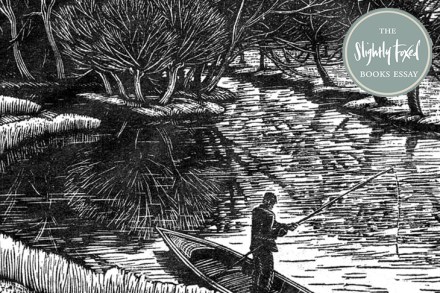
In the spring of 1883 my mother, Maud Du Puy, came from America to spend the summer in Cambridge with her aunt, Mrs Jebb. She was nearly 22, and had never been abroad before; pretty, affectionate, self-willed, and sociable; but not at all a flirt. Indeed her sisters considered her rather stiff with young men. She was very fresh and innocent, something of a Puritan, and with her strong character, was clearly destined for matriarchy.The Jebbs, my great-uncle Dick, and my great-aunt Cara, lived at Springfield, at the southern end of the Backs, and their house looked across Queens’ Green to the elms behind Queens’ College.

raverat darwin

A gas-lit world

For me, a home without Period Piece is like a house without a cat — lacking an essential cheering and comfortable element. I have loved Gwen Raverat’s memoir of growing up in Cambridge in the 1890s ever since I first read it 20 years ago when recuperating from a bad bout of ’flu, at that blissful moment when you are feeling better but not quite strong enough to get up and do anything. I can still recall the delicious feeling of reading and dozing, dozing and reading, snug in the gas-lit world of Victorian Cambridge, until the January afternoon outside the bedroom window gradually turned purple and faded into dark.

period piece