Charity

Labour’s Terminator, Silicon Valley’s ‘Antichrist’ obsession & can charity shops survive?

From our UK edition

37 min listen

First: who has the Home Secretary got in her sights? Political editor Tim Shipman profiles Shabana Mahmood in the Spectator’s cover article this week. Given Keir Starmer’s dismal approval ratings, politicos are consumed by gossip about who could be his heir-apparent – even more so, following Angela Rayner’s defenestration a few weeks ago. Mahmood may not be the most high-profile of the Starmer movement, but she is now talked about alongside Wes Streeting and Andy Burnham as a potential successor to Starmer. But – it all depends on what she can achieve at the Home Office. So, who does she have in her sights?

In praise of American charity

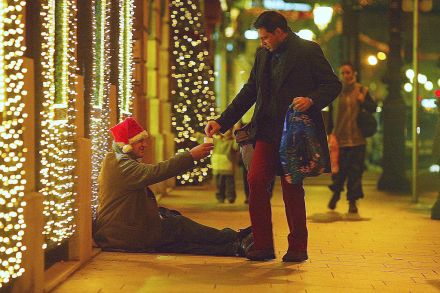
Here’s a bittersweet headline to warm your heart this holiday season: “Woman set up GoFundMe that raised over $1 million for her children before she died.” And another: “GoFundMe benefiting pregnant wife of Matthew Gaudreau has raised over $500K.” And one more for good measure: “GoFundMe raises over $26K for Massachusetts State Police trooper’s family.” I see stories like these weekly — and what’s remarkable about them is not so much that people are willing to help neighbors enduring tragedy, but how so many people are willing to go above and beyond what is being asked. The first fundraiser, for instance, was set up by a single mother from Utah dying of cancer to raise $5,000 for her own funeral expenses and a little money for the kids she left behind.

charity

Kindness backfires: Sufferance, by Charles Palliser, reviewed

From our UK edition

Charles Palliser’s Sufferance tells us what happens to one family in an occupied country during wartime. What sets it apart is that all the characters are unnamed. The country, region and historical period also remain unspecified. This indeterminacy lends the novel enormous power. The father of the family decides to take in a young girl from a minority ethnic group who has become separated from her own family. ‘I felt for her as if she was my own child,’ he says. Yet his motives are not entirely altruistic, since he believes he will be financially rewarded for looking after the girl. He is a lowly accountant working in the public sector and knows the girl’s father is the wealthy owner of a large department store.

Donating to charity is too easy

From our UK edition

It’s been a torrid few weeks for anyone who knows anyone who was running in the London Marathon. In have come the emails sent by the sender to himself or herself, and BCC’d no doubt to a very long list of the sender’s friends: ‘I’m running the London Marathon on 21 April, for [insert name of charity]. I’d be so pleased if you could sponsor me for this worthy cause. You’ll find my page on [JustGiving, or other similar websites]’ and a link is supplied. There’s no way of getting yourmoney back if your friend wobbles out of the marathon after five miles I’ve received a few of these and in fact been pleased to help. I know what runners go through, and I wholeheartedly approve of charitable giving. So, you may ask, what’s not to like about this growing practice?

Are Stonewall and Mermaids charitable?

From our UK edition

Iwas once asked by a colleague to sponsor him on an undertaking designed, he said, to raise money for a very good charitable cause. I can’t remember what the cause was – cancer, maybe, or mental kids – but I do remember the nature of the undertaking. He intended to walk a number of miles down the Great Rift Valley in Kenya. Why not, I suggested, just donate the enormous amount of money such a trek would cost direct to the charity? It would easily outweigh the amount raised, not least because miserable bastards like me would probably decide it was not a charitable act at all but first-world grandstanding with a smug hubris masquerading as kindness.

Meet the telemarketer-turned-filmmaker behind HBO’s Telemarketers

In 2001, at the age of fourteen, Sam Lipman-Stern dropped out of high school in New Jersey and started working at the now defunct Civic Development Group (CDG) as a telemarketer. He stayed for seven years, calling up citizens to ask for money on behalf of police charities. It turned out to be a massive scam.  More than two decades later, Lipman-Stern, now thirty-six and a seasoned filmmaker, has exposed not only CDG — which underhandedly kept 90 percent of the proceeds it raised — but the entire industry in his frenetic, rip-roaring investigative HBO documentary Telemarketers.  Co-directed by Adam Bhala Lough and produced by the Safdie brothers, the three-part docuseries is a wild ride, largely due to Lipman-Stern’s archival footage.

The Satanic Temple’s legal campaign against criticism

What happens when you create a de jure religious organization for the purposes of opposing organized religion? In the case of the Satanic Temple, you seemingly become the thing that you hate. After I wrote about the Satanic Temple's attempt to start an After School Satan Club at an elementary school in Chesapeake, Virginia, I was made aware of an ongoing legal battle between TST and some of its former members. TST accused four former members of hacking a Facebook group for a Washington State chapter, as well as a related meme page, and using it to post defamatory claims about the organization and its leadership. The Satanic Temple's latest lawsuit against these former members was dismissed in January by a district court.

Rewilding will kill Waitrose

From our UK edition

‘Do you care about the woodland? Do you care about the wildlife?’ shouted the bearded Woodland Trust volunteer from his table of tree-hugging paraphernalia set up outside Waitrose. He had pitched his camp – a trestle table covered in leaflets and bedecked with pictures of foxes and badgers – so close to the supermarket entrance on Cobham High Street that it was impossible for customers to get through the doors without running the gauntlet of his leaflets. No doubt these leaflets explained that the Woodland Trust is the largest woodland conservation charity in the United Kingdom and is concerned with the creation, protection and restoration of our native woodland heritage. It has planted 55 million trees since 1972.

The Manchester refugee charity representing the best of British

From our UK edition

In October The Spectator will be heading to Manchester for Conservative party conference for the first time in two years, after last year’s event was cancelled because of the pandemic. While the return of party conferences is a welcome sign that things are finally getting back to normal, it’s also a reminder of the damage that Covid and its lockdowns caused over the last year and a half. Charities were hit hard by the pandemic facing closures after being unable to fundraise or campaign. That’s why The Spectator has decided this year to donate all the ticket money for our events at conference to a charity based in Greater Manchester: Caritas Salford’s Refugee Education Programme.

My failed attempts to be a good Samaritan

From our UK edition

I’ve been trying to be a good Samaritan for some time now and failing. But this week I discovered that even well-trained, experienced good Samaritans — who work for the Samaritans — can fail too. Reports have surfaced revealing the ‘abuse’ of vulnerable callers by a small number of the charity’s phone volunteers. It’s a sad state of affairs when even the Samaritans are subject to scandal. They do excellent work and have always been the Eton of Britain’s volunteer sector. Two years ago, I tried to get in and failed, which was a bit of a shock. I’d assumed that my listening skills would make me the ideal volunteer.

Shelter and the world of white homeless privilege

The biggest homeless charity in the UK appears to be teaching its staff that white people who live on the street need to check their privilege because they benefit from white supremacy. This is the latest Wokeyleak from a source inside Shelter, which manages some £70 million ($96.3 million) in donations a year. The charity subjected employees to over 12 hours of excruciatingly woke Zoom tutorials on such edifying topics as ‘Mitigating Whiteness at Work’. Extracurricular reading included courses on ‘Learning How To Apologise’. Some of Shelter’s diverse staff objected to this controversial critical race theory training but were told that participation was ‘not optional’. Every single one of Shelter’s executive team, incidentally, is white.

shelter

Those emails seeking donations aren’t junk mail

It’s a small miracle, really, and it only happens in America. Every December, the mailboxes fill with requests for donations. They come from St Jude’s Hospital, the Salvation Army, the World Jewish Congress, Nature Conservancy, Feed America, the American Cancer Society and thousands more. They trickle in all year, but the deluge comes after the clock strikes 12 on December 1. And not just emails. Every day the postman brings more, most describing the charities’ good works, offering heart-warming (or heart-wrenching) stories of the people they help, and perhaps including a calendar for the coming year. Another request appears on Wikipedia pages, reminding us this invaluable service is funded solely by donations.

emails

Why charity begins in shops

From our UK edition

When everything re-opened after the first lockdown, I didn’t immediately head to a restaurant, bar or hairdresser. I went to the Second Chance charity shop on Blackstock Road in north London. It wasn’t that I was feeling particularly charitable. If anything, my visit came from a place of selfishness. I wanted to rootle around, alone, and find something unexpected — and probably pointless — in the piles of bric-à-brac. Out I came with a milk jug (£2.50) and a book titled Cool Names for Babies (50p) written by two women called Pamela Redmond Satran and Linda Rosenkrantz. I instantly felt better, as though the past few months had been a bad dream. I can’t be the only person who has missed this sort of experience.

Why I called Michael Gove to ask for some dosh for the teenage cancer trust

From our UK edition

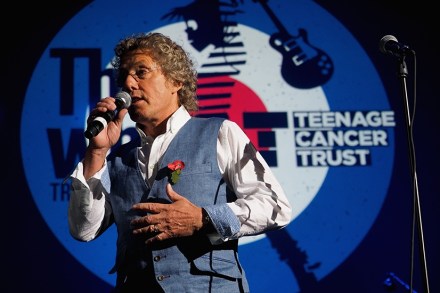
Is locking down again the right remedy for Britain, or will it only add to this country’s suffering in the long-term? It’s certainly been a disaster for many British charities — one report earlier this year estimated that there would be a £12 billion black hole in funding. And it’s been catastrophic for the charity I support: the Teenage Cancer Trust, which provides bespoke care for ill teenagers. An awful lot of people have heard of the Teenage Cancer Trust — but there’s something about teenagers that means they don’t pull at people’s heartstrings the same way that children do, so raising money is that bit more difficult. You could say that teenagers don’t have the ‘Bambi effect’.

The original Edinburgh Festival

From our UK edition

Edinburgh, 3 November 1815. The university courtyard is buzzing. A band is playing. Surrounding streets are filled with thousands of excited spectators, many waiting since 10 a.m. From the Castle, from windows and rooftops, from Calton Hill, Holyrood Park and Salisbury Crags, all strain to get a glimpse. Then finally at 3 p.m., above the university, a large balloon suddenly emerges, climbing wondrously into the crisp November sky. Orchestrating this aeronautical display was pioneer English balloonist James Sadler. His balloon rose majestically as the westerly wind took it towards the sea. Sadler continued waving his flags as long as he could be seen, and the crowds applauded and gasped.

Sunak bails out charities – but are his measures actually working?

From our UK edition

At Wednesday's coronavirus briefing, Chancellor Rishi Sunak turned his attention (and the Treasury’s coffers) to the charity sector, which will receive £750 million to support vital services for the community. The money will be divided between small, local charities working with vulnerable people and charities that provide ‘essential services,’ with Sunak citing St John Ambulance and the Citizens Advice bureau as two examples of potential beneficiaries. The support comes as organisations like Cancer Research announced in recent days that they would have to scale back their medical research due to a projected drop in donations on which they rely to keep their services going.

The case for a national hardship fund

From our UK edition

As normal life rapidly shuts up shop around us, there’s a need to salvage something positive from the chaos. So perhaps there’s a good story yet to be written about that oldest but most unfashionable of virtues, charity. Before you roll your eyes, I am not saying that, in a time of such sudden and sharp economic downturn, we must dig deep into our pockets to help those struggling more than us. That’s admirable behaviour at any time, and if it’s still an option for you, all power to your elbow. Instead, I have in mind those businesses and entrepreneurs that – by virtue of this sudden inversion of human behaviour – now find their profits soaring.

Coming clean: can porn be virtuous?

This week, Pornhub launched a campaign to raise awareness about plastic pollution: a porn video set on a dirty, plastic bottle-littered beach. Titled 'The Dirtiest Porn Ever,' the porn giant has promised to donate a portion of the money from views to an ocean cleanup charity ⁠— incentivizing people into watching porn. As if people don’t watch enough already. It’s not the first time that a pornography company has attempted to brand itself as virtuous. Pornhub even has an entire charity page on its website called Pornhub Cares. Saving the bees, conserving endangered pandas, helping women pursue an education, and planting trees are just a handful of campaigns that Pornhub has run over the past few years.

pornhub porn

It’s high time to butcher PETA

Animal liberation charity PETA (People for the Ethical Treatment of Animals) has gone and done it again. Notorious for using cheap shock tactics to make a noise and pull in more donations, the organization sent a press release and posted a tweet within an hour of the announcement that fashion icon Karl Lagerfeld (for whom I personally felt no love) had died: ‘Karl Lagerfeld has gone, and his passing marks the end of an era when fur and exotic skins were seen as covetable. PETA sends condolences to our old nemesis’s loved ones.’ Last year, Lagerfeld, who had long defended his use of fur, conceded to demands that that he stop using fur and crocodile, lizard, snake and stingray skins in his designs.

peta